News
Civil Aviation
Pilot Training
Flight School Analysis
Aviation Jobs
Training
Services
About Us
Contact Us

China Reportedly Halts Recreational Flying After Fatal Beijing Skyscraper Crash

Picture of Aviation Today News Desk

Aviation Today News Desk

Beijing, China: China has reportedly imposed a nationwide suspension on private light fixed-wing aircraft operations after a fatal light aircraft crash into Beijing's tallest skyscraper, marking one of the country's most unusual aviation incidents in recent years. According to multiple reports, authorities have issued a nationwide airspace control order halting recreational flying activities involving private light aircraft. The restrictions reportedly extend to flight clubs, skydiving, gliding, paragliding and other low-altitude recreational aviation operations. Although operators across China confirmed receiving official instructions, the measures have not been publicly announced by Chinese authorities, and no timeline has been provided for when the restrictions will be lifted. The Civil Aviation Administration of China (CAAC) has also not issued a public statement confirming the order. The move follows the June 26 crash of a light aircraft into the CITIC Tower, also known as China Zun, a 528-metre (1,732-foot), 109-storey skyscraper that serves as the headquarters of CITIC Group and is the tallest building in Beijing. The accident occurred at approximately 5:55 p.m. local time on June 26, when a Sunward SA60L Aurora, a Chinese-built single-engine, two-seat light sport aircraft registered B-12PP, struck the upper exterior of the CITIC Tower in Beijing's Central Business District in Chaoyang District during the evening rush hour. The aircraft had departed from Shifosi Airport on Beijing's eastern outskirts at around 5:30 p.m. Flight tracking data showed the aircraft flew a wide circuit before heading toward central Beijing, with tracking ending moments before the collision. Authorities confirmed that only one person was on board the pilot who was killed in the crash. Officials have not released the pilot's identity. The collision shattered two large glass façade panels on the skyscraper, sending aircraft debris and broken glass onto the streets below. Thirteen people on the ground were injured, reportedly by falling debris and shattered glass. All injured victims were taken to hospitals for treatment. Their identities and medical conditions have not been disclosed. Despite the dramatic impact, structural damage to the building appeared limited to the broken exterior glass panels, which were boarded up shortly after the accident. Flight tracking information identified the aircraft as a Sunward SA60L Aurora, a Chinese-manufactured two-seat light sport aircraft. The aircraft carried the registration B-12PP and is believed to have been operated by Dongshi Shuangyue General Aviation, a Beijing-based general aviation company that offers sightseeing flights, introductory flying experiences and pilot training from Shifosi Airport in Beijing's Pinggu District. Company promotional material advertising sightseeing flights was removed from Chinese social media shortly after the crash. Reuters reported it could not independently confirm whether the company still owned or operated the aircraft at the time of the accident, while an employee declined to verify ownership. Chinese authorities have launched an investigation into the accident. As of June 30, investigators have not identified the cause of the crash, and no preliminary findings have been released. Officials have not indicated whether the accident resulted from mechanical failure, pilot error, medical issues or any other factor.

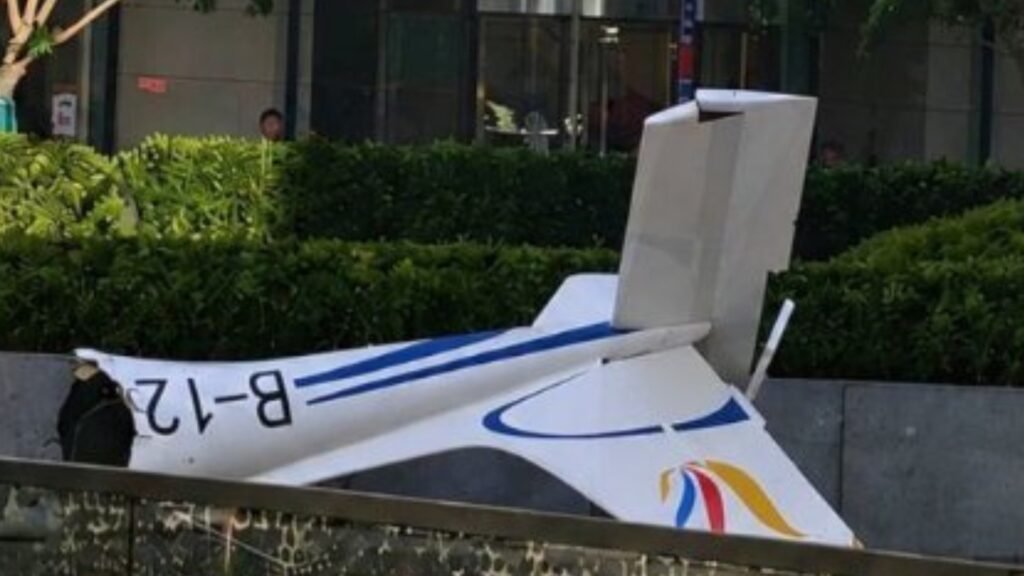
Image: @Turbinetraveler (X)

Beijing, China: China has reportedly imposed a nationwide suspension on private light fixed-wing aircraft operations after a fatal light aircraft crash into Beijing’s tallest skyscraper, marking one of the country’s most unusual aviation incidents in recent years.

According to multiple reports, authorities have issued a nationwide airspace control order halting recreational flying activities involving private light aircraft. The restrictions reportedly extend to flight clubs, skydiving, gliding, paragliding and other low-altitude recreational aviation operations. Although operators across China confirmed receiving official instructions, the measures have not been publicly announced by Chinese authorities, and no timeline has been provided for when the restrictions will be lifted. The Civil Aviation Administration of China (CAAC) has also not issued a public statement confirming the order.

The move follows the June 26 crash of a light aircraft into the CITIC Tower, also known as China Zun, a 528-metre (1,732-foot), 109-storey skyscraper that serves as the headquarters of CITIC Group and is the tallest building in Beijing.

The accident occurred at approximately 5:55 p.m. local time on June 26, when a Sunward SA60L Aurora, a Chinese-built single-engine, two-seat light sport aircraft registered B-12PP, struck the upper exterior of the CITIC Tower in Beijing’s Central Business District in Chaoyang District during the evening rush hour.

The aircraft had departed from Shifosi Airport on Beijing’s eastern outskirts at around 5:30 p.m. Flight tracking data showed the aircraft flew a wide circuit before heading toward central Beijing, with tracking ending moments before the collision.

Authorities confirmed that only one person was on board the pilot who was killed in the crash. Officials have not released the pilot’s identity.

The collision shattered two large glass façade panels on the skyscraper, sending aircraft debris and broken glass onto the streets below. Thirteen people on the ground were injured, reportedly by falling debris and shattered glass. All injured victims were taken to hospitals for treatment. Their identities and medical conditions have not been disclosed.

Despite the dramatic impact, structural damage to the building appeared limited to the broken exterior glass panels, which were boarded up shortly after the accident.

Flight tracking information identified the aircraft as a Sunward SA60L Aurora, a Chinese-manufactured two-seat light sport aircraft.

The aircraft carried the registration B-12PP and is believed to have been operated by Dongshi Shuangyue General Aviation, a Beijing-based general aviation company that offers sightseeing flights, introductory flying experiences and pilot training from Shifosi Airport in Beijing’s Pinggu District.

Company promotional material advertising sightseeing flights was removed from Chinese social media shortly after the crash. Reuters reported it could not independently confirm whether the company still owned or operated the aircraft at the time of the accident, while an employee declined to verify ownership.

Chinese authorities have launched an investigation into the accident. As of June 30, investigators have not identified the cause of the crash, and no preliminary findings have been released. Officials have not indicated whether the accident resulted from mechanical failure, pilot error, medical issues or any other factor.

Leave a Comment

Subscribe to our Newsletter

Recent News