Fort Simpson, Canada: Three people were killed after a Buffalo Airways firefighting aircraft crashed while supporting wildfire suppression efforts west of Fort Simpson in Canada’s Northwest Territories, prompting a federal investigation into one of the country’s latest fatal aviation accidents.
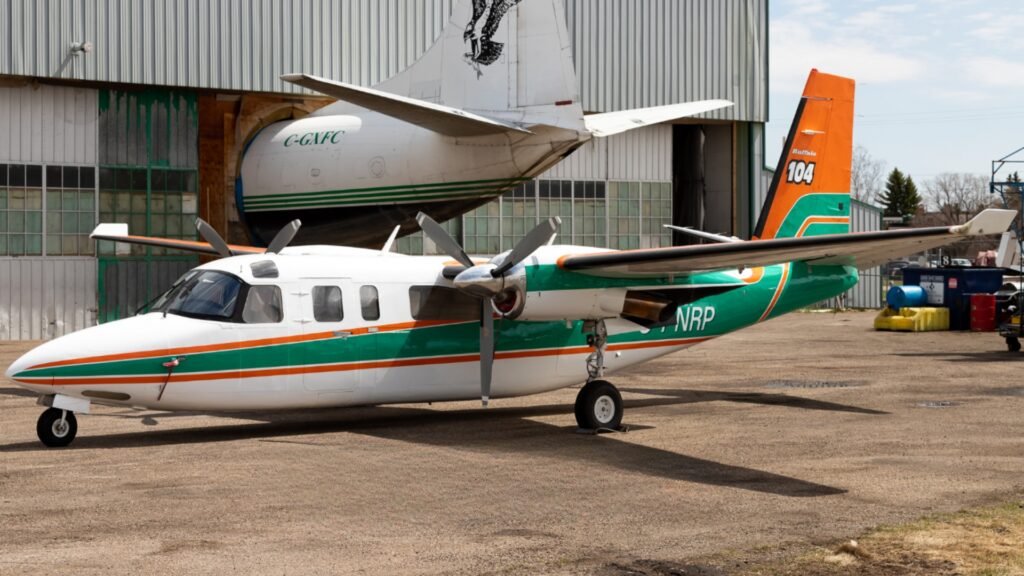
The aircraft, operating as Bird Dog 104, went down approximately 50 to 55 kilometres west of Fort Simpson on June 25 while assisting crews battling an active wildfire in the Martin Hills area. Authorities confirmed that all three occupants aboard the aircraft died in the crash.
Northwest Territories fire officials said the aircraft had been conducting aerial operations in support of wildfire FS009 when it crashed. The aircraft was serving in a “bird dog” role, a critical function in aerial firefighting that involves coordinating water bombers, assessing fire behaviour and directing suppression aircraft over the fire zone.
The aircraft involved was identified as a Rockwell Aero Commander 690C Jetprop (Turbo Commander) bearing Canadian registration C-FNRP. Aviation records show the aircraft was operated by Buffalo Airways, the Yellowknife-based airline widely known for its cargo operations and aerial firefighting services across northern Canada.
Buffalo Airways was founded in 1970 by Joe McBryan and has become one of Canada’s best-known northern aviation operators. The privately owned airline operates cargo, charter and aerial firefighting missions, particularly in remote regions where aviation remains essential for transporting supplies, equipment and emergency personnel.
Emergency responders were dispatched after reports that an aircraft supporting wildfire operations had crashed west of Fort Simpson. Due to the remote location, emergency crews worked alongside wildfire personnel to reach the accident site.
The Northwest Territories Coroner Service later confirmed that all three people aboard the aircraft had died. Officials have not publicly released their identities pending notification of next of kin.
The exact sequence of events leading to the crash remains unknown.
Authorities have not indicated whether the crew transmitted a distress call before impact, nor have they disclosed any information regarding weather conditions, mechanical issues or operational factors that may have contributed to the accident.
The Transportation Safety Board of Canada (TSB) has deployed investigators to the crash site and will examine the aircraft wreckage, maintenance records, flight history, operational procedures and environmental conditions as part of its investigation.
The Royal Canadian Mounted Police (RCMP) are also assisting alongside the Northwest Territories Coroner Service.
In a statement, Buffalo Airways confirmed that one of its firefighting aircraft had been involved in the fatal accident while conducting wildfire operations and said it was cooperating fully with investigators.
The company said its immediate focus is supporting the families of those who lost their lives as well as its employees affected by the tragedy.
Northwest Territories fire officials also expressed condolences to the victims’ families, colleagues and the broader firefighting community.
The accident occurred during an active wildfire season in the Northwest Territories, where aircraft play an essential role in detecting fires, coordinating aerial suppression and protecting remote communities. Bird Dog aircraft are particularly important because they guide larger airtankers to make accurate retardant and water drops while monitoring fire conditions from above.
Aviation experts note that aerial firefighting is among the most demanding forms of flying, requiring crews to operate at low altitudes, often in mountainous terrain, reduced visibility, smoke and rapidly changing weather conditions.
At present, investigators have not determined what caused the aircraft to crash.
The Transportation Safety Board’s investigation is expected to determine whether mechanical, operational, environmental or human factors contributed to the accident. Investigators will also assess aircraft performance, pilot actions and any available operational data before issuing preliminary findings.