Kuwait City, Kuwait: Kuwait International Airport suffered severe damage after an Iranian drone strike hit Terminal 1 on June 3, 2026, killing one person and injuring dozens in one of the most serious attacks on civilian aviation infrastructure in the Gulf since the outbreak of the regional conflict earlier this year.
According to Kuwaiti authorities, the attack occurred during a broader wave of Iranian missile and drone launches targeting Kuwait and other Gulf states. The strike damaged large sections of Terminal 1, forcing flight diversions, temporary suspension of airport operations and emergency response measures across the airport complex.
Kuwait’s Directorate General of Civil Aviation (DGCA) later released CCTV footage showing the moment of impact. The video released by officials appears to show a delta-wing drone striking the terminal before a large explosion erupts, sending debris, smoke and flames through parts of the building. Aviation officials said the footage was released after emergency teams secured the affected areas and initial damage assessments were completed.
Authorities reported that one person was killed and at least 63 others were injured. Emergency responders treated victims at the scene while firefighters worked to contain fires sparked by the attack.
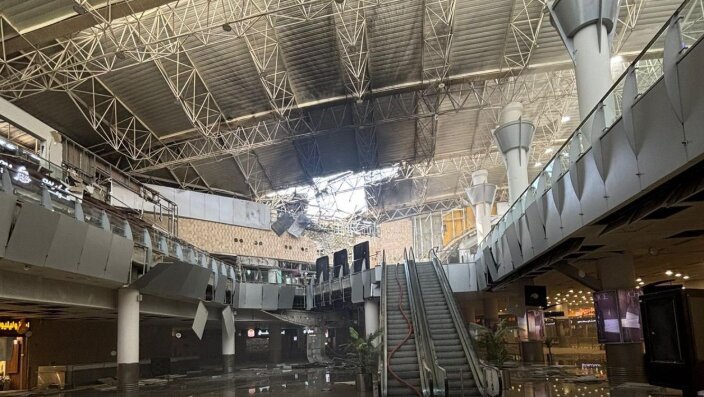
The DGCA said Terminal 1 sustained extensive structural damage, including collapsed ceiling sections, shattered glass and damage to airport facilities. Flight operations were temporarily disrupted, with several aircraft diverted to alternate airports. Kuwait Airways suspended scheduled services before later resuming limited operations from Terminal 4 following safety inspections and operational assessments.
The strike came hours after a sharp escalation between Iran and the United States. U.S. forces reportedly conducted military action against Iranian targets, including facilities on Qeshm Island and maritime assets linked to Tehran. Iranian officials subsequently launched retaliatory missile and drone attacks against multiple locations across the Gulf region.
U.S. Central Command stated that several Iranian missiles aimed at Kuwait and Bahrain either malfunctioned, fell short or were intercepted. Military officials also reported that additional drones targeting U.S. forces in Kuwait failed to reach their intended objectives.
Kuwaiti officials condemned the attack, describing it as a violation of national sovereignty and an assault on civilian infrastructure. The country’s Foreign Ministry said the strikes targeted civilian facilities, including the international airport, and warned that such actions threatened regional stability and aviation safety.
The attack represents the latest incident involving Kuwait International Airport during the wider Iran-related conflict. Earlier drone attacks during the spring damaged airport infrastructure, fuel facilities and radar systems, prompting prolonged disruptions and temporary airport closures. Although operations gradually resumed following an April ceasefire, the June 3 strike renewed concerns over the vulnerability of civilian aviation facilities in the region.
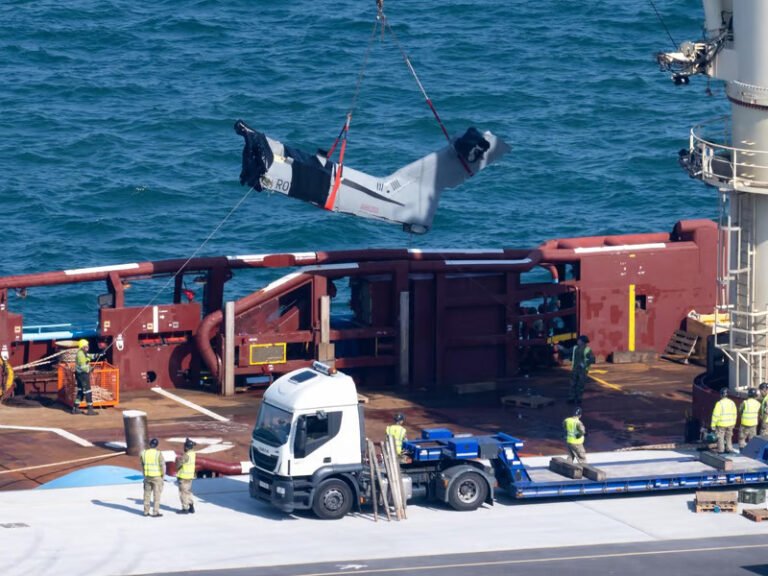
The released footage appears to show a drone resembling Iran’s Shahed-family unmanned aircraft, a design that has been widely used in regional conflicts. While authorities have not publicly confirmed the exact model involved, aviation and defense analysts cited by international media noted similarities in the aircraft’s shape and flight profile.
The incident also triggered immediate travel disruptions. Airlines reviewed operations to Kuwait, while India’s IndiGo issued a travel advisory and suspended flights to and from the country amid the deteriorating security situation.
Investigations into the attack, including the assessment of damage, casualty figures and operational impact, remain ongoing. Kuwaiti authorities continue to evaluate the airport’s infrastructure while implementing additional security measures to protect aviation operations.