News
Civil Aviation
Pilot Training
Flight School Analysis
Aviation Jobs
Training
Services
About Us
Contact Us

American Airlines Regional Jet Makes Emergency Landing After Smoke Reported In Cabin

Picture of Aviation Today News Desk

Aviation Today News Desk

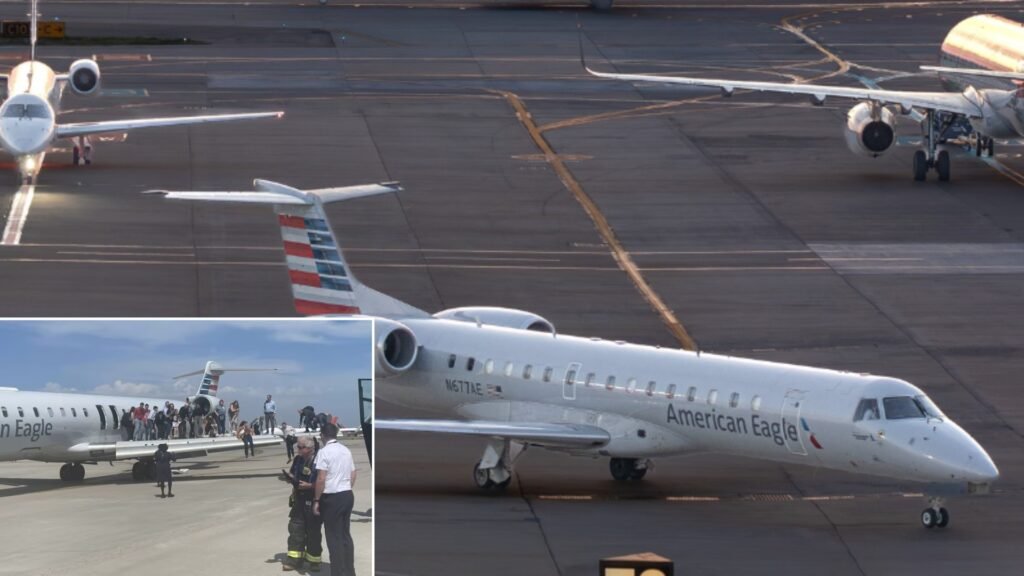
Kansas City, United States: An American Airlines regional jet operating as American Eagle Flight 5318 made an emergency landing after smoke was reported inside the cabin while the aircraft was approaching its destination in Kansas City, according to airline officials and air traffic control recordings. The flight, operated by PSA Airlines using a Bombardier CRJ-900 regional jet, had departed from Ronald Reagan Washington National Airport and was en route to Kansas City with 76 passengers and crew members onboard. The emergency unfolded shortly before landing when the crew detected smoke inside the aircraft. Air traffic control audio captured the pilot declaring an emergency as the aircraft neared the airport. In the transmission, the pilot stated, “Bluestreak 5318, declaring an emergency. We’re landing,” signaling the urgency of the situation. The aircraft was reportedly about two miles from the runway when the emergency was declared. Emergency response teams were immediately dispatched and positioned along the runway as the jet prepared for landing. The aircraft landed safely without further incident. Following touchdown, passengers were evacuated onto the taxiway as firefighters and emergency personnel inspected the aircraft. Images and videos shared online showed passengers exiting through overwing exits and standing on the tarmac while first responders surrounded the regional jet. Among those onboard was U.S. Congressman Tracey Mann, who later shared details of the incident on social media. In a video posted after the landing, Mann thanked emergency responders and confirmed smoke had been detected onboard the aircraft. “There was smoke on our aircraft and so we landed and are now sitting on the tarmac,” he said in the video, while also expressing appreciation for airport fire and rescue crews responding to the emergency. American Airlines later issued a statement emphasizing that passenger and crew safety remained the airline’s highest priority. The carrier apologized to customers for the disruption and said maintenance teams would inspect the aircraft to determine the source of the smoke indication. The Federal Aviation Administration confirmed it has opened an investigation into the incident. Smoke or fumes inside an aircraft cabin are treated as serious in-flight emergencies because they can indicate electrical malfunctions, overheating systems, or other onboard hazards that may escalate rapidly if not contained. No injuries were immediately reported following the emergency landing, and passengers were later assisted by airline personnel at the airport while arrangements for onward travel were being made.
Image: Charlotte Douglas International Airport – CLT

Kansas City, United States: An American Airlines regional jet operating as American Eagle Flight 5318 made an emergency landing after smoke was reported inside the cabin while the aircraft was approaching its destination in Kansas City, according to airline officials and air traffic control recordings.

The flight, operated by PSA Airlines using a Bombardier CRJ-900 regional jet, had departed from Ronald Reagan Washington National Airport and was en route to Kansas City with 76 passengers and crew members onboard. The emergency unfolded shortly before landing when the crew detected smoke inside the aircraft.

Air traffic control audio captured the pilot declaring an emergency as the aircraft neared the airport. In the transmission, the pilot stated, “Bluestreak 5318, declaring an emergency. We’re landing,” signaling the urgency of the situation.

The aircraft was reportedly about two miles from the runway when the emergency was declared. Emergency response teams were immediately dispatched and positioned along the runway as the jet prepared for landing. The aircraft landed safely without further incident.

Following touchdown, passengers were evacuated onto the taxiway as firefighters and emergency personnel inspected the aircraft. Images and videos shared online showed passengers exiting through overwing exits and standing on the tarmac while first responders surrounded the regional jet.

Among those onboard was U.S. Congressman Tracey Mann, who later shared details of the incident on social media. In a video posted after the landing, Mann thanked emergency responders and confirmed smoke had been detected onboard the aircraft.

“There was smoke on our aircraft and so we landed and are now sitting on the tarmac,” he said in the video, while also expressing appreciation for airport fire and rescue crews responding to the emergency.

American Airlines later issued a statement emphasizing that passenger and crew safety remained the airline’s highest priority. The carrier apologized to customers for the disruption and said maintenance teams would inspect the aircraft to determine the source of the smoke indication.

The Federal Aviation Administration confirmed it has opened an investigation into the incident. Smoke or fumes inside an aircraft cabin are treated as serious in-flight emergencies because they can indicate electrical malfunctions, overheating systems, or other onboard hazards that may escalate rapidly if not contained.

No injuries were immediately reported following the emergency landing, and passengers were later assisted by airline personnel at the airport while arrangements for onward travel were being made.

Leave a Comment

Subscribe to our Newsletter

Recent News