News
Civil Aviation
Pilot Training
Flight School Analysis
Aviation Jobs
Training
Services
About Us
Contact Us

Cessna Citation Aircraft Crashes In Bolivia After Loss Of Contact, Two Pilots Killed

Picture of Aviation Today News Desk

Aviation Today News Desk

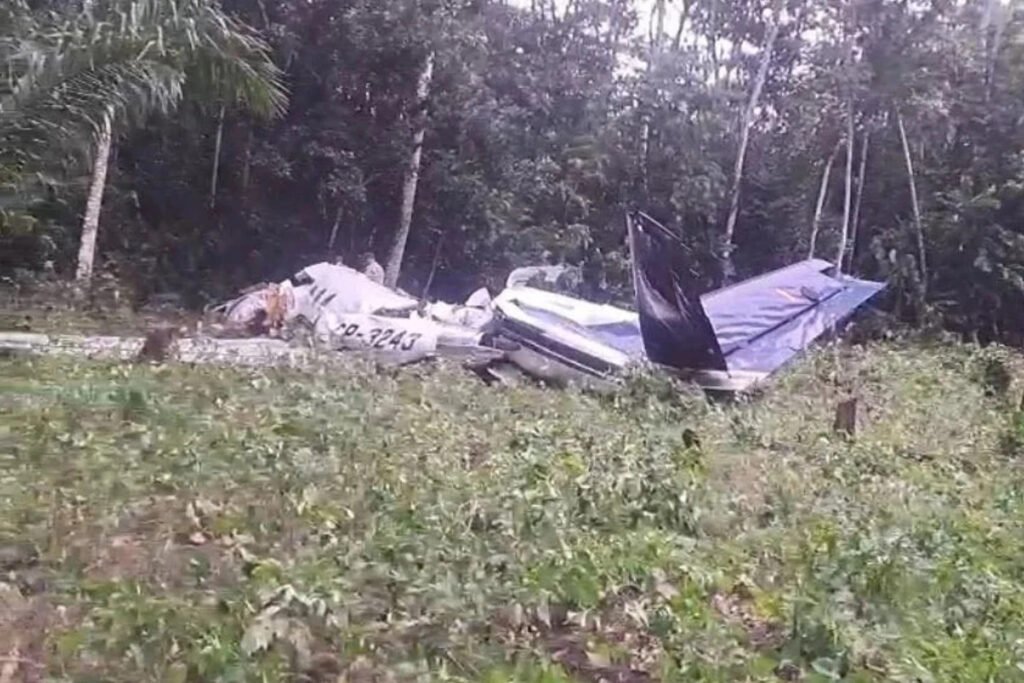
Cochabamba, Bolivia: A Cessna 550 Citation Bravo aircraft crashed in central Bolivia after losing contact with air traffic control shortly after departure from La Paz-El Alto Airport, killing both pilots on board, according to aviation authorities and flight tracking data. The aircraft, registered CP-3243, departed at approximately 08:19 local time on a domestic positioning flight to Santa Cruz-El Trompillo Airport. Roughly 30 minutes into the flight, communication with La Paz Area Control Centre was lost. According to Bolivia’s Dirección General de Aeronáutica Civil (DGAC), the aircraft stopped responding to controllers at around 08:47–08:50. Shortly after, radar systems detected the jet performing unusual circular flight patterns north of Cochabamba. Flight tracking data reviewed by investigators showed the aircraft entered a repeated 360-degree orbit pattern, estimated at around 20 continuous circuits, while cruising at approximately FL390 (39,000 feet) before beginning a gradual descent. The DGAC confirmed that at around 09:00, the aircraft was observed flying in controlled but unresponsive orbits, prompting emergency protocols. By approximately 11:00, radar contact was fully lost, with the aircraft last recorded near the Cochabamba region. Search and rescue teams later located the wreckage in a remote, forested valley in the Cochabamba region, approximately 100–115 kilometres from the city. Authorities confirmed that both occupants, the pilot Carlos Moyano and co-pilot Julio Sardán were killed. No passengers were on board. The DGAC stated that emergency response operations were activated immediately after loss of contact, involving aircraft and helicopter deployments coordinated with the Bolivian Air Force. Preliminary assessments from aviation authorities indicate that a possible cabin pressurisation failure is being considered as one of the leading hypotheses. Investigators note that the flight profile stable high-altitude circling followed by uncontrolled descent is consistent with a scenario in which pilots may have become incapacitated due to hypoxia, allowing the aircraft to continue flying on autopilot. However, officials stressed that no final cause has been established, and all findings remain preliminary. Officials confirmed that the aircraft was manufactured in 2006 and was operating a private flight with only two crew members onboard. The DGAC said it will release further updates as technical analysis continues.


Image: Air Data News

Cochabamba, Bolivia: A Cessna 550 Citation Bravo aircraft crashed in central Bolivia after losing contact with air traffic control shortly after departure from La Paz-El Alto Airport, killing both pilots on board, according to aviation authorities and flight tracking data.

The aircraft, registered CP-3243, departed at approximately 08:19 local time on a domestic positioning flight to Santa Cruz-El Trompillo Airport. Roughly 30 minutes into the flight, communication with La Paz Area Control Centre was lost.

According to Bolivia’s Dirección General de Aeronáutica Civil (DGAC), the aircraft stopped responding to controllers at around 08:47–08:50. Shortly after, radar systems detected the jet performing unusual circular flight patterns north of Cochabamba.

Flight tracking data reviewed by investigators showed the aircraft entered a repeated 360-degree orbit pattern, estimated at around 20 continuous circuits, while cruising at approximately FL390 (39,000 feet) before beginning a gradual descent.

The DGAC confirmed that at around 09:00, the aircraft was observed flying in controlled but unresponsive orbits, prompting emergency protocols. By approximately 11:00, radar contact was fully lost, with the aircraft last recorded near the Cochabamba region.

Search and rescue teams later located the wreckage in a remote, forested valley in the Cochabamba region, approximately 100–115 kilometres from the city.

Authorities confirmed that both occupants, the pilot Carlos Moyano and co-pilot Julio Sardán were killed. No passengers were on board.

The DGAC stated that emergency response operations were activated immediately after loss of contact, involving aircraft and helicopter deployments coordinated with the Bolivian Air Force.

Preliminary assessments from aviation authorities indicate that a possible cabin pressurisation failure is being considered as one of the leading hypotheses.

Investigators note that the flight profile stable high-altitude circling followed by uncontrolled descent is consistent with a scenario in which pilots may have become incapacitated due to hypoxia, allowing the aircraft to continue flying on autopilot.

However, officials stressed that no final cause has been established, and all findings remain preliminary. Officials confirmed that the aircraft was manufactured in 2006 and was operating a private flight with only two crew members onboard.

The DGAC said it will release further updates as technical analysis continues.

Leave a Comment

Subscribe to our Newsletter

Recent News