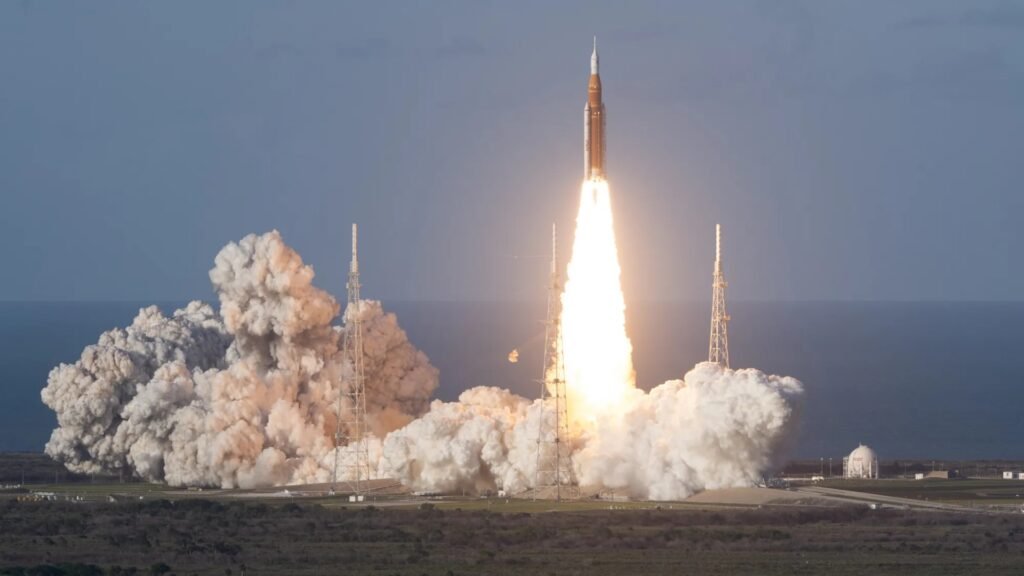
Cape Canaveral, United States: NASA has launched the Artemis II mission, sending four astronauts on a historic journey around the Moon and marking humanity’s return to crewed deep space exploration for the first time since the Apollo era.
The mission lifted off from Launch Complex 39B at Kennedy Space Center on April 1, 2026 aboard NASA’s Space Launch System (SLS), carrying the Orion spacecraft on its first crewed flight. Artemis II is the agency’s first mission to send astronauts beyond low Earth orbit in over 50 years and represents a defining milestone in the United States’ long-term lunar exploration strategy.
NASA has positioned Artemis II as a critical test mission, designed to validate the systems required for sustained human presence beyond Earth.
According to NASA’s official mission brief, Artemis II will be the first crewed flight of both the SLS rocket and Orion spacecraft, testing their combined performance in deep space. The mission will demonstrate capabilities including life-support systems, navigation, communication, and crew operations under deep space conditions.
The Orion spacecraft, developed as NASA’s next-generation crew vehicle, is central to the agency’s long-term goal of enabling missions not only to the Moon but eventually to Mars.
Artemis II is a 10-day mission that will follow a free-return trajectory around the Moon, allowing the spacecraft to loop back to Earth without requiring additional propulsion in case of emergencies.
After launch, the crew entered high Earth orbit to conduct initial system checks and manual flight demonstrations before executing a trans-lunar injection burn to begin their journey toward the Moon.
NASA’s official mission timeline indicates:
- Transit to the Moon will take approximately four days
- Closest approach to the lunar surface will occur around flight day six
- The mission may set a new record for the farthest distance traveled by humans from Earth
The spacecraft is expected to travel more than 250,000 miles from Earth, surpassing distances achieved during the Apollo programme.
The Artemis II crew comprises NASA astronauts Reid Wiseman (Commander), Victor Glover (Pilot), Christina Koch (Mission Specialist), and Canadian Space Agency astronaut Jeremy Hansen (Mission Specialist).
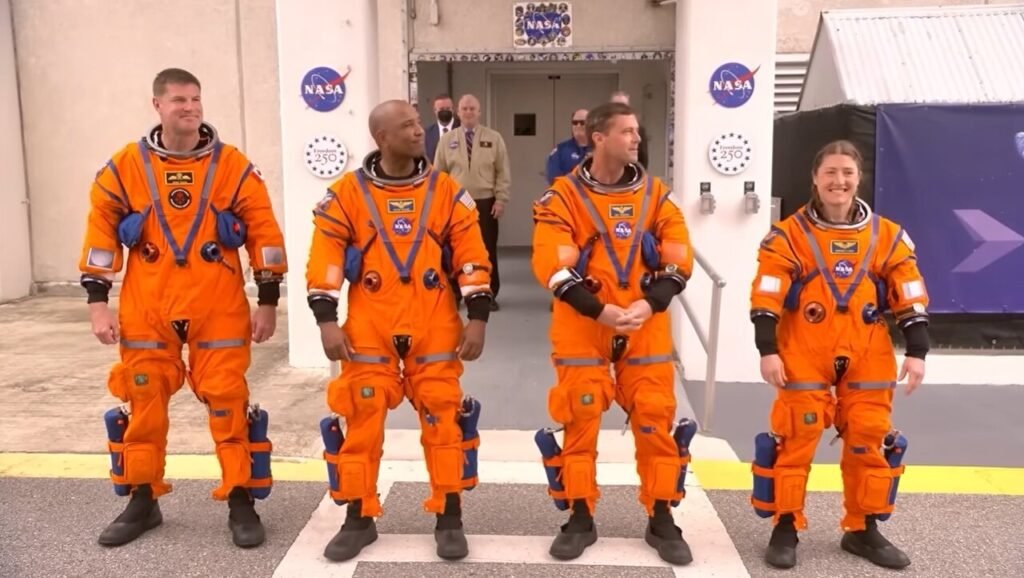
The mission marks several historic firsts:
- First woman assigned to a lunar mission
- First Black astronaut on a lunar trajectory
- First non-American astronaut to travel beyond low Earth orbit
NASA has emphasized that the mission reflects increasing international collaboration in space exploration.
Artemis II follows the successful uncrewed Artemis I mission conducted in 2022 and represents the next step in NASA’s broader Artemis programme.
The agency’s roadmap includes:
- Artemis III: A crewed lunar landing mission
- Artemis IV and beyond: Development of long-term infrastructure, including a lunar orbital platform and sustained human presence
NASA states that Artemis missions aim to enable scientific discovery, economic opportunities, and technological advancement, while laying the groundwork for future human missions to Mars.
The launch follows extensive preparation, including a Flight Readiness Review and rollout of the SLS rocket and Orion spacecraft to the launch pad in March 2026.
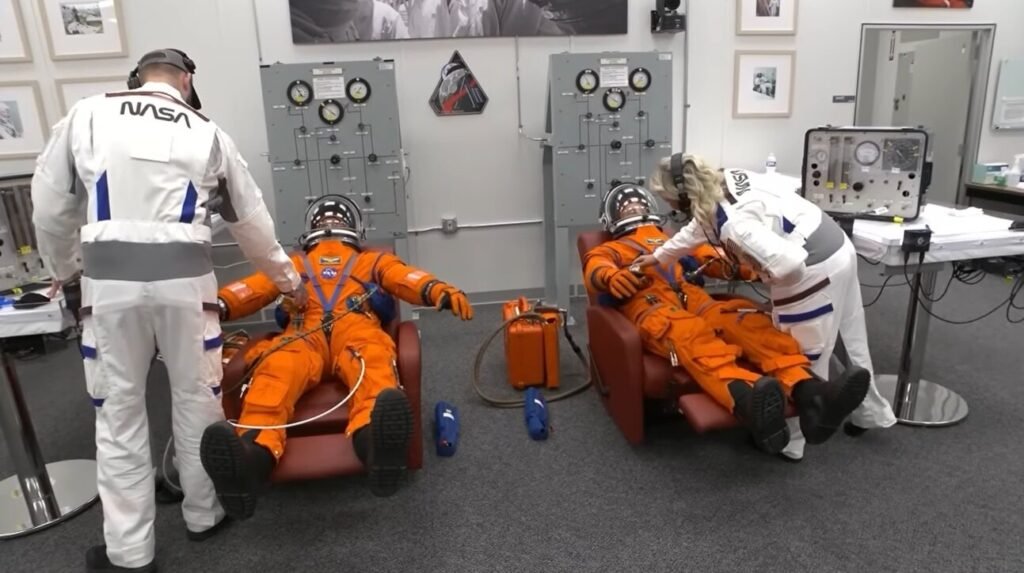
NASA engineers conducted final system checks and resolved ground support issues ahead of launch, ensuring mission readiness within a targeted April launch window.
Initial mission updates indicate that the spacecraft is performing as expected, with astronauts completing system checks and trajectory operations in high Earth orbit before heading toward the Moon.
Minor issues, including brief communication disruptions, have been reported but are within expected parameters for a test mission of this scale.
NASA officials have maintained a cautious tone, emphasizing that Artemis II is a test flight designed to identify and address challenges before future landing missions.
Artemis II is widely viewed as a turning point in modern space exploration, re-establishing human capability to operate beyond Earth orbit after more than five decades.
NASA has described the mission as essential to “verify modern human capabilities in deep space” and to prepare for sustained lunar exploration and eventual missions to Mars.
With increasing global interest in lunar exploration and participation from international partners, Artemis II marks the beginning of a new era of human spaceflight, one that extends beyond symbolic missions toward long-term presence beyond Earth.