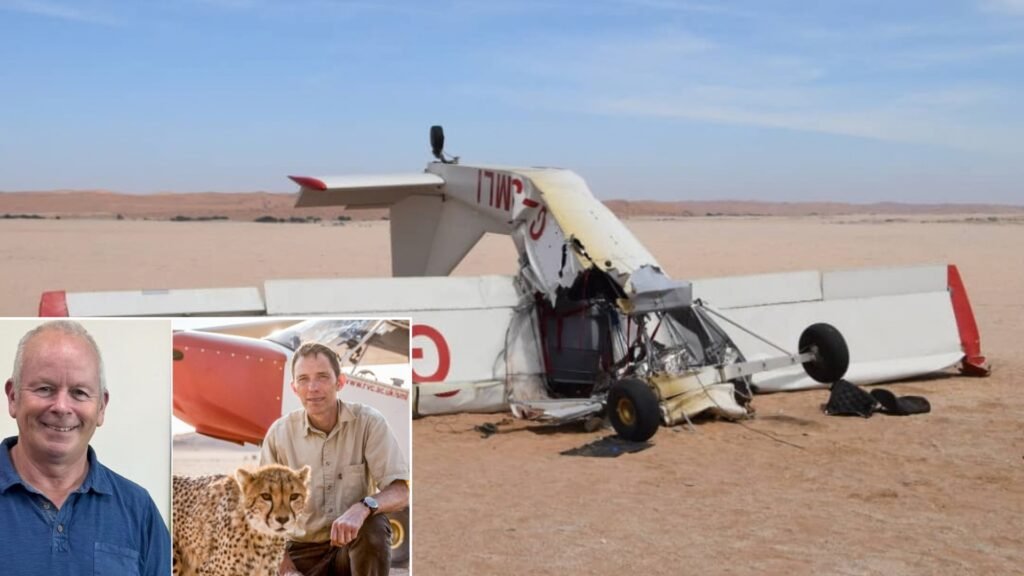
Walvis Bay, Namibia: A British wildlife scientist and a pilot were killed when a light aircraft crashed near a desert research centre in Namibia during a wildlife-tracking mission, authorities confirmed.
The accident occurred on Wednesday, 4 March 2026, near the Gobabeb Research Centre in the Namib Desert, about 100 km from Walvis Bay. The aircraft involved was a British-registered Groppo light aircraft (Groppo-Trail ultralight type) conducting a research observation flight over the dunes.
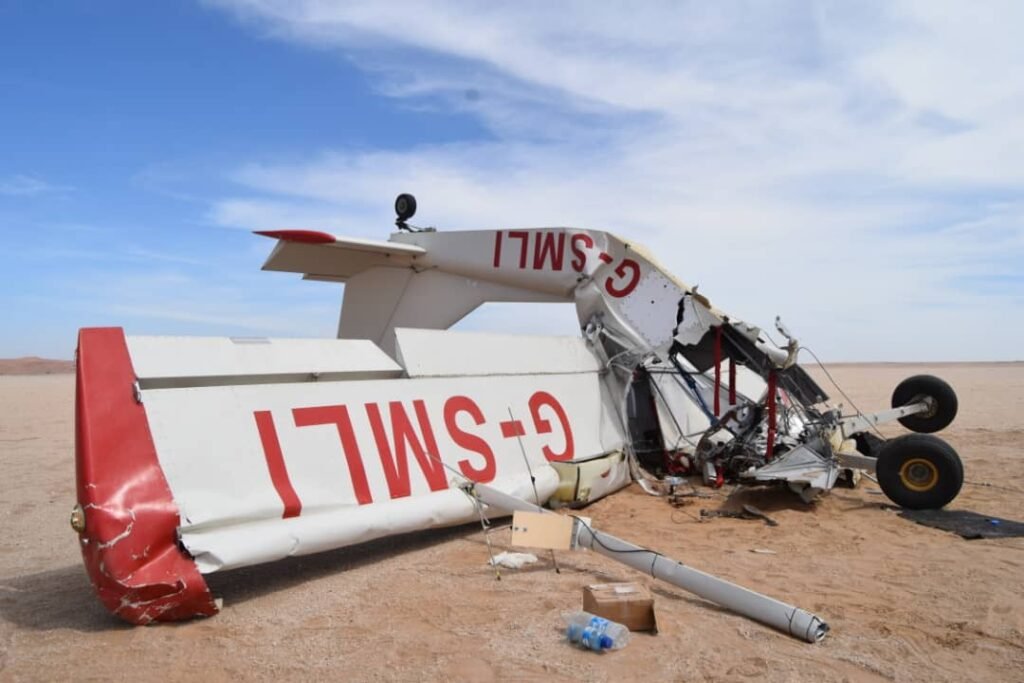
According to Namibian police and investigators, the aircraft took off at around 17:00 local time to locate radio-collared antelope being monitored as part of a wildlife research project. The flight was expected to return shortly afterward.
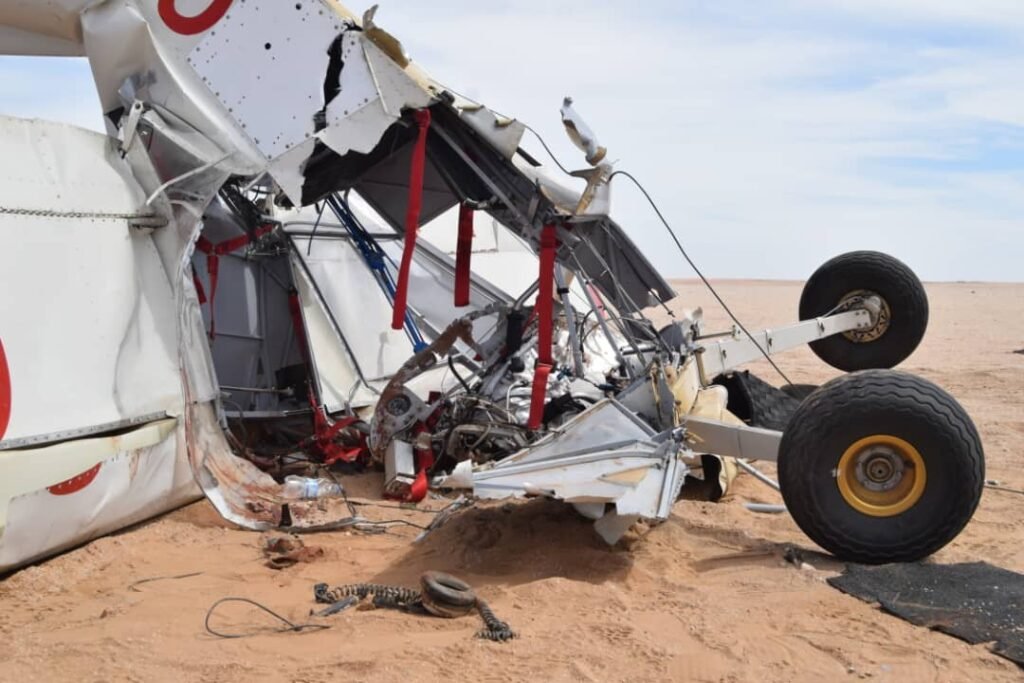
When the aircraft failed to return by about 19:00, a colleague at the research station raised the alarm and initiated a search in the surrounding desert. The wreckage was soon located just metres from the Gobabeb airstrip, with debris scattered around the crash site.
Authorities said the two occupants likely died instantly on impact. Investigators from Namibia’s Directorate of Aircraft Accident Investigations are examining the wreckage and flight circumstances, but a final cause has not yet been determined.
Police identified the victims as Professor Alan Martin Wilson, 62, a British wildlife scientist, and pilot Neil Thomas Oakman.
Wilson was a prominent researcher affiliated with the Royal Veterinary College in the United Kingdom, known internationally for his work on animal biomechanics and wildlife tracking. His research focused on understanding how large animals move and survive in extreme environments, often using tracking collars and aerial observation.
He also appeared in several BBC natural history documentaries, helping explain animal locomotion and wildlife behaviour to broader audiences.
Wilson and his colleagues had arrived in Namibia in February 2026 to conduct field research on oryx and other desert antelope, tracking animals fitted with monitoring collars in the Namib dunes. The flight on 4 March was part of an aerial observation mission linked to the study.
The Gobabeb Research Centre, which collaborated on the project, described the deceased researchers as “outstanding scientists” and expressed shock at the tragedy. In a statement, the centre extended condolences to their families, friends and colleagues following the fatal accident.
Mr. Oakman was a retired airline pilot who had trained commercial pilots for Ryanair. He was the chief pilot of 501 Squadron’s former Battle of Britain Hurricane VZ497 and flew it at displays.
Investigators confirmed the aircraft was registered in the United Kingdom and operated as a small research platform. Officials from Namibia’s accident investigation authority visited the crash site and began examining the wreckage and flight details.
Authorities said a formal investigation report will be released once the examination is completed.