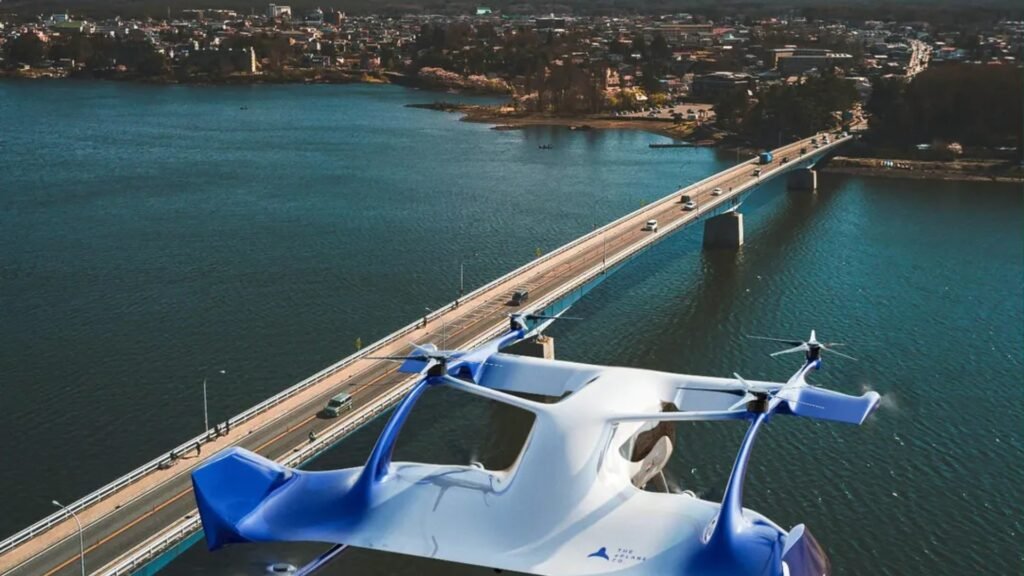
Chennai, India: The ePlane Company, a deep-tech aerospace startup incubated at the Indian Institute of Technology (IIT) Chennai, has announced a significant milestone in the development of its e200x electric air taxi: the creation of a high-fir-delity digital twin model built with technology from NVIDIA. The announcement was made on 19 February 2026 in an official statement published by the company.
The digital twin, constructed using NVIDIA’s Omniverse simulation libraries, is a virtual representation of the ePlane eVTOL (electric Vertical Take-Off and Landing) aircraft designed to replicate complex aerodynamic behaviours, sensor inputs and flight scenarios with high precision. Engineers can now simulate interactions that would be expensive, risky or time-consuming to test physically, such as extreme weather conditions and emergency manoeuvres.
To power onboard computing and real-time decision-making, The ePlane Company will deploy NVIDIA’s IGX platform, aimed at integrating multiple sensors like cameras and radar with advanced data-fusion and visualisation capabilities. This system is expected to support autonomy algorithms and enhance situational awareness during flight operations.
In a statement included in the press release, Prof. Satya Chakravarthy, Founder and Chief Technology Officer of The ePlane Company, said the collaboration “blurs the line between the digital and the physical” and allows the company to validate its flight-operations systems extensively through simulation before real-world testing.
The digital twin also functions as a predictive analytics engine, mirroring real-world aircraft behaviour to forecast maintenance requirements. This capability could reduce operational downtime and improve reliability as the e200x moves toward regulatory certification.
The initiative marks a noteworthy advance for India’s growing Urban Air Mobility (UAM) sector, which has seen increasing investment and interest from both government and private players. The ePlane Company holds India’s first Design Organisation Approval (DOA) for a privately developed electric aircraft and operates a 60,000-square-foot manufacturing facility in Chennai.
Despite the technological promise, regulatory frameworks for certifying eVTOL aircraft are still evolving in India and globally, which analysts identify as a key hurdle before large-scale deployment can begin. Moreover, building and validating high-accuracy digital twins requires significant computational resources, including high-performance GPUs and specialised engineering expertise.
The ePlane e200x project essentializes the convergence of advanced simulation tools and next-generation aerospace design, reinforcing India’s ambitions in electric aviation and setting the stage for future developments in aerial mobility.