News
Civil Aviation
Pilot Training
Flight School Analysis
Aviation Jobs
Training
Services
About Us
Contact Us

Azur Air Flight Boeing 757 Makes Emergency Landing In Lanzhou After Mid-Air Alert

Picture of Aviation Today News Desk

Aviation Today News Desk

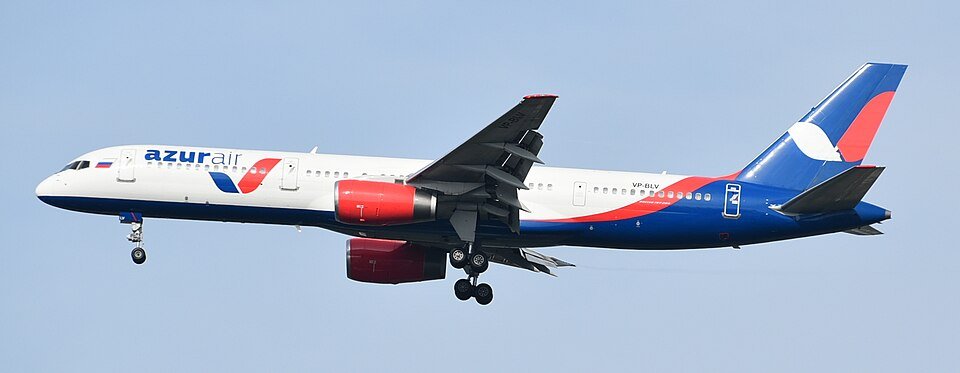
Lanzhou, China: A Russian-registered passenger aircraft made a precautionary emergency landing at Lanzhou Zhongchuan International Airport in northwest China on Friday afternoon after declaring a distress situation while transiting Chinese airspace, Chinese authorities and international sources reported. The Azur Air flight ZF2998, operated by a Boeing 757-200, was en route from Phuket International Airport in Thailand to Barnaul, Russia when the crew activated the transponder code 7700, the internationally recognized signal for a flight emergency. According to airport and media reports, the aircraft circled near Lanzhou and conducted precautionary fuel jettisoning before safely touching down at 4:51 p.m. local time on January 23. All people onboard 239 passengers and seven crew members, totaling 246 individuals disembarked without injury, authorities said. Following the landing, airport officials confirmed that regular departure and arrival operations were maintained without disruption. Passengers have since been transported to accommodation in Lanzhou as part of post-flight arrangements by airport and airline representatives. Initial reports from state and international outlets indicate the emergency diversion was linked to a malfunction in the aircraft’s right engine, prompting the crew’s decision to divert for safety reasons. Specialists are expected to conduct detailed technical inspections of the airframe and propulsion systems. A spokesperson for the airline told media that the aircraft’s technical condition will be evaluated thoroughly to determine the precise cause of the in-flight emergency. A transponder code of 7700 is used globally to signal an aircraft is experiencing a serious in-flight emergency requiring immediate coordination with air traffic control and priority handling. Aviation safety experts note that diversion under such conditions is a routine but critical response to ensure passenger and crew safety.
Image: Alec Wilson (Flickr)

Lanzhou, China: A Russian-registered passenger aircraft made a precautionary emergency landing at Lanzhou Zhongchuan International Airport in northwest China on Friday afternoon after declaring a distress situation while transiting Chinese airspace, Chinese authorities and international sources reported.

The Azur Air flight ZF2998, operated by a Boeing 757-200, was en route from Phuket International Airport in Thailand to Barnaul, Russia when the crew activated the transponder code 7700, the internationally recognized signal for a flight emergency.

According to airport and media reports, the aircraft circled near Lanzhou and conducted precautionary fuel jettisoning before safely touching down at 4:51 p.m. local time on January 23.

All people onboard 239 passengers and seven crew members, totaling 246 individuals disembarked without injury, authorities said.

Following the landing, airport officials confirmed that regular departure and arrival operations were maintained without disruption.

Passengers have since been transported to accommodation in Lanzhou as part of post-flight arrangements by airport and airline representatives.

Initial reports from state and international outlets indicate the emergency diversion was linked to a malfunction in the aircraft’s right engine, prompting the crew’s decision to divert for safety reasons.

Specialists are expected to conduct detailed technical inspections of the airframe and propulsion systems. A spokesperson for the airline told media that the aircraft’s technical condition will be evaluated thoroughly to determine the precise cause of the in-flight emergency.

A transponder code of 7700 is used globally to signal an aircraft is experiencing a serious in-flight emergency requiring immediate coordination with air traffic control and priority handling. Aviation safety experts note that diversion under such conditions is a routine but critical response to ensure passenger and crew safety. 

Leave a Comment

Subscribe to our Newsletter

Recent News

error: Unauthorized copying is not permitted