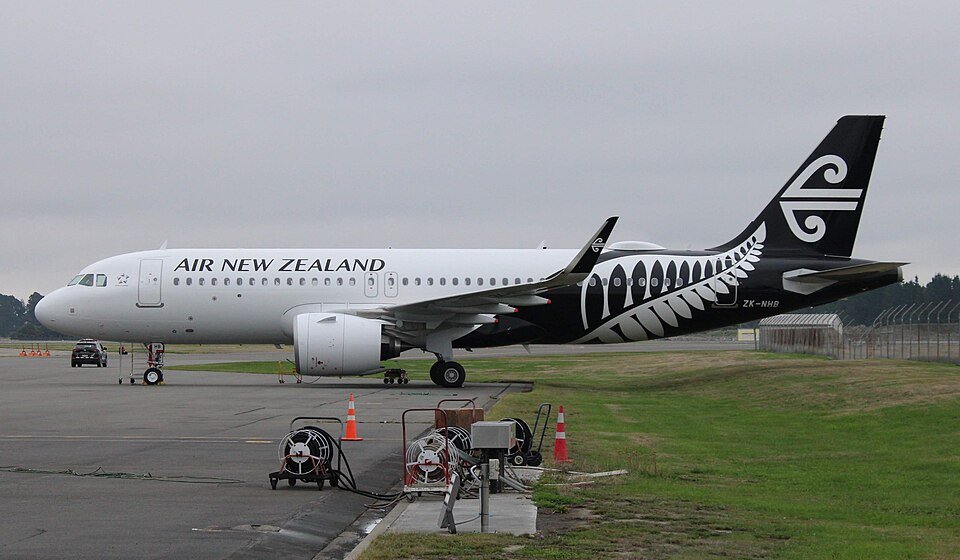
Auckland, New Zealand: An Airbus A320‑Neo operated by Air New Zealand (Flight NZ249) experienced an uncommanded engine shutdown mid‑flight last year, due to a defective fire‑switch, the Transport Accident Investigation Commission (TAIC) confirmed in its interim report released on 4 December 2025.
The incident occurred on 1 December 2024, when the aircraft was en route from Wellington to Sydney. Approximately 40 minutes after takeoff, the No. 2 engine unexpectedly shut down following activation of the overhead fire‑switch despite no pilot input. The crew declared a mayday and safely diverted to Auckland Airport, with all 154 passengers and crew unharmed.
TAIC’s report identifies internal damage to the fire‑switch mechanism as the primary cause. A retaining pin inside the switch had bent, reducing the latching security and allowing vibration or normal operation to trigger the switch inadvertently. Inspections revealed that the panel surrounding the switch also showed signs of deformation, further contributing to the uncommanded activation.
“The fire‑switch is designed to be manually operated only in case of an actual engine fire,” TAIC noted. “Its activation without pilot input posed a significant safety risk.” The commission also highlighted that the same fire‑panel design is used across the global A320 fleet indicating that other aircraft could potentially be affected.
The switch manufacturer had issued service bulletins in late 2024 recommending inspection of previously repaired panels, but those checks focused on visually detectable external damage. Following the ANZ incident, Airbus expanded its guidance to inspect all affected fire‑panels for any signs of deformation within 1,000 flight cycles.
The European Union Aviation Safety Agency (EASA) has since issued an Airworthiness Directive mandating such inspections and, where necessary, replacement of defective panels. Air New Zealand reportedly removed suspect panels from its fleet in early December 2024.
On 28 November 2025, Airbus triggered another major safety action ordering a global recall of approximately 6,000 A320‑family aircraft, following a serious mid‑air flight‑control issue linked to corruption of flight‑control data under intense solar radiation.
In a statement, Airbus described the recall as “precautionary,” urging all operators worldwide to apply an immediate software rollback (or, where required, hardware modifications) before affected aircraft are flown again. This recall reportedly the largest in Airbus’s 55‑year history affects over half of the global A320 fleet and has already prompted airlines across the U.S., Europe, Asia and beyond to ground jets for urgent software updates.