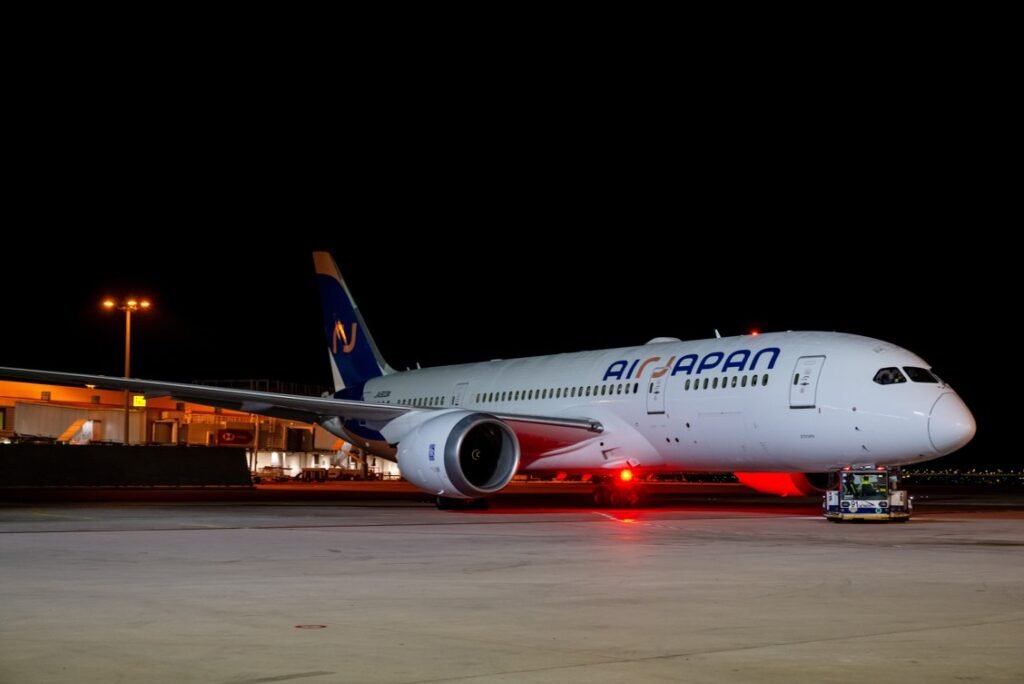
Tokyo, Japan: ANA Holdings has confirmed it will end all scheduled flight operations under the AirJapan (NQ) brand by March 2026, consolidating the hybrid subsidiary into the mainline All Nippon Airways (ANA) network. The company said the move is part of a broader effort to streamline its international operations following persistent supply chain disruptions and aircraft delivery delays.
Under the plan, AirJapan will cease branded flights at the end of March 2026, though it will remain an independent Air Operator’s Certificate (AOC) within the group, operating flights on behalf of ANA. The transition effectively turns AirJapan into a capacity provider for its parent airline rather than a separate commercial brand.
AirJapan had launched in February 2024 to capture inbound leisure traffic to Japan, offering a simplified cabin and unbundled pricing on medium-haul routes. Despite initial optimism, industry analysts noted that demand fluctuations and competition from established low-cost carriers in Southeast Asia made profitability challenging.
AirJapan currently flies three international routes from Tokyo Narita to Bangkok Suvarnabhumi, Singapore Changi, and Seoul Incheon using two Boeing 787-8s and one 787-9. These services will continue until the end of March 2026, with the final scheduled flight from Singapore to Narita set for March 29, 2026.
After the withdrawal of its standalone operations, AirJapan’s aircraft and crews will be fully integrated into ANA’s international division, maintaining service continuity under the ANA brand identity.
The decision follows ongoing operational challenges affecting the Boeing 787 fleet across ANA Holdings, five of ANA’s 34 B787-8s and five of 43 B787-9s remain inactive due to supply chain issues and maintenance delays linked to engine and component shortages. These disruptions have constrained AirJapan’s growth plans, which initially targeted a five-aircraft fleet by late 2025.
ANA Holdings also cited the prolonged impact of the Russian invasion of Ukraine, which forced route diversions and increased operational costs for Japan-Europe flights.
ANA Group said the integration would “expand the ANA brand’s international business by leveraging AirJapan’s operational expertise and high service quality.”
The carrier’s hybrid model positioned between ANA’s full-service offering and the low-cost Peach Aviation brand struggled to achieve sustainable margins in a competitive post-pandemic market. ANA executives acknowledged that maintaining a third brand had become less viable amid rising costs and limited aircraft availability.