By Captain Shahinsha S.K (A Seasoned Pilot Trainer and Former CFI & HT-DE)
When I fly from Hyderabad to Dubai in 2025, the calendar shows the same year. Yet symbolically, I am traveling nearly 20 years forward in time from a city still evolving to one already living in the future. The same contrast exists in aviation training.
An Indian cadet training under DGCA rules in 2025 is learning today’s standards. An Indian cadet training under EASA regulations in Europe is being shaped by standards India may take another decade to adopt. In effect, that cadet is training in 2035, while many of his peers remain in 2025.
The Cockpit Paradox
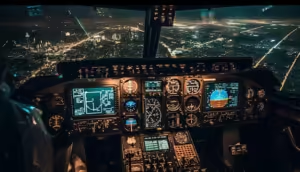
Aviation has transformed dramatically in just over 100 years:
- The mechanical cockpit demanded total human efficiency.
- The glass cockpit shared efficiency with machines.
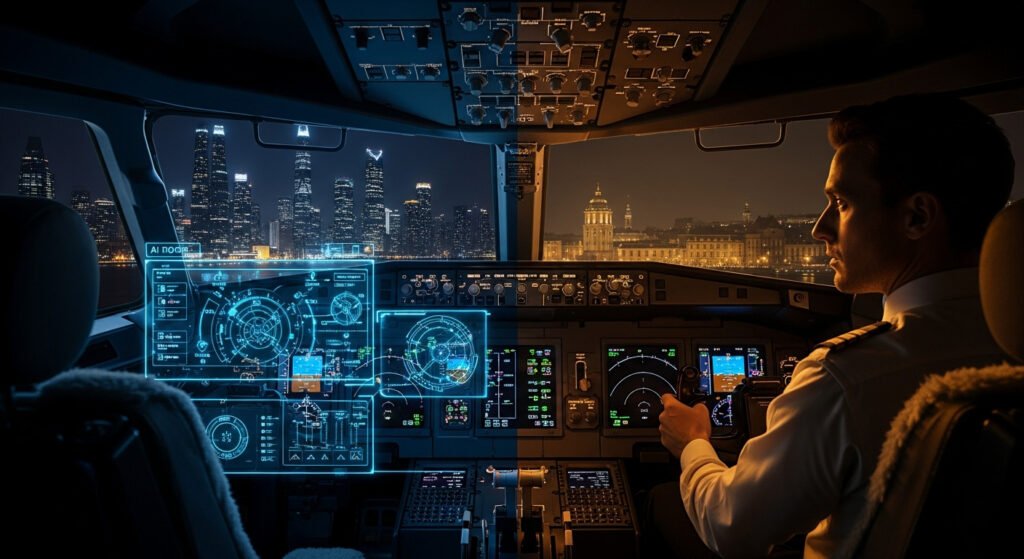
- The future cockpit runs on automation, AI, and algorithms.
And yet, when machines fail, it is the human brain that must take over.
Here lies the paradox: as automation rises, the demand for human efficiency must not disappear; it must become sharper, deeper, and more refined.
The Indian Risk
India is the fastest-growing aviation market in the world. Fleets are expanding, passenger numbers are doubling, and thousands of pilots are urgently needed. But the critical question remains: will these pilots be masters of the cockpit, or merely monitors of automation?
Under the DGCA system, cadets are largely trained within a test-heavy, rote-learning framework. Under EASA, cadets are trained for competence, resilience, decision-making, and adaptability. This gap is not academic. It directly affects safety, confidence, and international credibility.
Global Lessons
Aviation history has repeatedly warned us about the dangers of overreliance on automation:
- Air France 447: pilots struggled to manage manual flight after autopilot disengaged.
- Asiana 214: excessive dependence on systems led to fatal misjudgments.
Europe reformed its training philosophy after these lessons. India cannot afford to wait for its own wake-up call.
A Call for Urgency
This is not about Europe versus India. It is about the future versus the present. Every Indian cadet who trains under EASA today returns as a messenger from the future, carrying skills and mindsets India has yet to fully embrace.
“Automation will continue to rise. Human efficiency must evolve, not vanish.”
If India wants its pilots to stand shoulder-to-shoulder with the best in the world, DGCA must reform now, not tomorrow. Not in 10 years. But now. Are we ready?