Warsaw, Poland: NATO has authorised the forward deployment of an Airborne Warning and Control System (AWACS) aircraft to Poland following the discovery of three Russian Kh-101 cruise missile remnants at separate locations in the country after an airspace incursion on November 20, 2026.
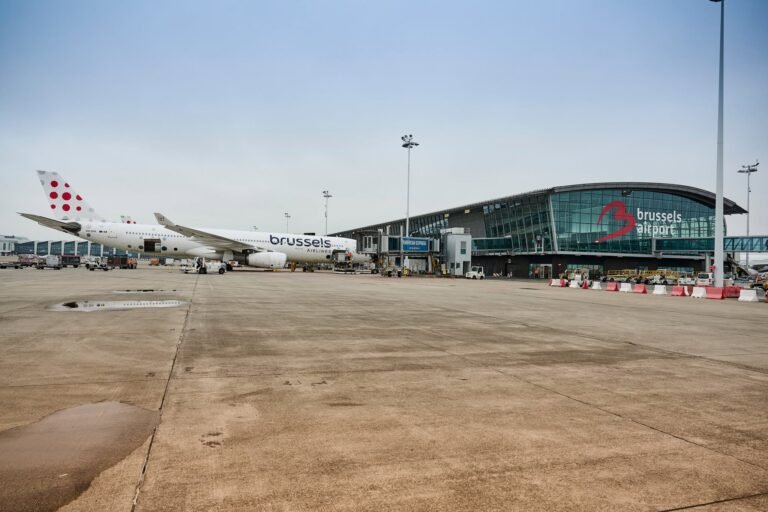
The authorisation was confirmed on November 23 by NATO spokesperson Allison Hart, following a meeting of NATO ambassadors in Brussels under the North Atlantic Council. Hart said the Supreme Allied Commander Europe (SACEUR), General Alexus G. Grynkewich, had authorised the deployment.
“NATO and Allied assets reacted quickly to the airspace violations, and the Supreme Allied Commander Europe (SACEUR) has authorized the forward deployment of a NATO Airborne Warning and Control System (AWACS) aircraft,” Hart said in a statement posted on X.
“All Allies stand in full solidarity with Poland. NATO remains united, ready, and committed to defending against any threat,” she added. Hart also said SACEUR was examining the deployment of additional assets as NATO continued assessing its deterrence and defence posture in Poland and elsewhere.
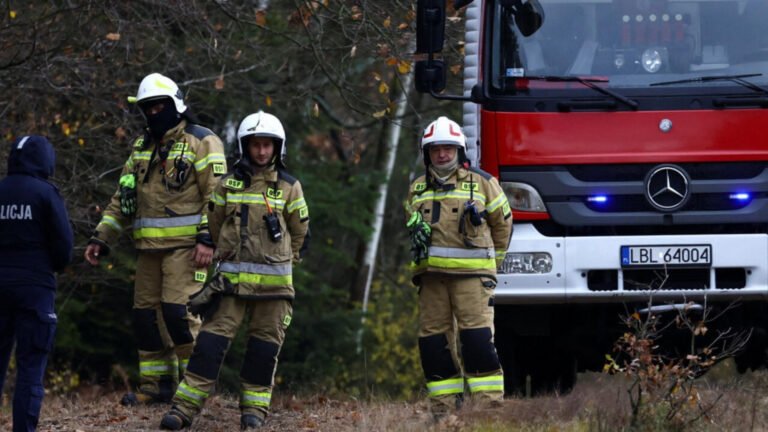
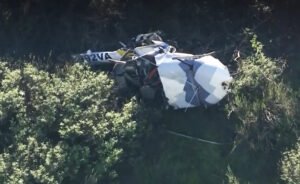
The decision followed the November 20 incident, when Russian objects breached Polish airspace during attacks on Ukraine. According to the Polish Prime Minister’s Office, the objects fell near Nowy Lipowiec, Rudnik nad Sanem and Mołodycz in eastern and southeastern Poland.
Initial assessments identified a Kh-101 cruise missile at Nowy Lipowiec, a suspected missile at Rudnik and a possible jet-powered drone at Mołodycz. However, the District Prosecutor’s Office in Lublin reported on November 22 that preliminary examinations, supported by specialists in military technology, had identified remnants of Russian Kh-101 cruise missiles at all three locations.
Prosecutors said preliminary findings indicated that the missiles were manufactured during the fourth quarter of 2026 at facilities in Dubna, in Russia’s Moscow region. The recovered material was sent for further laboratory examinations and expert analysis to establish the circumstances surrounding the incidents, including the type of warheads, flight trajectories and possible causes of the missiles’ falls.
Polish Deputy Prime Minister and Defence Minister Władysław Kosiniak-Kamysz said on November 20 that Polish and allied aircraft had operated overnight in response to the incident. Polish F-16 fighters and Swedish Gripen aircraft were deployed, with a Dutch Air Force tanker providing aerial refuelling support. Poland also activated a Saab early-warning and reconnaissance aircraft over the Lublin and Subcarpathian regions.
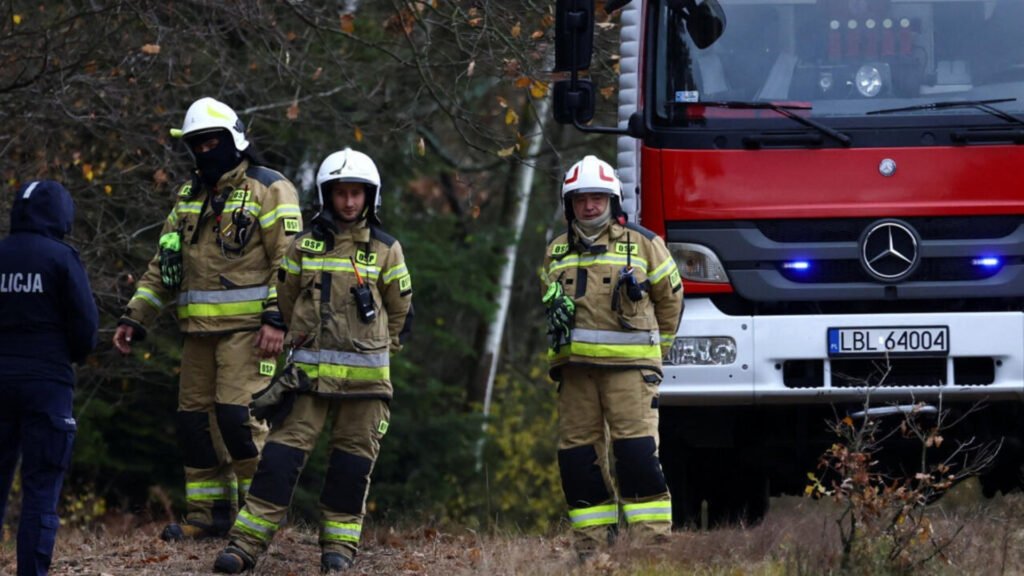
The minister confirmed that Patriot air-defence systems around Rzeszów-Jasionka Airport and near Świdnik, alongside Poprad and Pilica+ ground-based systems, had been activated. Helicopters and three Territorial Defence brigades also participated in the response. Kosiniak-Kamysz said no casualties or damage to critical infrastructure had been reported.
Polish Prime Minister Donald Tusk described the incident as a possible intentional provocation and said Poland would engage its allies on strengthening security along NATO’s eastern flank. He said, “We know for certain that what fell on Polish soil is from Russia.”
The AWACS deployment adds an airborne surveillance and command-and-control capability to NATO’s response. According to NATO, its Airborne Warning and Control Force operates 14 Boeing E-3A aircraft from Geilenkirchen Air Base in Germany. The aircraft use long-range radar and onboard sensors to detect, track and identify potential aerial threats, while supporting command and control of allied fighter aircraft.
NATO’s published technical specifications state that an E-3A aircraft operating at 30,000 feet can provide surveillance coverage exceeding 312,000 square kilometres. Its radar can detect low-altitude targets within approximately 400 kilometres and medium-altitude targets within 520 kilometres.
NATO has not publicly specified the aircraft’s arrival date, deployment duration or the precise operating location in Poland. The Alliance has, however, confirmed that SACEUR is examining whether additional assets are required as part of its wider deterrence and defence assessment.