Ankara, Turkey: Turkey has ruled out sabotage, explosives, and any form of external attack in the crash of a Turkish Air Force C-130 military transport aircraft near the Georgia-Azerbaijan border, according to early findings released as part of the ongoing investigation.
The aircraft, a Lockheed C-130 Hercules, crashed on November 11, 2025, while operating a return flight from Ganja in Azerbaijan to Merzifon Air Base in Turkey. All 20 personnel on board, including crew members and military technical staff, were killed in the accident, making it one of the deadliest recent incidents involving the Turkish Air Force.
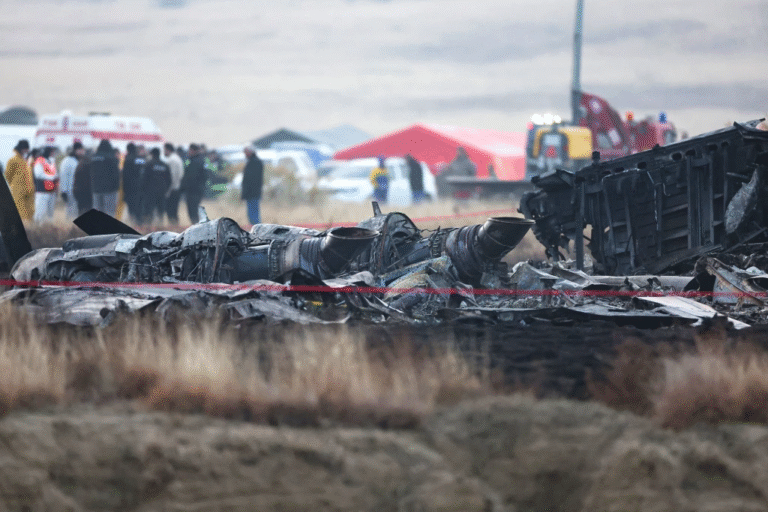
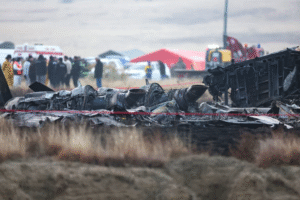
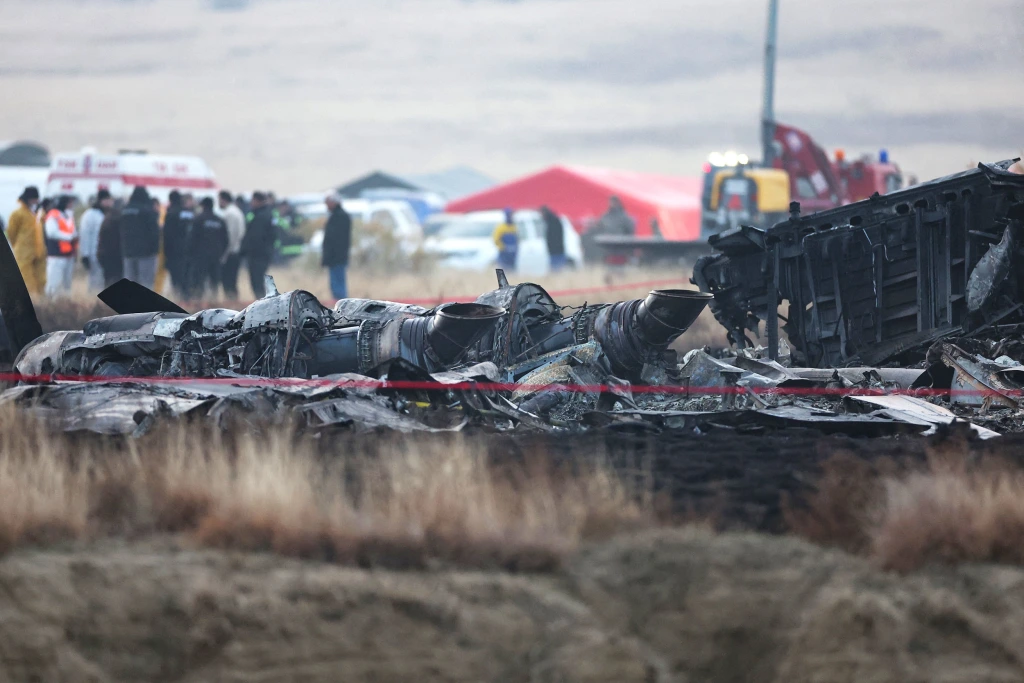
Initial data from the time of the crash indicated a sudden and catastrophic in-flight breakup. The aircraft was cruising at altitude when it disappeared from radar without issuing a distress call. Tracking data showed a rapid and uncontrolled descent, with the aircraft breaking into multiple sections mid-air before crashing in Georgia’s Kakheti region near the Azerbaijan border. The wide debris field and separation of major components suggested structural failure occurred before ground impact.
According to the latest findings cited by Caliber and supported by Turkish authorities, forensic examinations have found no evidence of explosives, missile strike, or any external interference. Investigators reported no traces of bomb residue, shrapnel, or chemical agents, effectively ruling out sabotage or a hostile act. Turkish officials have also dismissed circulating claims suggesting the aircraft may have been shot down, describing them as unfounded.
With external causes eliminated, the investigation has now narrowed its focus to possible internal factors, including mechanical malfunction or structural failure. Preliminary assessments suggest that a critical structural component, possibly in the tail section, may have failed mid-flight, leading to the aircraft breaking apart into multiple sections. The exact sequence of events, however, remains under detailed examination.
The aircraft had undergone modernization in recent years and reportedly completed maintenance checks roughly a month before the crash. Despite this, investigators are examining whether structural fatigue, system failure, or an undetected defect could have triggered the catastrophic breakup.
Authorities continue to analyse data from the flight data recorder and cockpit voice recorder, which are expected to play a key role in determining the final cause. Officials have indicated that a comprehensive final report will only be released after full technical, forensic, and operational analysis is completed.
Following the accident, Turkey temporarily grounded its C-130 fleet for safety inspections and deployed a large investigation team to the crash site. Wreckage recovered from the mountainous terrain has been transported for detailed examination as part of the probe.
While early findings have provided clarity by ruling out external factors, the final report is expected to establish the precise cause and sequence of failures that led to the mid-air breakup of the aircraft.