News
Civil Aviation
Pilot Training
Flight School Analysis
Aviation Jobs
Training
Services
About Us
Contact Us

Preliminary Report On Baramati Crash Flags Low Visibility, Instructor-Handled Tower

Picture of Aviation Today News Desk

Aviation Today News Desk

Baramati, India: The Aircraft Accident Investigation Bureau (AAIB) has released its preliminary report into the accident involving a Learjet 45XR aircraft, registration VT-SSK, which crash-landed at Baramati on 28 January 2026, resulting in five fatalities including the Hon’ble Deputy Chief Minister of Maharashtra. IMPORTANT NOTE: As per the AAIB, this report contains preliminary factual information subject to change. In accordance with ICAO Annex 13, the sole objective of this investigation is the prevention of future accidents and not the apportioning of blame or liability. No final conclusions should be drawn from this document at this stage. The aircraft, operated by M/s VSR Ventures Pvt. Ltd., was conducting a non-scheduled passenger flight from Chhatrapati Shivaji Maharaj International Airport (Mumbai) to Baramati. The accident occurred at approximately 0316 UTC (0846 IST) during the landing phase on Runway 11 at the uncontrolled Baramati airfield. Aircraft and Crew The aircraft was a Learjet 45XR (Serial No. 417), manufactured in 2010 and powered by Honeywell TFE 731-20BR-1B engines. It held a valid Certificate of Airworthiness and Airworthiness Review Certificate at the time of the accident. The aircraft had accumulated 4,915:48 total airframe hours. On board were two flight crew members, one cabin attendant and two passengers. All five occupants sustained fatal injuries. The Pilot-in-Command, aged 61, held an Airline Transport Pilot Licence (ATPL) and had 18,855 total flying hours, including 2,815 hours on type. The First Officer, aged 25, held a Commercial Pilot Licence (CPL) and had 2,490 total flying hours, including 2,243 hours on type. Both pilots were current and medically valid. Pre-flight breath analyser tests conducted prior to departure were reported as negative. Flight and Approach The flight departed Mumbai after filing a flight plan to Baramati, with Pune and Mumbai listed as alternates. The aircraft took off from Runway 27 at Mumbai and climbed to FL190 before descending toward Baramati. Baramati is an uncontrolled airfield managed by M/s Maharashtra Airport Development Company Limited (MADC). The aerodrome permits only Visual Flight Rules (VFR) operations and does not have navigational aids other than windsocks. The runway orientation is 11/29, with displaced thresholds of 1,400 ft for Runway 11 and 500 ft for Runway 29. According to the report, the airfield does not have a Meteorological (MET) facility. Weather information is relayed using instruments installed in a temporary tower operated by one of the flying training organisations based at the airfield. During the initial approach, the crew requested visibility information and were advised it was 3 kilometres. The report notes that the visibility required for VFR flight is 5 kilometres. The aircraft continued the approach but initiated a go-around. On the second approach to Runway 11, the aircraft reported the field in sight and was cleared to land. Winds were reported as calm. Shortly thereafter, the aircraft was heard transmitting “Oh S**T Oh S**T” before impacting terrain to the left of Runway 11, abeam the threshold. CCTV footage from a nearby village reportedly showed the aircraft banking to the right before striking trees and impacting ground approximately 50 metres left of the runway edge. The aircraft was engulfed in fire and was destroyed. Aerodrome Observations During on-site inspection, investigators observed faded runway markings and the presence of loose gravel on the runway surface. The last runway re-carpeting was conducted in March 2016. The report also states that the aerodrome does not have an in-house Aircraft Rescue and Fire Fighting (ARFF) unit. Firefighting and ambulance services are provided by the Baramati Municipal Corporation upon request. Additionally, the aerodrome does not have a boundary wall, and fencing was reported to be inadequate. Weather Context METAR data from nearby controlled airports showed reduced visibility conditions on the morning of the accident. Pune reported visibility as low as 2,000 metres between 0240 and 0300 UTC, while Mumbai reported 2,500 metres visibility during the period. Satellite imagery from INSAT-3DR indicated no significant clouding over Pune but suggested the presence of shallow fog patches in the vicinity of Baramati. Flight Recorders Both the Solid-State Flight Data Recorder (SSFDR) and Solid-State Cockpit Voice Recorder (SSCVR) were recovered from the tail section. Although both units sustained thermal damage, raw data from the SSFDR has been successfully downloaded at the AAIB laboratory in New Delhi and is under analysis. Due to thermal damage and manufacturer considerations, assistance has been sought from the United States to recover data from the SSCVR, in accordance with ICAO Annex 13 provisions. The National Transportation Safety Board (NTSB), USA, has appointed an Accredited Representative and technical advisers to assist in the investigation. Interim Safety Recommendations Based on interim findings, the AAIB has issued safety recommendations to the Directorate General of Civil Aviation (DGCA). These include directing operators conducting VFR flights to uncontrolled airfields to strictly adhere to standard operating procedures, and ensuring flying operations are permitted only when prevailing meteorological conditions meet regulatory criteria. The AAIB has also recommended that DGCA issue directions to stakeholders responsible for managing uncontrolled airfields to maintain required safety standards, enhance landing aids and basic MET facilities, and examine the feasibility of licensing such aerodromes for regulated operations.
Image: Aircraft Accident Investigation Bureau (AAIB)

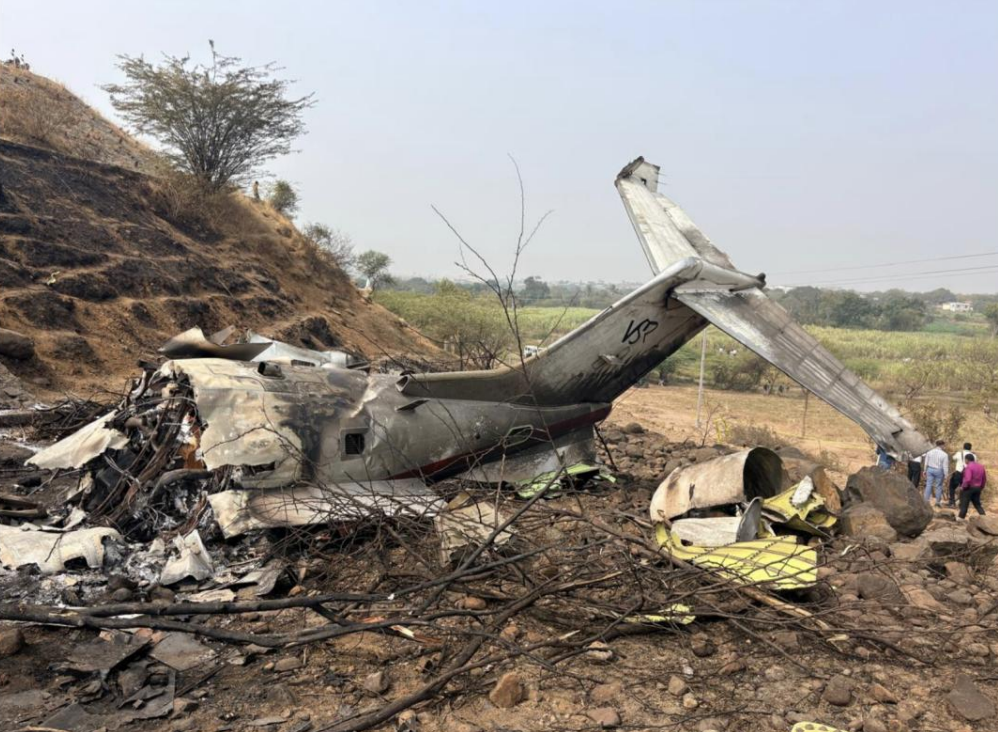
Baramati, India: The Aircraft Accident Investigation Bureau (AAIB) has released its preliminary report into the accident involving a Learjet 45XR aircraft, registration VT-SSK, which crash-landed at Baramati on 28 January 2026, resulting in five fatalities including the Hon’ble Deputy Chief Minister of Maharashtra.

IMPORTANT NOTE: As per the AAIB, this report contains preliminary factual information subject to change. In accordance with ICAO Annex 13, the sole objective of this investigation is the prevention of future accidents and not the apportioning of blame or liability. No final conclusions should be drawn from this document at this stage.

The aircraft, operated by M/s VSR Ventures Pvt. Ltd., was conducting a non-scheduled passenger flight from Chhatrapati Shivaji Maharaj International Airport (Mumbai) to Baramati. The accident occurred at approximately 0316 UTC (0846 IST) during the landing phase on Runway 11 at the uncontrolled Baramati airfield.

The aircraft was a Learjet 45XR (Serial No. 417), manufactured in 2010 and powered by Honeywell TFE 731-20BR-1B engines. It held a valid Certificate of Airworthiness and Airworthiness Review Certificate at the time of the accident. The aircraft had accumulated 4,915:48 total airframe hours.

On board were two flight crew members, one cabin attendant and two passengers. All five occupants sustained fatal injuries.

The Pilot-in-Command, aged 61, held an Airline Transport Pilot Licence (ATPL) and had 18,855 total flying hours, including 2,815 hours on type. The First Officer, aged 25, held a Commercial Pilot Licence (CPL) and had 2,490 total flying hours, including 2,243 hours on type. Both pilots were current and medically valid. Pre-flight breath analyser tests conducted prior to departure were reported as negative.
The flight departed Mumbai after filing a flight plan to Baramati, with Pune and Mumbai listed as alternates. The aircraft took off from Runway 27 at Mumbai and climbed to FL190 before descending toward Baramati.

Baramati is an uncontrolled airfield managed by M/s Maharashtra Airport Development Company Limited (MADC). The aerodrome permits only Visual Flight Rules (VFR) operations and does not have navigational aids other than windsocks. The runway orientation is 11/29, with displaced thresholds of 1,400 ft for Runway 11 and 500 ft for Runway 29.

According to the report, the airfield does not have a Meteorological (MET) facility. Weather information is relayed using instruments installed in a temporary tower operated by one of the flying training organisations based at the airfield.
During the initial approach, the crew requested visibility information and were advised it was 3 kilometres. The report further notes that tower communication at the time was handled by a ground instructor from one of the flying training organisations operating at the airfield. The report notes that the visibility required for VFR flight is 5 kilometres. The aircraft continued the approach but initiated a go-around.

On the second approach to Runway 11, the aircraft reported the field in sight and was cleared to land. Winds were reported as calm. Shortly thereafter, the aircraft was heard transmitting “Oh S**T Oh S**T” before impacting terrain to the left of Runway 11, abeam the threshold.

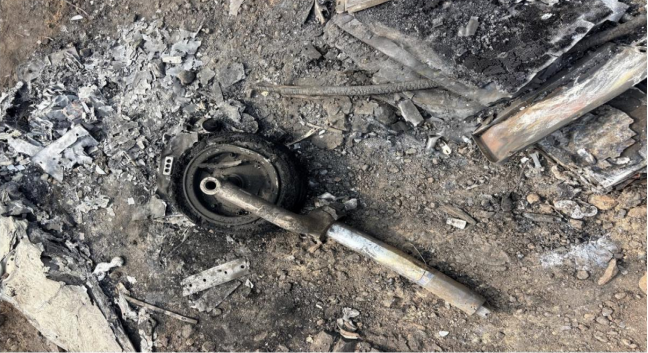
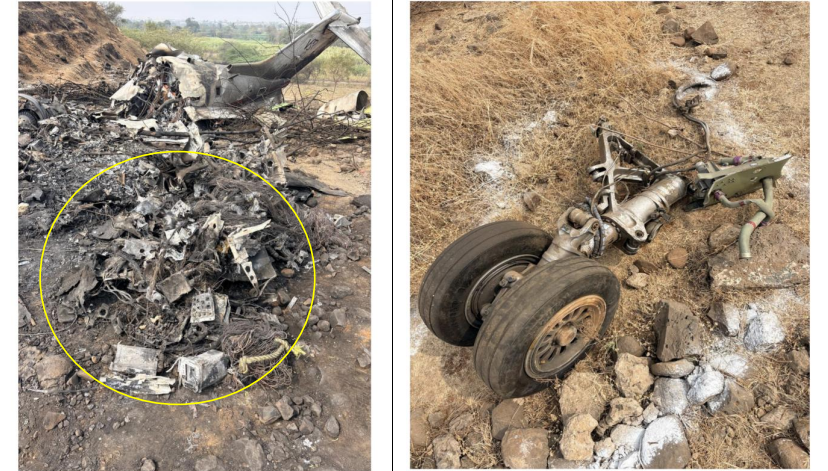
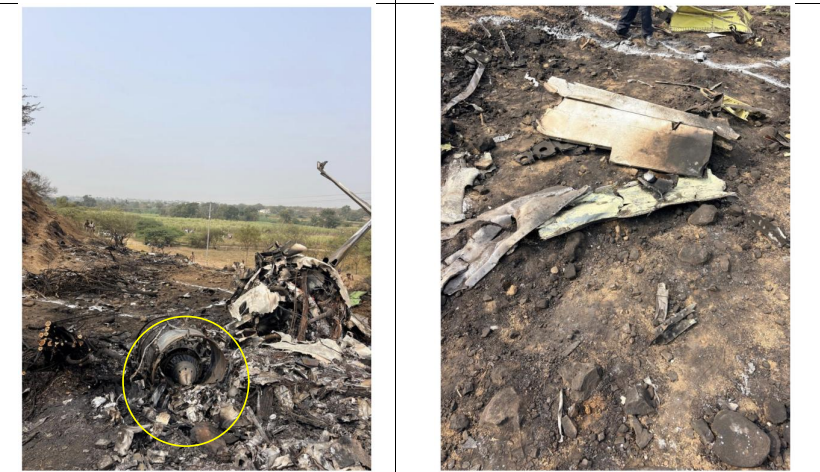
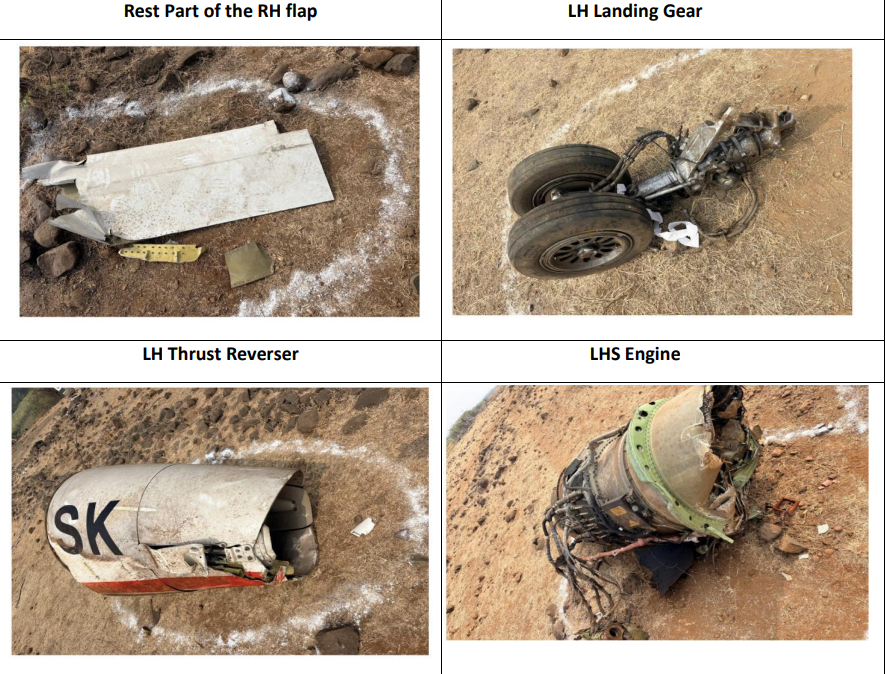
CCTV footage from a nearby village reportedly showed the aircraft banking to the right before striking trees and impacting ground approximately 50 metres left of the runway edge. The aircraft was engulfed in fire and was destroyed.

During on-site inspection, investigators observed faded runway markings and the presence of loose gravel on the runway surface. The last runway re-carpeting was conducted in March 2016.

The report also states that the aerodrome does not have an in-house Aircraft Rescue and Fire Fighting (ARFF) unit. Firefighting and ambulance services are provided by the Baramati Municipal Corporation upon request.

Additionally, the aerodrome does not have a boundary wall, and fencing was reported to be inadequate.
METAR data from nearby controlled airports showed reduced visibility conditions on the morning of the accident. Pune reported visibility as low as 2,000 metres between 0240 and 0300 UTC, while Mumbai reported 2,500 metres visibility during the period

Satellite imagery from INSAT-3DR indicated no significant clouding over Pune but suggested the presence of shallow fog patches in the vicinity of Baramati.
Both the Solid-State Flight Data Recorder (SSFDR) and Solid-State Cockpit Voice Recorder (SSCVR) were recovered from the tail section. Although both units sustained thermal damage, raw data from the SSFDR has been successfully downloaded at the AAIB laboratory in New Delhi and is under analysis.

Due to thermal damage and manufacturer considerations, assistance has been sought from the United States to recover data from the SSCVR, in accordance with ICAO Annex 13 provisions. The National Transportation Safety Board (NTSB), USA, has appointed an Accredited Representative and technical advisers to assist in the investigation.

Based on interim findings, the AAIB has issued safety recommendations to the Directorate General of Civil Aviation (DGCA). These include directing operators conducting VFR flights to uncontrolled airfields to strictly adhere to standard operating procedures, and ensuring flying operations are permitted only when prevailing meteorological conditions meet regulatory criteria.

The AAIB has also recommended that DGCA issue directions to stakeholders responsible for managing uncontrolled airfields to maintain required safety standards, enhance landing aids and basic MET facilities, and examine the feasibility of licensing such aerodromes for regulated operations.

Leave a Comment

Subscribe to our Newsletter

Recent News

error: Unauthorized copying is not permitted