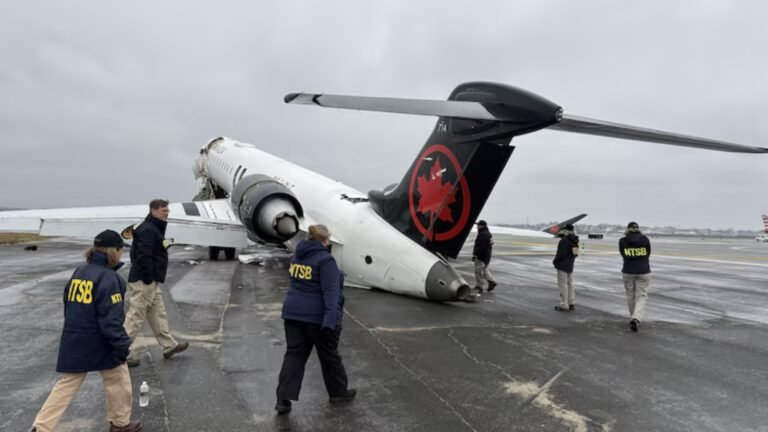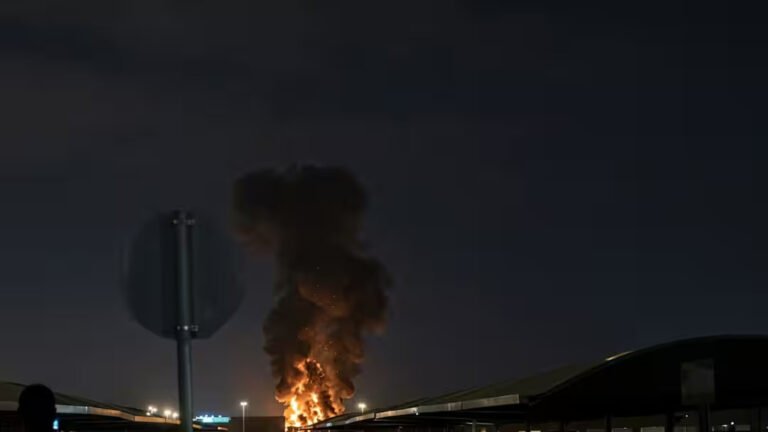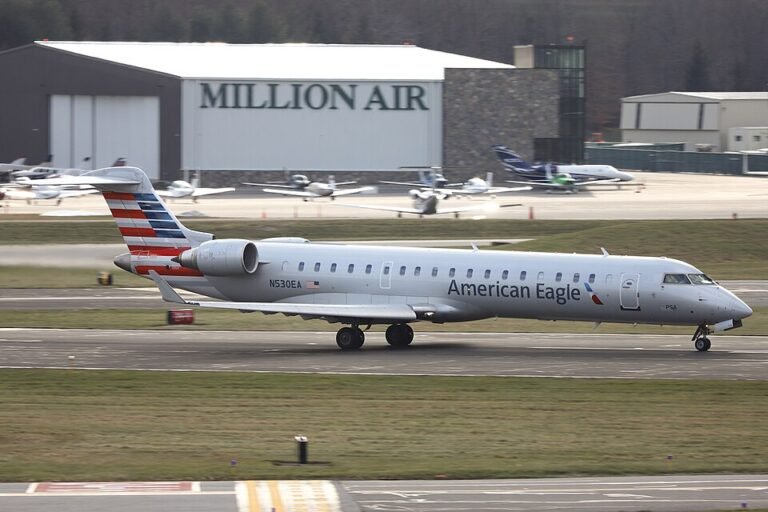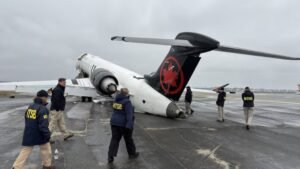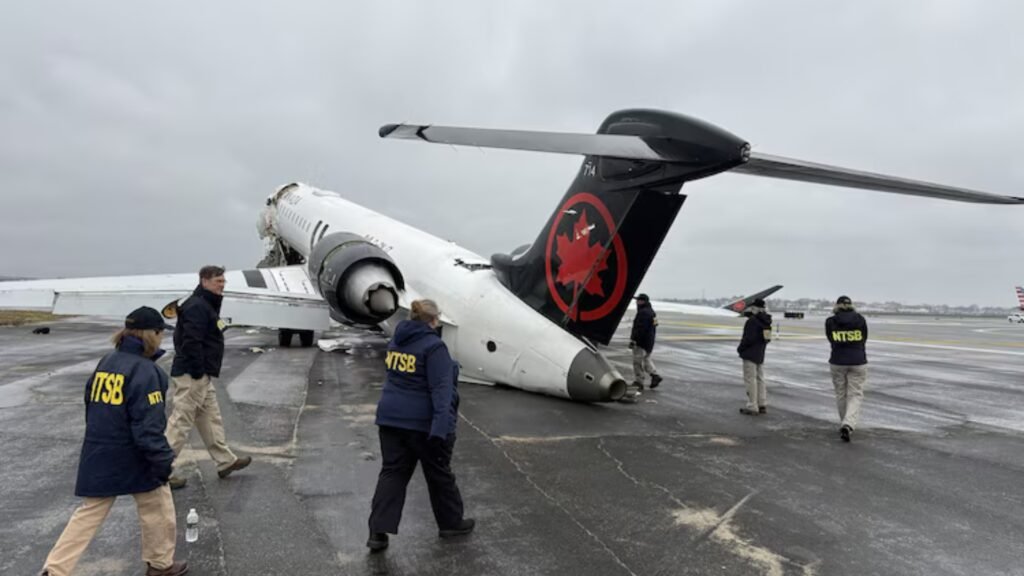
New York, United States: A critical runway safety alert system at LaGuardia Airport (LGA) failed to issue a warning before an Air Canada Express jet struck a Port Authority fire‑rescue vehicle on the runway late Sunday night, federal investigators confirmed Tuesday. The National Transportation Safety Board (NTSB) said the absence of an alert is a central focus of its ongoing probe into the crash that killed both pilots and injured dozens of passengers and crew.
The March 22 collision involved Air Canada Express Flight 8646, a Bombardier CRJ‑900 arriving from Montréal with 76 people aboard. The aircraft was landing when it collided at high speed with an airport rescue‑and‑firefighting vehicle responding to another incident at the busy New York City airport. Two pilots were killed and at least 41 people were hurt in the impact.
In a press briefing, NTSB Chair Jennifer Homendy said the runway surveillance system at LGA designed to track ground movements of aircraft and vehicles“did not alert” air traffic controllers before the collision.
Homendy explained that the failure stemmed from the fire truck’s lack of a transponder, a device that broadcasts its position to radar and ground detection systems. Without that signal, the alert system was unable to generate a confident track of the vehicle’s movements and therefore did not issue a warning of the imminent danger.
NTSB officials noted that the crash occurred amid complex surface movements near the runway, with vehicles merging and un‑merging, which further complicated the system’s ability to create a reliable track. Even though the physical safety system was functioning, its inability to detect the non‑transponder‑equipped truck prevented an alert that might have given controllers and flight crews crucial extra seconds to respond.
Homendy also confirmed there were two controllers in the LGA air traffic control tower at the time of the accident the local controller and the controller in charge which she said is consistent with standard operating procedures for the airport’s midnight shift.
The NTSB is reviewing whether controller workload, shift changes, and the emergency duties being handled at the time played any role in the decision to authorize the fire truck’s runway crossing just seconds before the jet touched down. Officials are examining cockpit voice recordings and communications to better understand how the sequence unfolded.
Homendy stressed that NTSB rarely finds a single cause in accidents of this scale, saying investigators are examining “many, many things” and that any conclusions are preliminary.