News
Civil Aviation
Pilot Training
Flight School Analysis
Aviation Jobs
Training
Services
About Us
Contact Us

Nearly 12 Years On, New Search Fails to Find Malaysia Airlines Flight MH370 Wreckage

Picture of Aviation Today News Desk

Aviation Today News Desk

Nearly 12 Years On, New Search Fails to Find Malaysia Airlines Flight MH370 Wreckage SEO DES: On 8 March 2014, the Boeing 777-200ER, carrying 239 people, vanished less than an hour after departing Kuala Lumpur for Beijing SOCIAL: Nearly 12 years after Malaysia Airlines Flight MH370 disappeared on 8 March 2014, the latest deep-sea search in the southern Indian Ocean has ended without locating the aircraft’s wreckage. The Boeing 777-200ER, carrying 239 people, vanished less than an hour after departing Kuala Lumpur for Beijing, and investigators believe it diverted before crashing in the ocean. Massive multinational searches between 2014 and 2017 and a renewed 2025–2026 mission by Ocean Infinity under a “no find, no fee” agreement failed to find the main wreckage, though some debris washed ashore on Indian Ocean islands. Meanwhile, a Beijing court ordered Malaysia Airlines to pay about 2.9 million yuan in compensation to families of eight victims, while relatives and advocacy group Voice370 continue urging authorities to extend search efforts for the aircraft. Image: Laurent ERRERA (Flickr) Video: Malaysia Airlines Kuala Lumpur, Malaysia: Nearly 12 years after Malaysia Airlines Flight MH370 vanished from radar on 8 March 2014, the latest deep‑sea search has ended without locating the aircraft’s wreckage, leaving one of modern aviation’s greatest mysteries unresolved and families of the missing urging renewed efforts. Malaysia Airlines Flight MH370, a Boeing 777‑200ER registered as 9M‑MRO, departed Kuala Lumpur International Airport at 00:41 local time bound for Beijing with 239 people on board including passengers and crew from more than a dozen countries. Less than an hour after takeoff, the flight’s transponder and primary communications stopped transmitting. The aircraft disappeared from radar screens and was never seen again in normal flight tracking. Investigators later concluded from satellite data that MH370 likely diverted from its planned path westwards over the Strait of Malacca, continued for several hours, and ultimately went down in the southern Indian Ocean. In 2014, authorities from Malaysia, Australia and China launched the largest ocean search in aviation history, focusing on an area of the remote southern Indian Ocean based on satellite signal analysis. Aircraft, ships and underwater sonar scanning were deployed for years. Australia led an extensive seabed search that covered over 120,000 square kilometres, but found no main wreckage. That phase officially ended in January 2017. In the meantime, debris confirmed to be from MH370 washed ashore on various Indian Ocean coastlines, including Réunion Island, Mozambique and Madagascar. These pieces provided some confirmation of the aircraft’s fate but not the crash location. A 2018 Malaysian investigative report into the disappearance was inconclusive, failing to determine a definitive cause but leaving open the possibility that the aircraft was deliberately diverted from its flight path. After a long hiatus, the Malaysian government entered into a no find, no fee” agreement with marine exploration company Ocean Infinity meaning the firm would be paid up to US $70 million only if the wreckage was located. On 25 March 2025, Malaysia signed the agreement and identified a new search area of approximately 15,000 square kilometres of the southern Indian Ocean seabed. Search operations under this accord were conducted in two phases from March 25–28, 2025, and later from 31 December 2025 until 23 January 2026 resulting in 28 operational days scanning around 7,571 square kilometres of seabed using autonomous underwater drones and advanced sonar mapping. Despite these efforts, officials confirmed that the mission ended in January 2026 without any confirmed findings that would pinpoint the aircraft’s wreckage or flight recorders. The conclusion of the latest search, announced as the 12th anniversary of the disappearance approached, prompted renewed calls from families of the passengers and crew for continued efforts. The Chaoyang District People’s Court in Beijing ordered Malaysia Airlines and its international affiliate to pay over 2.9 million yuan (about US $410,000) in compensation to each of the families of eight passengers from Flight MH370 who were declared legally deceased. The award covers death compensation, funeral costs and damages for emotional distress, marking the first formal Chinese court decision on compensation for victims of the 2014 disappearance. Of the original 78 lawsuits filed by relatives of missing passengers, 47 were settled and withdrawn earlier, while 23 cases remain pending because some families have not completed the legal procedures to have passengers declared dead. The ruling comes as renewed search efforts for the aircraft resume in the southern Indian Ocean. Advocacy group Voice370 and relatives said they remain determined to pursue further search operations and urged the Malaysian government to extend Ocean Infinity’s contract beyond its planned expiry in mid‑2026. They also suggested considering other exploration firms under similar terms. In open letters, relatives criticised gaps in communication during the recent search and expressed ongoing grief over the lack of closure. With no confirmed discovery after repeated multinational search efforts spanning more than a decade, MH370 remains one of the most enduring mysteries in aviation. The Malaysian government has stated it will continue to keep families informed and assess future search possibilities.
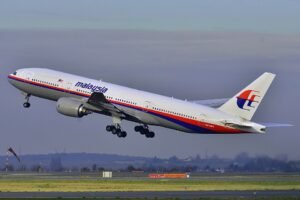
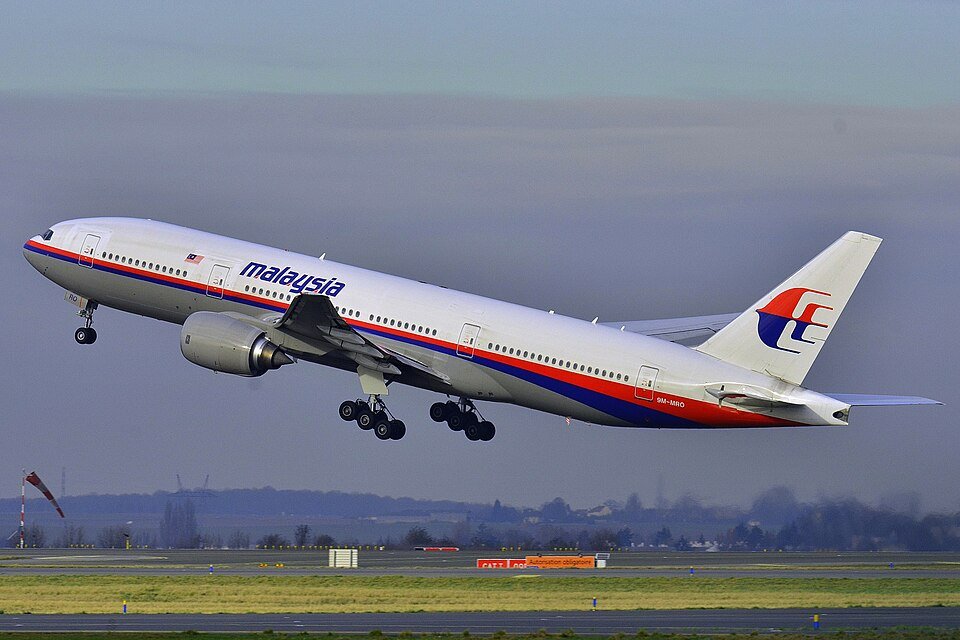
Image: Malaysia Airlines

Kuala Lumpur, Malaysia: Nearly 12 years after Malaysia Airlines Flight MH370 vanished from radar on 8 March 2014, the latest deep‑sea search has ended without locating the aircraft’s wreckage, leaving one of modern aviation’s greatest mysteries unresolved and families of the missing urging renewed efforts.

Malaysia Airlines Flight MH370, a Boeing 777‑200ER registered as 9M‑MRO, departed Kuala Lumpur International Airport at 00:41 local time bound for Beijing with 239 people on board including passengers and crew from more than a dozen countries.

Less than an hour after takeoff, the flight’s transponder and primary communications stopped transmitting. The aircraft disappeared from radar screens and was never seen again in normal flight tracking. Investigators later concluded from satellite data that MH370 likely diverted from its planned path westwards over the Strait of Malacca, continued for several hours, and ultimately went down in the southern Indian Ocean.

In 2014, authorities from Malaysia, Australia and China launched the largest ocean search in aviation history, focusing on an area of the remote southern Indian Ocean based on satellite signal analysis. Aircraft, ships and underwater sonar scanning were deployed for years.

  • Australia led an extensive seabed search that covered over 120,000 square kilometres, but found no main wreckage. That phase officially ended in January 2017.
  • In the meantime, debris confirmed to be from MH370 washed ashore on various Indian Ocean coastlines, including Réunion Island, Mozambique and Madagascar. These pieces provided some confirmation of the aircraft’s fate but not the crash location.

A 2018 Malaysian investigative report into the disappearance was inconclusive, failing to determine a definitive cause but leaving open the possibility that the aircraft was deliberately diverted from its flight path.

After a long hiatus, the Malaysian government entered into a no find, no fee” agreement with marine exploration company Ocean Infinity meaning the firm would be paid up to US $70 million only if the wreckage was located.

  • On 25 March 2025, Malaysia signed the agreement and identified a new search area of approximately 15,000 square kilometres of the southern Indian Ocean seabed.
  • Search operations under this accord were conducted in two phases from March 25–28, 2025, and later from 31 December 2025 until 23 January 2026 resulting in 28 operational days scanning around 7,571 square kilometres of seabed using autonomous underwater drones and advanced sonar mapping.

Despite these efforts, officials confirmed that the mission ended in January 2026 without any confirmed findings that would pinpoint the aircraft’s wreckage or flight recorders.

The conclusion of the latest search, announced as the 12th anniversary of the disappearance approached, prompted renewed calls from families of the passengers and crew for continued efforts.

The Chaoyang District People’s Court in Beijing ordered Malaysia Airlines and its international affiliate to pay over 2.9 million yuan (about US $410,000) in compensation to each of the families of eight passengers from Flight MH370 who were declared legally deceased.

The award covers death compensation, funeral costs and damages for emotional distress, marking the first formal Chinese court decision on compensation for victims of the 2014 disappearance. 

Of the original 78 lawsuits filed by relatives of missing passengers, 47 were settled and withdrawn earlier, while 23 cases remain pending because some families have not completed the legal procedures to have passengers declared dead. The ruling comes as renewed search efforts for the aircraft resume in the southern Indian Ocean. 

Advocacy group Voice370 and relatives said they remain determined to pursue further search operations and urged the Malaysian government to extend Ocean Infinity’s contract beyond its planned expiry in mid‑2026. They also suggested considering other exploration firms under similar terms.

In open letters, relatives criticised gaps in communication during the recent search and expressed ongoing grief over the lack of closure.

With no confirmed discovery after repeated multinational search efforts spanning more than a decade, MH370 remains one of the most enduring mysteries in aviation. The Malaysian government has stated it will continue to keep families informed and assess future search possibilities.

Leave a Comment

Subscribe to our Newsletter

Recent News

error: Unauthorized copying is not permitted