News
Civil Aviation
Pilot Training
Flight School Analysis
Aviation Jobs
Training
Services
About Us
Contact Us

Brazil Formally Accuses 16 Voepass Employees Over 2024 ATR Crash That Killed 62

Picture of Aviation Today News Desk

Aviation Today News Desk

Brazil Formally Accuses 16 Voepass Employees Over 2024 ATR Crash That Killed 62 SEO DES: Brazil's August 6 accusations follow CENIPA's final report after a two-year probe into negligence, maintenance failures, omissions and de-icing issues SOCIAL: Brazilian federal police have formally accused 16 current and former Voepass employees over the August 2024 ATR 72 crash that killed all 62 people aboard. The accusations follow a two-year criminal investigation into alleged negligence and safety failures. The probe cited improper maintenance, omitted technical failures, operational lapses and the aircraft’s de-icing problems. CENIPA’s final report, released July 23, identified 19 contributing factors, including severe icing, crew actions and regulatory weaknesses. The case now moves to Brazil’s Federal Public Prosecutor’s Office, which will assess the evidence and decide whether to bring criminal charges against those accused. Image: BBC Video: FOX 4 Dallas-Fort Worth Vinhedo, Brazil: Brazilian federal police have formally accused 16 current and former Voepass employees over the August 2024 crash of an ATR 72-500 that killed all 62 people aboard, opening a new criminal-responsibility chapter in the investigation nearly two years after the aircraft fell in Vinhedo, São Paulo. The accusations were announced by police on Thursday, August 6, 2026, after a two-year investigation into alleged malpractice, negligence, omissions and failures in the airline's operation and maintenance practices. Among those formally accused is Voepass owner and president José Luiz Felicio Filho. Federal police also accused 15 other current and former employees of endangering air traffic safety resulting in a fatal disaster, an offence that can carry a prison sentence of up to 12 years. Some of those accused additionally face allegations involving the omission of technical failures from aircraft logbooks. The 16 accused have not publicly commented on the police action, while prosecutors must now decide whether to bring formal criminal charges. The accident occurred on August 9, 2024, when Voepass Flight 2283 was operating from Cascavel in Paraná to São Paulo-Guarulhos. The ATR 72-500, registration PS-VPB, was carrying 58 passengers and four crew members. During the flight, the aircraft encountered severe icing conditions and progressively lost performance before entering an uncontrolled descent and flat-spin sequence. It fell about 13,000 feet and crashed into the grounds of a gated residential condominium in Vinhedo, killing everyone aboard. The latest criminal investigation has placed particular attention on what happened before the aircraft was dispatched for its final flight. Federal police investigator André Ribeiro said the ATR was irregularly cleared to depart despite known severe icing conditions and despite de-icing system failures occurring on three flights earlier that same day. Investigators also found from the aircraft's recorded data that the de-icing system had repeatedly failed or had been manually switched on and off during 136 flights. Ribeiro said the investigation represented a major turning point for Brazil's approach to aviation accidents and suggested that prosecutors should also examine possible responsibility involving Brazil's National Civil Aviation Agency, ANAC. The police investigation concluded that deliberate omissions, improper maintenance practices and organizational failures contributed directly to the decision to send the aircraft into dangerous weather. The new accusations follow the technical investigation already completed by Brazil's Center for Investigation and Prevention of Aeronautical Accidents, CENIPA. The Brazilian Air Force officially released the CENIPA final report on July 23, 2026, during a press conference in Brasília, after first presenting its findings privately to representatives and relatives of the victims. The 266-page report, identified as A-116/CENIPA/2024, was subsequently made available to the public through the CENIPA system. CENIPA did not assign criminal blame. Instead, its investigation reconstructed the technical, operational, human, organizational and regulatory factors that contributed to the accident. The report identified 19 contributing factors, including severe icing, failures involving the aircraft's de-icing system, crew actions, operational decision-making, maintenance shortcomings, organizational weaknesses and deficiencies in regulatory oversight. Earlier problems involving the aircraft's Airframe De-Icing system were not properly entered into maintenance records, while some maintenance activities were carried out without adequate supervision. CENIPA investigator Lieutenant Colonel Paulo Mendes Fróes said the company had developed a practice in which pilots and mechanics did not formally record aircraft problems so that aircraft could continue operating the following day. CENIPA said the crew's ability to process the warnings may have been affected by high workload and the phenomena known as “inattentional blindness” and “inattentional deafness”, in which critical information can fail to receive adequate attention despite being available to the crew. The investigation also identified weaknesses involving cockpit coordination, flight planning, pilot judgment, decision-making and the management of the aircraft's degraded performance. The investigation further found that the aircraft should not have been dispatched at the time of departure because of a fault involving its windshield-wiper system. CENIPA determined, however, that this particular defect did not directly contribute to the crash. More broadly, investigators found that maintenance practices and the airline's organizational processes allowed technical problems to remain unresolved or inadequately documented. ANAC's role also came under scrutiny in the CENIPA report. Investigators found that the regulator had previously identified weaknesses involving Voepass's maintenance controls, technical irregularities and other operational risks, but those findings did not translate into sufficiently effective risk-management measures to prevent the deterioration of the company's safety environment. ANAC said after receiving the report that it would conduct a detailed technical analysis of the findings and recommendations within its area of responsibility, with the review expected to take up to 120 days. CENIPA also issued safety recommendations extending beyond Voepass. One recommendation called for the European Union Aviation Safety Agency, EASA, to work with ATR on reviewing the aircraft's “Degraded Performance” procedure. Another recommendation concerned changing the “increase speed” alert from a caution-level alert to a warning-level alert, which would require immediate corrective action from the crew. With the Federal Police now having formally accused 16 people, the case moves into its next legal stage. The August 6 accusations therefore represent a separate development that follows the technical conclusions released by CENIPA on July 23. The accusations do not themselves constitute convictions or final criminal charges. The Federal Public Prosecutor's Office must determine whether the evidence warrants bringing charges against the accused. For the families of the 62 victims, however, the latest development marks a significant shift from determining what went wrong to examining who may ultimately be held legally responsible for allowing those failures to continue.

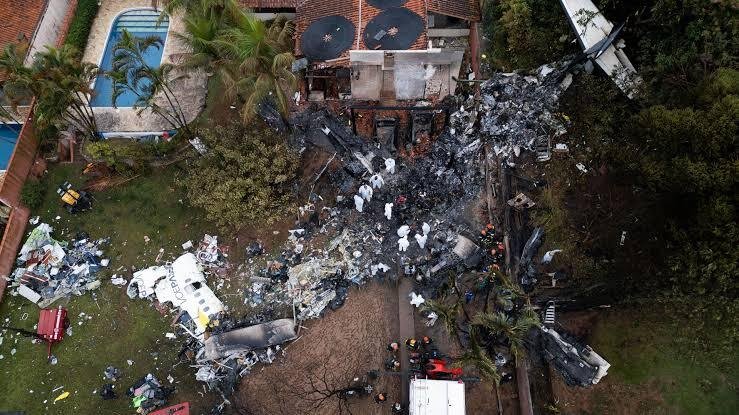
Image: BBC

Vinhedo, Brazil: Brazilian federal police have formally accused 16 current and former Voepass employees over the August 2024 crash of an ATR 72-500 that killed all 62 people aboard, opening a new criminal-responsibility chapter in the investigation nearly two years after the aircraft fell in Vinhedo, São Paulo. The accusations were announced by police on Thursday, August 6, 2026, after a two-year investigation into alleged malpractice, negligence, omissions and failures in the airline’s operation and maintenance practices.

Among those formally accused is Voepass owner and president José Luiz Felicio Filho. Federal police also accused 15 other current and former employees of endangering air traffic safety resulting in a fatal disaster, an offence that can carry a prison sentence of up to 12 years. Some of those accused additionally face allegations involving the omission of technical failures from aircraft logbooks. The 16 accused have not publicly commented on the police action, while prosecutors must now decide whether to bring formal criminal charges.

The accident occurred on August 9, 2024, when Voepass Flight 2283 was operating from Cascavel in Paraná to São Paulo-Guarulhos. The ATR 72-500, registration PS-VPB, was carrying 58 passengers and four crew members. During the flight, the aircraft encountered severe icing conditions and progressively lost performance before entering an uncontrolled descent and flat-spin sequence. It fell about 13,000 feet and crashed into the grounds of a gated residential condominium in Vinhedo, killing everyone aboard.

The latest criminal investigation has placed particular attention on what happened before the aircraft was dispatched for its final flight. Federal police investigator André Ribeiro said the ATR was irregularly cleared to depart despite known severe icing conditions and despite de-icing system failures occurring on three flights earlier that same day. Investigators also found from the aircraft’s recorded data that the de-icing system had repeatedly failed or had been manually switched on and off during 136 flights.

Ribeiro said the investigation represented a major turning point for Brazil’s approach to aviation accidents and suggested that prosecutors should also examine possible responsibility involving Brazil’s National Civil Aviation Agency, ANAC. The police investigation concluded that deliberate omissions, improper maintenance practices and organizational failures contributed directly to the decision to send the aircraft into dangerous weather.

The new accusations follow the technical investigation already completed by Brazil’s Center for Investigation and Prevention of Aeronautical Accidents, CENIPA. The Brazilian Air Force officially released the CENIPA final report on July 23, 2026, during a press conference in Brasília, after first presenting its findings privately to representatives and relatives of the victims. The 266-page report, identified as A-116/CENIPA/2024, was subsequently made available to the public through the CENIPA system.

CENIPA did not assign criminal blame. Instead, its investigation reconstructed the technical, operational, human, organizational and regulatory factors that contributed to the accident. The report identified 19 contributing factors, including severe icing, failures involving the aircraft’s de-icing system, crew actions, operational decision-making, maintenance shortcomings, organizational weaknesses and deficiencies in regulatory oversight.

Earlier problems involving the aircraft’s Airframe De-Icing system were not properly entered into maintenance records, while some maintenance activities were carried out without adequate supervision. CENIPA investigator Lieutenant Colonel Paulo Mendes Fróes said the company had developed a practice in which pilots and mechanics did not formally record aircraft problems so that aircraft could continue operating the following day.

CENIPA said the crew’s ability to process the warnings may have been affected by high workload and the phenomena known as “inattentional blindness” and “inattentional deafness”, in which critical information can fail to receive adequate attention despite being available to the crew. The investigation also identified weaknesses involving cockpit coordination, flight planning, pilot judgment, decision-making and the management of the aircraft’s degraded performance.

The investigation further found that the aircraft should not have been dispatched at the time of departure because of a fault involving its windshield-wiper system. CENIPA determined, however, that this particular defect did not directly contribute to the crash. More broadly, investigators found that maintenance practices and the airline’s organizational processes allowed technical problems to remain unresolved or inadequately documented.

ANAC’s role also came under scrutiny in the CENIPA report. Investigators found that the regulator had previously identified weaknesses involving Voepass’s maintenance controls, technical irregularities and other operational risks, but those findings did not translate into sufficiently effective risk-management measures to prevent the deterioration of the company’s safety environment. ANAC said after receiving the report that it would conduct a detailed technical analysis of the findings and recommendations within its area of responsibility, with the review expected to take up to 120 days.

CENIPA also issued safety recommendations extending beyond Voepass. One recommendation called for the European Union Aviation Safety Agency, EASA, to work with ATR on reviewing the aircraft’s “Degraded Performance” procedure. Another recommendation concerned changing the “increase speed” alert from a caution-level alert to a warning-level alert, which would require immediate corrective action from the crew. 

With the Federal Police now having formally accused 16 people, the case moves into its next legal stage. The August 6 accusations therefore represent a separate development that follows the technical conclusions released by CENIPA on July 23.

The accusations do not themselves constitute convictions or final criminal charges. The Federal Public Prosecutor’s Office must determine whether the evidence warrants bringing charges against the accused. For the families of the 62 victims, however, the latest development marks a significant shift from determining what went wrong to examining who may ultimately be held legally responsible for allowing those failures to continue.


Leave a Comment

Subscribe to our Newsletter

Recent News

Aviation Today Perspectives