News
Civil Aviation
Pilot Training
Flight School Analysis
Aviation Jobs
Training
Services
About Us
Contact Us

IndiGo Tops India In Pilot Numbers But Has Lowest Pilot-To-Aircraft Ratio At 7.6

Picture of Aviation Today News Desk

Aviation Today News Desk

IndiGo Tops India In Pilot Numbers But Has Lowest Pilot-To-Aircraft Ratio At 7.6 SEO DES: SpiceJet has the highest pilots per aircraft, followed by Akasa Air, Air India and Air India Express, while IndiGo ranks lowest among major Indian airlines SOCIAL: The government said IndiGo has the lowest pilot-to-aircraft ratio among Indian airlines at 7.6, meaning about eight pilots per aircraft. Other airlines have higher ratios: SpiceJet (9.4), Akasa Air (9.33), Air India (9.1), and Air India Express (8.8). IndiGo employs about 5,200 pilots, including 970 women, the highest among domestic carriers. Other airlines employ 3,123 pilots at Air India, 1,820 at Air India Express, 761 at Akasa Air, and 375 at SpiceJet. The disclosure comes after IndiGo CEO Pieter Elbers resigned on March 10 following flight disruptions in December 2025 that affected about 3 lakh passengers. The DGCA fined the airline ₹22.20 crore over operational lapses. New Delhi, India: India’s largest airline IndiGo has the lowest pilot-to-aircraft ratio among domestic carriers, the government informed Parliament, highlighting staffing disparities across the country’s aviation sector. The data also reveals six major domestic airlines in India together employ 13,989 pilots. Responding to a question in the Lok Sabha, Minister of State for Civil Aviation Murlidhar Mohol said IndiGo has a pilot-to-aircraft ratio of 7.6, meaning the airline deploys about eight pilots per aircraft on average. Airlines typically assign several pilots to each aircraft because planes operate multiple flights daily and pilots must observe mandatory rest periods under aviation safety regulations. Government data presented to Parliament shows that other Indian carriers maintain higher pilot-to-aircraft ratios than IndiGo: SpiceJet: 9.4 pilots per aircraft Akasa Air: 9.33 pilots per aircraft Air India: 9.1 pilots per aircraft Air India Express: 8.8 pilots per aircraft IndiGo: 7.6 pilots per aircraft The figures place IndiGo at the bottom among India’s major scheduled airlines in terms of pilot availability relative to fleet size. The government also disclosed the total number of pilots employed by major Indian carriers. IndiGo currently employs around 5,200 pilots, including 970 women pilots, the highest number among domestic airlines. Pilot employment across other airlines is as follows: Air India: 3,123 pilots, including 508 women Air India Express: 1,820 pilots, including 234 women Akasa Air: 761 pilots, including 76 women SpiceJet: 375 pilots, including 58 women The data also revealed that Air India Express employs the highest number of foreign (expatriate) pilots at 48, while IndiGo has hired 29 expatriate pilots. The parliamentary disclosure comes days after Pieter Elbers, Chief Executive Officer of IndiGo, resigned on March 10. The leadership change follows a major operational disruption in December 2025, when the airline experienced widespread flight cancellations and delays that affected around 300,000 passengers. Following the incident, India’s aviation regulator Directorate General of Civil Aviation (DGCA) imposed a ₹22.20-crore penalty on the airline for operational lapses. This triggered broader scrutiny of workforce planning and operational preparedness at the country’s largest airline as it continues to expand its fleet and network. India’s aviation sector has been expanding rapidly, with airlines adding aircraft and routes to meet rising passenger demand. The government’s data reflects how pilot availability relative to fleet size varies widely among airlines, a factor that can influence scheduling flexibility and operational resilience.
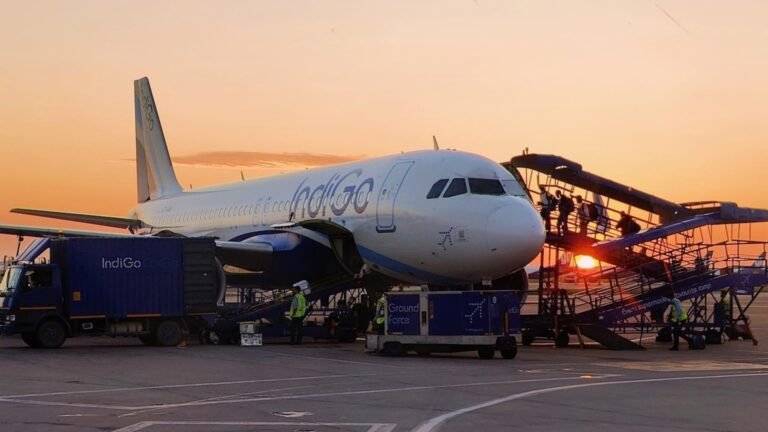
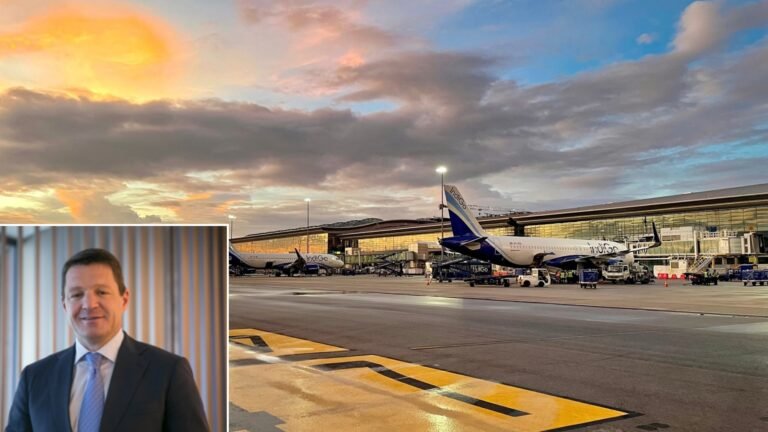
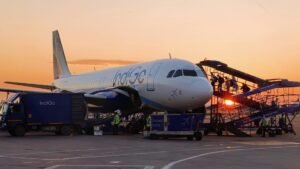
Image: IndiGo

New Delhi, India: India’s largest airline IndiGo has the lowest pilot-to-aircraft ratio among domestic carriers, the government informed Parliament, highlighting staffing disparities across the country’s aviation sector. The data also reveals six major domestic airlines in India together employ 13,989 pilots. 

Responding to a question in the Lok Sabha, Minister of State for Civil Aviation Murlidhar Mohol said IndiGo has a pilot-to-aircraft ratio of 7.6, meaning the airline deploys about eight pilots per aircraft on average.

Airlines typically assign several pilots to each aircraft because planes operate multiple flights daily and pilots must observe mandatory rest periods under aviation safety regulations.

Government data presented to Parliament shows that other Indian carriers maintain higher pilot-to-aircraft ratios than IndiGo:

  • SpiceJet: 9.4 pilots per aircraft
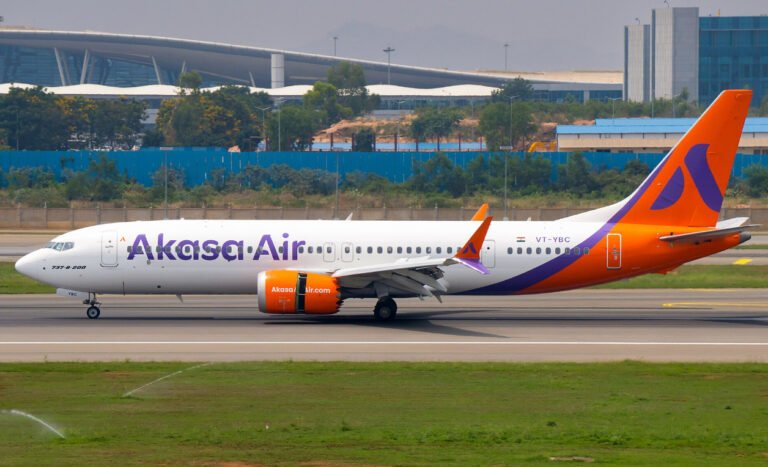
  • Akasa Air: 9.33 pilots per aircraft
  • Air India: 9.1 pilots per aircraft
  • Air India Express: 8.8 pilots per aircraft
  • IndiGo: 7.6 pilots per aircraft

The figures place IndiGo at the bottom among India’s major scheduled airlines in terms of pilot availability relative to fleet size.

The government also disclosed the total number of pilots employed by major Indian carriers.

IndiGo currently employs around 5,200 pilots, including 970 women pilots, the highest number among domestic airlines.

Pilot employment across other airlines is as follows:

  • Air India: 3,123 pilots, including 508 women
  • Air India Express: 1,820 pilots, including 234 women
  • Akasa Air: 761 pilots, including 76 women
  • SpiceJet: 375 pilots, including 58 women

The data also revealed that Air India Express employs the highest number of foreign (expatriate) pilots at 48, while IndiGo has hired 29 expatriate pilots. 

The parliamentary disclosure comes days after Pieter Elbers, Chief Executive Officer of IndiGo, resigned on March 10.

The leadership change follows a major operational disruption in December 2025, when the airline experienced widespread flight cancellations and delays that affected around 300,000 passengers.

Following the incident, India’s aviation regulator Directorate General of Civil Aviation (DGCA) imposed a ₹22.20-crore penalty on the airline for operational lapses.

This triggered broader scrutiny of workforce planning and operational preparedness at the country’s largest airline as it continues to expand its fleet and network.

India’s aviation sector has been expanding rapidly, with airlines adding aircraft and routes to meet rising passenger demand. The government’s data reflects how pilot availability relative to fleet size varies widely among airlines, a factor that can influence scheduling flexibility and operational resilience.


Leave a Comment

Subscribe to our Newsletter

Recent News

error: Unauthorized copying is not permitted