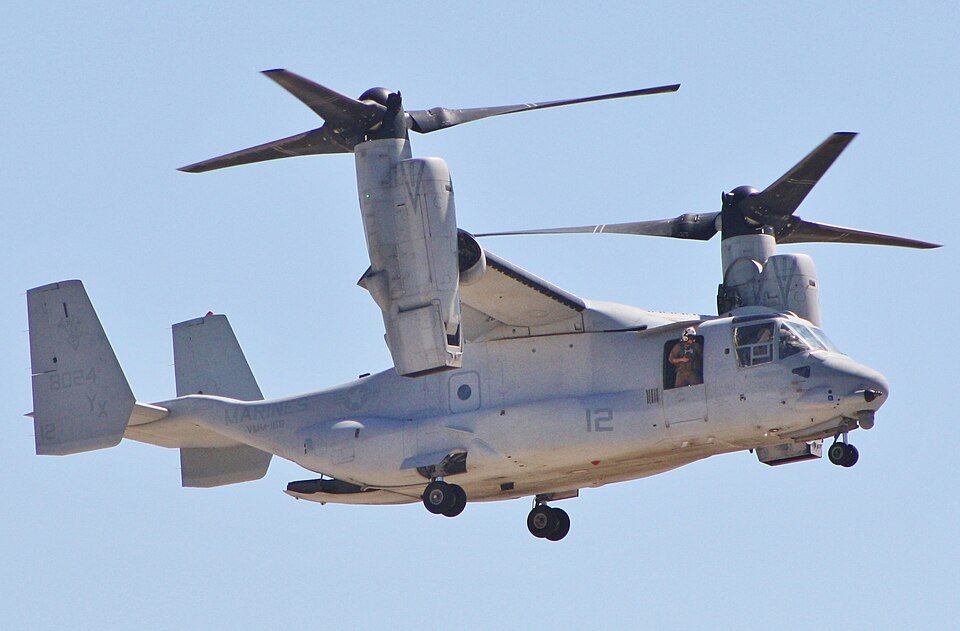
Hawaii, United States: A U.S. Marine Corps MV‑22B Osprey tiltrotor aircraft executed a precautionary emergency landing on February 3, 2026, after experiencing an in‑flight mechanical malfunction, emphasizing persistent reliability issues that have dogged the aircraft for years.
The aircraft, assigned to Marine Medium Tiltrotor Squadron 268 of the 1st Marine Aircraft Wing, touched down in the Tactical Flight Training Area on Oahu, Hawaii, after pilots detected a crack in a proprotor gearbox during flight, according to testimony from military officials and lawmakers.
No injuries were reported among the crew, and the Osprey remained intact, but the aircraft will undergo maintenance and repairs before returning to service, the Marine Corps statement said. The incident occurred days before Naval Air Systems Command leaders were scheduled to brief Congress on progress in addressing longstanding mechanical challenges confronting the V‑22 fleet.
At a February 10 congressional hearing, Navy and Marine Corps representatives acknowledged ongoing risks associated with the aircraft’s complex gearbox and drivetrain system, which transfers power from its engines to the tiltrotor mechanism. Lawmakers were told that while interim gearbox solutions are in service, permanent design improvements remain years away from full implementation.
Vice Admiral John Dougherty, commander of Naval Air Systems Command (NAVAIR), testified that redesigned Input Quill Assemblies intended to eliminate abrupt clutch engagements and similar failures, are slated for fielding in late 2027, with broader fleet upgrades continuing into the early 2030s.
The Marine Corps’ latest aviation plan described the MV‑22 as a “cornerstone” of air‑ground mobility forces due to its speed, range, and versatility, but acknowledged that limitations remain due to safety controls imposed after fatal mishaps.
Recent reviews by the Government Accountability Office (GAO) and military safety offices revealed that V‑22 Ospreys continue to experience higher rates of serious accidents compared with other fixed‑ and rotary‑wing aircraft.
The GAO testimony shared data showing that serious mishap rates involving Ospreys in fiscal years 2022 and 2023 were substantially above historical averages, contributing to congressional concern about the aircraft’s safety profile. A gearbox failure was the root cause of a 2023 Air Force Osprey crash that killed eight airmen and a 2022 crash that killed five Marines.
Additionally, independent assessments noted faulty materials in gearbox components and lapses in inter‑service communication regarding safety and risk data among the Marine Corps, Navy, and Air Force factors that have compounded operational challenges.
Fielding of improved gearboxes began in January 2026, with officials reporting a steady delivery rate of upgraded units to Osprey squadrons. However, full retrofit of the fleet is not expected to be completed until 2027, and broader transmission and avionics modernization programs are planned well into the next decade.
Defense analysts have noted that the V‑22’s tiltrotor design, while offering unmatched operational flexibility, also introduces complex mechanical stresses that have proven difficult to fully mitigate, even after decades of service.