News
Civil Aviation
Pilot Training
Flight School Analysis
Aviation Jobs
Training
Services
About Us
Contact Us

Garuda Indonesia Boeing 737 Lands With Severe Radome Damage Unnoticed During Flight

Picture of Aviation Today News Desk

Aviation Today News Desk

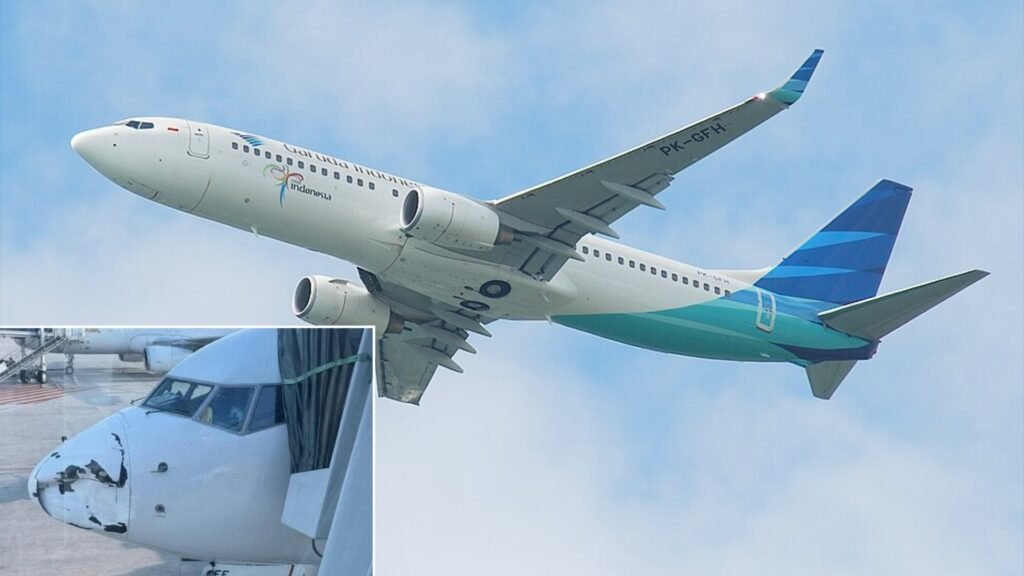
Garuda Indonesia Boeing 737 Lands With Severe Radome Damage Unnoticed During Flight SEO DES: Crew reported no issues & no injuries, the aircraft was grounded for checks the return flight cancelled & passengers were rebooked on Citilink flights SOCIAL: A Garuda Indonesia Boeing 737-800 operating flight GA176 landed safely in Pekanbaru after flying from Jakarta, where engineers later discovered severe damage to the aircraft’s nose radome during a post-flight inspection. The crew reported no abnormalities during the flight, and no injuries occurred. The aircraft was grounded for technical checks, the return flight was cancelled, and passengers were rebooked on alternative services including Citilink. Investigators are examining possible causes such as a bird strike, debris impact, hail, or ground damage. Image: Aero Lcarus (Flickr) Video: Radio Elshinta (X) Pekanbaru, Indonesia: A Garuda Indonesia Boeing 737-800 completed a domestic flight in Indonesia before engineers discovered significant structural damage to the aircraft’s nose radome, prompting an inspection and investigation into the cause of the incident. The aircraft, registered PK-GFF, was operating flight GA176 from Soekarno–Hatta International Airport to Sultan Syarif Kasim II International Airport when the damage occurred. The flight landed safely in Pekanbaru, and no injuries were reported among passengers or crew. According to aviation reports, the flight crew did not detect any abnormalities during the journey. The damage was discovered only after the aircraft arrived at the gate, when ground personnel and maintenance engineers conducted a routine post-flight inspection. Images circulating online showed the aircraft’s radome, the protective nose cone housing the weather radar suffering heavy visible damage. Following the discovery, the airline removed the aircraft from service for technical evaluation. The scheduled return flight from Pekanbaru to Jakarta was cancelled, and affected passengers were accommodated on alternative services, including flights operated by Citilink, the low-cost subsidiary of Garuda Indonesia. A radome is made of lightweight composite material designed to allow radar signals to pass through while protecting sensitive avionics equipment. Because it sits outside the pilots’ field of view and is not a load-bearing structure, certain types of external damage may not immediately produce cockpit alerts or noticeable flight-handling changes. The exact cause of the damage remains under investigation. There can be several possible scenarios, including a bird strike, impact with airborne debris, hail, or damage sustained prior to departure during ground operations. The airline has not yet confirmed the definitive cause. Despite the extent of the visible damage, aviation safety experts note that the aircraft’s safe landing indicates that critical systems continued functioning normally during the flight.
Image: Aero Lcarus (Flickr)

Pekanbaru, Indonesia: A Garuda Indonesia Boeing 737-800 completed a domestic flight in Indonesia before engineers discovered significant structural damage to the aircraft’s nose radome, prompting an inspection and investigation into the cause of the incident.

The aircraft, registered PK-GFF, was operating flight GA176 from Soekarno–Hatta International Airport to Sultan Syarif Kasim II International Airport when the damage occurred. The flight landed safely in Pekanbaru, and no injuries were reported among passengers or crew.

According to aviation reports, the flight crew did not detect any abnormalities during the journey. The damage was discovered only after the aircraft arrived at the gate, when ground personnel and maintenance engineers conducted a routine post-flight inspection. Images circulating online showed the aircraft’s radome, the protective nose cone housing the weather radar suffering heavy visible damage.

Following the discovery, the airline removed the aircraft from service for technical evaluation. The scheduled return flight from Pekanbaru to Jakarta was cancelled, and affected passengers were accommodated on alternative services, including flights operated by Citilink, the low-cost subsidiary of Garuda Indonesia.

A radome is made of lightweight composite material designed to allow radar signals to pass through while protecting sensitive avionics equipment. Because it sits outside the pilots’ field of view and is not a load-bearing structure, certain types of external damage may not immediately produce cockpit alerts or noticeable flight-handling changes.

The exact cause of the damage remains under investigation. There can be several possible scenarios, including a bird strike, impact with airborne debris, hail, or damage sustained prior to departure during ground operations. The airline has not yet confirmed the definitive cause.

Despite the extent of the visible damage, aviation safety experts note that the aircraft’s safe landing indicates that critical systems continued functioning normally during the flight.

Leave a Comment

Subscribe to our Newsletter

Recent News

error: Unauthorized copying is not permitted