News
Civil Aviation
Pilot Training
Flight School Analysis
Aviation Jobs
Training
Services
About Us
Contact Us

China Southern A330 Jet Hit By A Bird Strike, Loses Nose Radome After Shanghai Takeoff

Picture of Aviation Today News Desk

Aviation Today News Desk

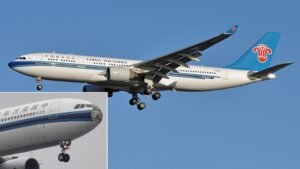
China Southern A330 Jet Hit By A Bird Strike, Loses Nose Radome After Shanghai Takeoff SEO DES: Impact hit the radome, tearing it off; images show exposed radar dish with nose parts missing or hanging loose, showing the severity of the strike SOCIAL: A China Southern A330 suffered a severe bird strike after takeoff from Shanghai on March 21, 2026, losing its nose radome and forcing an emergency return. The crew declared an emergency, held at low altitude, and landed safely with no injuries. Passengers were rebooked as the aircraft was withdrawn for inspection, causing temporary disruption. The impact likely involved a large bird or flock during the critical climb phase, causing extensive nose damage. The incident highlights the risks of bird strikes despite established aviation safety measures. Image: Jules Meulemans (Wikimedia) Shanghai, China: A China Southern Airlines Airbus A330 was forced to make an emergency return shortly after departure from Shanghai following a dramatic bird strike that caused extensive damage to the aircraft’s nose section. The incident occurred on March 21, 2026, involving flight CZ3554, which had departed from Shanghai Hongqiao International Airport bound for Shenzhen. The widebody aircraft, identified as an Airbus A330-343 (registration B-1062), encountered a bird strike during its initial climb, leading to the near-total loss of its nose and radome, the protective structure housing the aircraft’s weather radar. According to flight data and multiple reports, the aircraft struck either a large bird or a flock shortly after takeoff, at a relatively low altitude during a critical phase of flight. The impact was concentrated on the radome, a composite component designed to be lightweight and radar-transparent, which was severely compromised and largely torn away. Images circulating online showed the aircraft on the ground with its radar dish fully exposed and sections of the radome missing or hanging loose, showcasing the intensity of the impact. Following the strike, the flight crew halted the climb and initiated standard emergency procedures. The pilots declared an emergency with air traffic control and executed an air turn-back, opting to return to Shanghai rather than continue the flight to Shenzhen. Flight tracking data indicates the aircraft maintained a relatively low altitude before entering a holding pattern near the departure airport. It subsequently landed safely at Shanghai Hongqiao at approximately 10:45 AM local time, with no reported injuries among passengers or crew. All passengers and crew disembarked safely after landing. China Southern Airlines activated its emergency response procedures, arranging alternative travel for affected passengers, including a replacement aircraft to continue the journey to Shenzhen later the same day. The incident caused temporary disruption at Shanghai Hongqiao Airport, requiring operational adjustments as the damaged aircraft was removed from service for inspection and repairs.
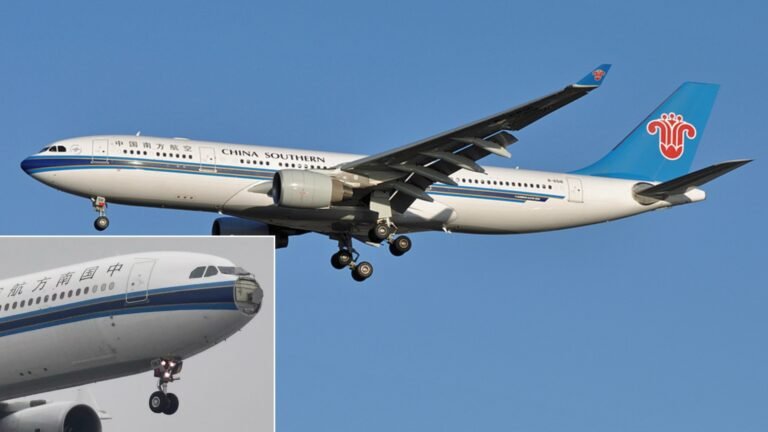
Image: Jules Meulemans (Wikimedia)

Shanghai, China: A China Southern Airlines Airbus A330 was forced to make an emergency return shortly after departure from Shanghai following a dramatic bird strike that caused extensive damage to the aircraft’s nose section.

The incident occurred on March 21, 2026, involving flight CZ3554, which had departed from Shanghai Hongqiao International Airport bound for Shenzhen. The widebody aircraft, identified as an Airbus A330-343 (registration B-1062), encountered a bird strike during its initial climb, leading to the near-total loss of its nose and radome, the protective structure housing the aircraft’s weather radar.

According to flight data and multiple reports, the aircraft struck either a large bird or a flock shortly after takeoff, at a relatively low altitude during a critical phase of flight. The impact was concentrated on the radome, a composite component designed to be lightweight and radar-transparent, which was severely compromised and largely torn away.

Images circulating online showed the aircraft on the ground with its radar dish fully exposed and sections of the radome missing or hanging loose, showcasing the intensity of the impact.

Following the strike, the flight crew halted the climb and initiated standard emergency procedures. The pilots declared an emergency with air traffic control and executed an air turn-back, opting to return to Shanghai rather than continue the flight to Shenzhen.

Flight tracking data indicates the aircraft maintained a relatively low altitude before entering a holding pattern near the departure airport. It subsequently landed safely at Shanghai Hongqiao at approximately 10:45 AM local time, with no reported injuries among passengers or crew.

All passengers and crew disembarked safely after landing. China Southern Airlines activated its emergency response procedures, arranging alternative travel for affected passengers, including a replacement aircraft to continue the journey to Shenzhen later the same day.

The incident caused temporary disruption at Shanghai Hongqiao Airport, requiring operational adjustments as the damaged aircraft was removed from service for inspection and repairs. 
Leave a Comment

Subscribe to our Newsletter

Recent News

error: Unauthorized copying is not permitted