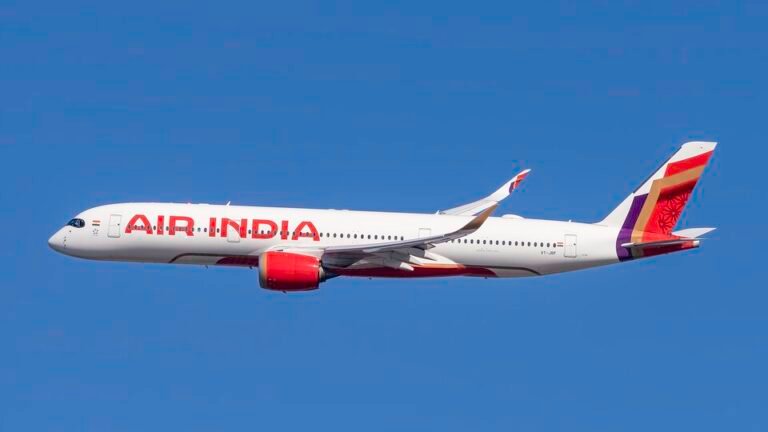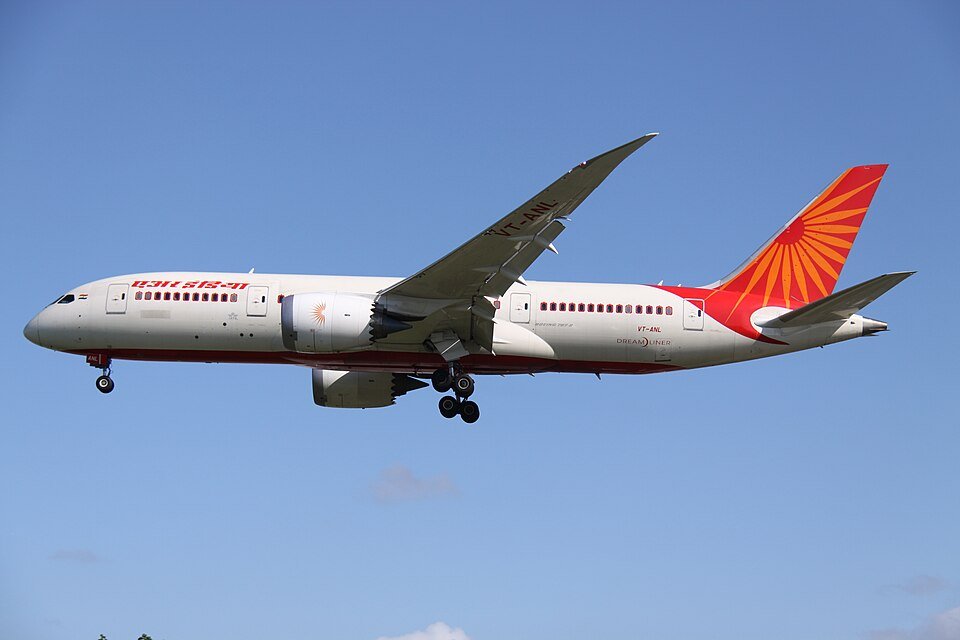
Birmingham, United Kingdom: An Air India Boeing 787‑8 Dreamliner operating flight AI117 from Amritsar, India, to Birmingham, UK, declared a general emergency due to low fuel on the evening of 8 January 2026 after prolonged holding caused by severe winter weather and the temporary closure of Birmingham Airport. The aircraft was safely diverted to London Heathrow Airport where it landed without incident, airline and flight tracking data show.
Flight AI117, registration VT‑NAC, was approaching Birmingham in worsening weather as Storm Goretti brought heavy snowfall and dangerously low visibility, leading airport authorities to suspend runway operations. Visibility dipped well below the minima required for a safe landing, forcing the crew to abort the initial approach and enter a holding pattern.
With extended time spent circling near the destination, fuel reserves fell toward critical levels. In response, the crew transmitted Squawk 7700 the transponder emergency code indicating a serious onboard issue requiring urgent air traffic control priority signalling a general emergency due to low fuel. This prompted expedited handling and coordination with UK air traffic control for diversion.
Air Traffic Control cleared the Boeing 787 to divert to London Heathrow Airport (LHR), chosen for its longer runways and advanced Category III Instrument Landing System (ILS) capable of accommodating landing in degraded weather conditions with enhanced safety margins. The aircraft touched down safely on Heathrow’s runway 09L and subsequently taxied to gate B49 with no reported injuries to passengers or crew.
Air India flight operations encountered significant disruption as snow continued to impact Birmingham Airport operations throughout the evening. The airport’s decision to close the runways was part of ongoing safety precautions amid rapid snow accumulation and deteriorating meteorological conditions.
A declaration of Squawk 7700, a universal aviation emergency code does not automatically reflect a catastrophic failure; rather, it alerts all air traffic units that the flight requires priority handling due to a critical situation, in this case driven by fuel management considerations following a prolonged holding pattern.