News
Civil Aviation
Pilot Training
Flight School Analysis
Aviation Jobs
Training
Services
About Us
Contact Us

Macron Unveils ‘France Libre’ New Next-Gen Nuclear Aircraft Carrier Plan For France

Picture of Aviation Today News Desk

Aviation Today News Desk

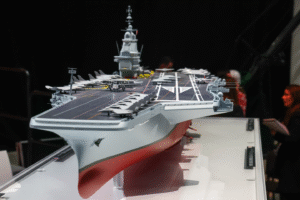
Macron Unveils ‘France Libre’ New Next-Gen Nuclear Aircraft Carrier Plan For France SEO DES: Designed as Europe’s largest warship, France Libre will be about 310m long with a displacement of 75,000–80,000 tonnes, boosting major naval capability SOCIAL: French President Emmanuel Macron has named France’s next-generation nuclear aircraft carrier “France Libre”, replacing the Charles de Gaulle by 2038 and boosting strategic autonomy. The €10 billion project, formerly PANG, will be Europe’s largest warship, powered by nuclear reactors and capable of operating Rafale jets, Hawkeye aircraft, and drones. Positioned as key to France’s defence strategy, the carrier boosts nuclear deterrence and expands global deployment capability amid rising geopolitical tensions. Paris, France: French President Emmanuel Macron has officially named France’s next-generation nuclear-powered aircraft carrier “France Libre”, marking a significant step in the country’s long-term naval modernization strategy and its push for strategic autonomy. Macron announced the name during a visit to the shipyard at Indret in western France, where early work on the vessel’s nuclear reactors has already begun. The name “France Libre” meaning “Free France”pays tribute to the World War II resistance movement led by Charles de Gaulle, symbolizing national resilience and independence. The new aircraft carrier will replace the aging Charles de Gaulle, currently France’s only aircraft carrier and the only nuclear-powered carrier in service outside the United States. Commissioned in 2001, the vessel is expected to retire by 2038, when the new carrier becomes operational following sea trials planned around 2036. The France Libre programme, previously known as the Porte-avions de nouvelle génération (PANG), forms the backbone of France’s future naval aviation capability. Designed to be the largest warship ever built in Europe, the France Libre will measure approximately 310 meters in length and displace around 75,000 to 80,000 tonnes. The carrier will be powered by two nuclear reactors, enabling extended deployment without frequent refuelling and reinforcing France’s nuclear deterrence posture. It is expected to carry: Around 30 Rafale fighter jets Airborne early warning aircraft such as E-2D Hawkeye Helicopters and next-generation unmanned aerial systems (UAVs/UCAVs) The vessel will also incorporate advanced launch and recovery systems, including electromagnetic catapults (EMALS), aligning it with next-generation carrier technologies. The programme is estimated to cost €10–10.2 billion ($11–12 billion), making it one of Europe’s most ambitious defence projects. Reactor component manufacturing began in 2025 Full-scale construction is expected around 2030–2031 Sea trials are projected for 2035–2036 Entry into service is targeted for 2038 The project involves major French defence and industrial players, including Naval Group, Chantiers de l’Atlantique, and TechnicAtome. Macron framed the programme as essential in an evolving global security environment, describing oceans as “new arenas of contemporary conflict.” France remains the only nuclear-armed nation in the European Union, and the new carrier will reinforce its ability to deploy nuclear-capable aircraft at sea. The announcement also comes amid heightened military activity, with France recently deploying the Charles de Gaulle and additional naval assets to the Mediterranean and Middle East in response to regional tensions. Paris views the programme as central to: Maintaining continuous carrier availability Strengthening NATO contributions while enhancing European defence autonomy Expanding global power projection, particularly in strategic maritime regions Beyond its military role, the name “France Libre” carries strong political symbolism. Macron described it as a commitment to national strength and independence, invoking the legacy of resistance and sovereignty. “In this name lives the memory to remain free, we must be powerful,” he said, linking historical identity with future defence ambitions. As Europe navigates an increasingly complex security landscape, the project signals France’s intent to combine historical legacy, nuclear capability, and advanced technology into a single strategic platform.
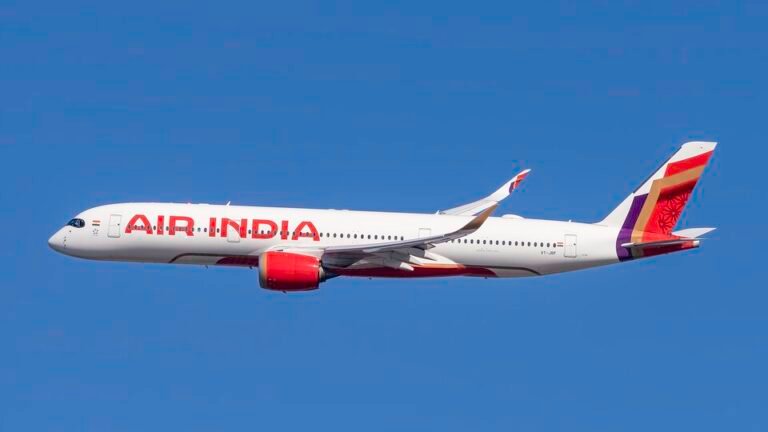
Image: Associated Press

Paris, France: French President Emmanuel Macron has officially named France’s next-generation nuclear-powered aircraft carrier “France Libre”, marking a significant step in the country’s long-term naval modernization strategy and its push for strategic autonomy.

Macron announced the name during a visit to the shipyard at Indret in western France, where early work on the vessel’s nuclear reactors has already begun. The name “France Libre” meaning “Free France”pays tribute to the World War II resistance movement led by Charles de Gaulle, symbolizing national resilience and independence.

The new aircraft carrier will replace the aging Charles de Gaulle, currently France’s only aircraft carrier and the only nuclear-powered carrier in service outside the United States. Commissioned in 2001, the vessel is expected to retire by 2038, when the new carrier becomes operational following sea trials planned around 2036.

The France Libre programme, previously known as the Porte-avions de nouvelle génération (PANG), forms the backbone of France’s future naval aviation capability.

Designed to be the largest warship ever built in Europe, the France Libre will measure approximately 310 meters in length and displace around 75,000 to 80,000 tonnes.

The carrier will be powered by two nuclear reactors, enabling extended deployment without frequent refuelling and reinforcing France’s nuclear deterrence posture.

It is expected to carry:

  • Around 30 Rafale fighter jets
  • Airborne early warning aircraft such as E-2D Hawkeye
  • Helicopters and next-generation unmanned aerial systems (UAVs/UCAVs)

The vessel will also incorporate advanced launch and recovery systems, including electromagnetic catapults (EMALS), aligning it with next-generation carrier technologies.

The programme is estimated to cost €10–10.2 billion ($11–12 billion), making it one of Europe’s most ambitious defence projects.

  • Reactor component manufacturing began in 2025
  • Full-scale construction is expected around 2030–2031
  • Sea trials are projected for 2035–2036
  • Entry into service is targeted for 2038

The project involves major French defence and industrial players, including Naval Group, Chantiers de l’Atlantique, and TechnicAtome.

Macron framed the programme as essential in an evolving global security environment, describing oceans as “new arenas of contemporary conflict.”

France remains the only nuclear-armed nation in the European Union, and the new carrier will reinforce its ability to deploy nuclear-capable aircraft at sea.

The announcement also comes amid heightened military activity, with France recently deploying the Charles de Gaulle and additional naval assets to the Mediterranean and Middle East in response to regional tensions.

Paris views the programme as central to:

  • Maintaining continuous carrier availability
  • Strengthening NATO contributions while enhancing European defence autonomy
  • Expanding global power projection, particularly in strategic maritime regions

Beyond its military role, the name “France Libre” carries strong political symbolism. Macron described it as a commitment to national strength and independence, invoking the legacy of resistance and sovereignty.

“In this name lives the memory to remain free, we must be powerful,” he said, linking historical identity with future defence ambitions.

As Europe navigates an increasingly complex security landscape, the project signals France’s intent to combine historical legacy, nuclear capability, and advanced technology into a single strategic platform.

Leave a Comment

Subscribe to our Newsletter

Recent News

error: Unauthorized copying is not permitted