News
Civil Aviation
Pilot Training
Flight School Analysis
Aviation Jobs
Training
Services
About Us
Contact Us

Sydney Airport Imposes Flight Restrictions After Air Traffic Controller Shortage

Picture of Aviation Today News Desk

Aviation Today News Desk

Sydney, Australia: Sydney Airport faced another round of flight cancellations and significant delays on Friday, September 11, 2026 after a shortage of available air traffic controllers forced Airservices Australia to impose temporary air traffic-flow restrictions. Airservices said the measures were introduced “to safely manage aviation demand” after unexpected staff absences left the Sydney control tower without enough operational controllers. Around 14 inbound flights were cancelled, while delays exceeded one hour in the morning. The restrictions were lifted at 8:15 a.m. local time, with some minor delays continuing. Airservices Deputy Chief Executive Peter Curran told a Senate committee that the immediate disruption followed unplanned overnight absenteeism. “Last night, at relatively short notice, we had some unplanned absenteeism, which we weren't able to recover from,” Curran said. “We're down in the tower this morning and that led to some significant delays.” Sydney currently has 49 employed air traffic controllers, but 41 are required to be operational, while eight were unavailable because of longer-term absences, leaving little capacity to absorb unexpected sickness or other staff shortages. The latest disruption follows similar problems in recent weeks. Airservices acknowledged “roster constraints” when Sydney experienced major delays in August, including a day when more than 150 flights were affected. On September 10, 2026 Qantas and Virgin Australia each reported six Sydney cancellations, with dozens of other flights delayed. Airservices said it was “enhancing our training pipeline to add further controllers to improve roster depth” and was working to address rostering problems that reduce workforce flexibility. The staffing problem is not new. Airservices CEO Rob Sharp previously said the shortage developed during the COVID-19 pandemic after the organisation offered early-retirement arrangements to controllers nearing retirement. Sharp said the organisation subsequently found itself short of experienced personnel. He has also stressed that training replacements take considerable time; Airservices has been recruiting aggressively, with additional controllers moving through training and a new Sydney Tower simulator installed to increase training capacity. The issue has also become a safety concern. The ATSB is investigating a series of Sydney Airport occurrences dating back to July 27, 2026 when a Qantas Boeing 737 was cleared to cross runway 34L while a QantasLink Dash 8 was landing. ATC detected the conflict and stopped the Boeing before it entered the runway. The ATSB classified that occurrence as a serious incident. Further incidents followed in August. On August 9, 2026 a Virgin Australia Boeing 737 beginning its take-off roll on runway 34L encountered a Qantas Boeing 737 crossing the runway; the Virgin crew rejected the take-off. The ATSB is investigating the occurrence as a runway incursion. The same day, a Jetstar Airbus A320 came into close proximity with a Qatar Airways Boeing 777 being towed, forcing both aircraft to stop; a Jetstar cabin crew member was injured. The ATSB is also investigating a 16 August taxiing conflict involving Virgin Australia and Qantas Boeing 737s, an 18 August conflict involving Qantas Airbus A321 and Boeing 737 aircraft, and a 25 August incident in which incomplete traffic information was passed to a Jetstar A320 before pushback. In the latter two cases, the ATSB said safety defences remained effective and classified the events as incidents rather than serious incidents. Airservices has said safety is not being compromised by the staffing shortage, with traffic-flow restrictions being used to reduce aircraft movements when staffing levels cannot support normal capacity. Earlier, Sharp said, “We put in place measures that reduce the traffic levels to ensure safety, but this can lead to flight delays.” The scale of the staffing problem was highlighted before the Senate committee on September 11, 2026. Airservices said Australian airports recorded 2,536 cancellations in the year to August 31, 2026 of which 121 were attributed to Airservices, including 103 at Sydney. That equates to roughly one Airservices-attributable cancellation every three days nationally. Airservices is now seeking to increase controller numbers, strengthen standby coverage and improve rosters. The organisation has also been using controllers from other facilities to help cover Sydney, while the government and aviation industry face pressure to resolve the shortage before further growth in Sydney-area aviation places additional demand on the system. The ATSB investigations into the safety incidents remain ongoing, and no final finding has established that staffing shortages caused any of the individual occurrences.
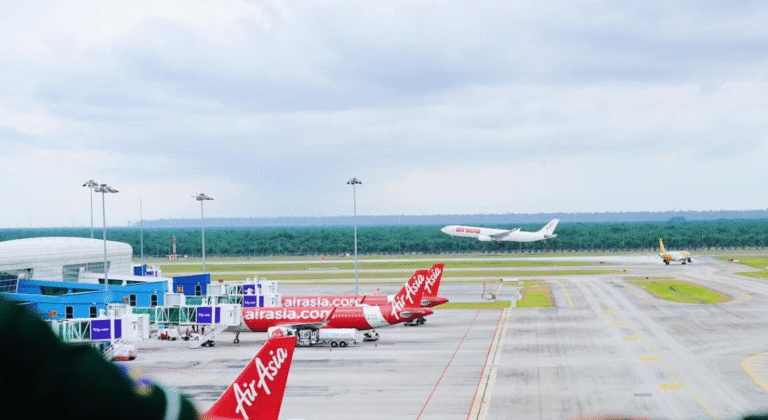
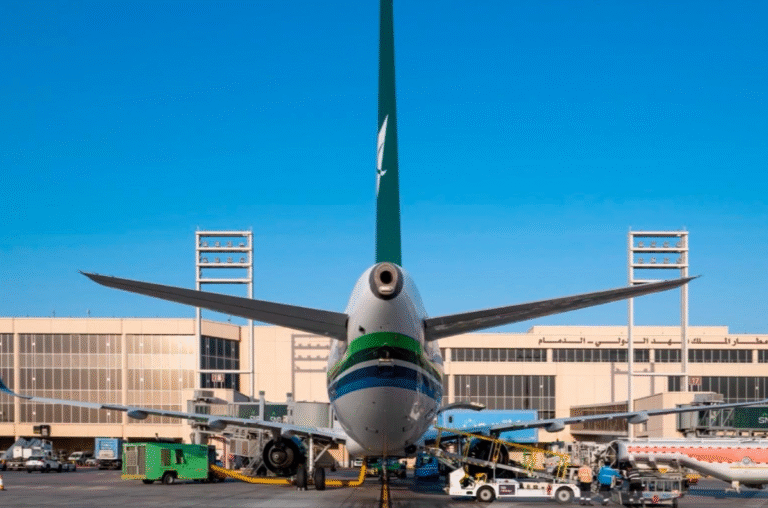
Image: Sydney Airport

Sydney, Australia: Sydney Airport faced another round of flight cancellations and significant delays on Friday, September 11, 2026 after a shortage of available air traffic controllers forced Airservices Australia to impose temporary air traffic-flow restrictions.

Airservices said the measures were introduced “to safely manage aviation demand” after unexpected staff absences left the Sydney control tower without enough operational controllers. Around 14 inbound flights were cancelled, while delays exceeded one hour in the morning. The restrictions were lifted at 8:15 a.m. local time, with some minor delays continuing. 

Airservices Deputy Chief Executive Peter Curran told a Senate committee that the immediate disruption followed unplanned overnight absenteeism. “Last night, at relatively short notice, we had some unplanned absenteeism, which we weren’t able to recover from,” Curran said. “We’re down in the tower this morning and that led to some significant delays.” Sydney currently has 49 employed air traffic controllers, but 41 are required to be operational, while eight were unavailable because of longer-term absences, leaving little capacity to absorb unexpected sickness or other staff shortages.

The latest disruption follows similar problems in recent weeks. Airservices acknowledged “roster constraints” when Sydney experienced major delays in August, including a day when more than 150 flights were affected. On September 10, 2026 Qantas and Virgin Australia each reported six Sydney cancellations, with dozens of other flights delayed. Airservices said it was “enhancing our training pipeline to add further controllers to improve roster depth” and was working to address rostering problems that reduce workforce flexibility.

The staffing problem is not new. Airservices CEO Rob Sharp previously said the shortage developed during the COVID-19 pandemic after the organisation offered early-retirement arrangements to controllers nearing retirement. Sharp said the organisation subsequently found itself short of experienced personnel. He has also stressed that training replacements take considerable time; Airservices has been recruiting aggressively, with additional controllers moving through training and a new Sydney Tower simulator installed to increase training capacity.

The issue has also become a safety concern. The ATSB is investigating a series of Sydney Airport occurrences dating back to July 27, 2026 when a Qantas Boeing 737 was cleared to cross runway 34L while a QantasLink Dash 8 was landing. ATC detected the conflict and stopped the Boeing before it entered the runway. The ATSB classified that occurrence as a serious incident.

Further incidents followed in August. On August 9, 2026 a Virgin Australia Boeing 737 beginning its take-off roll on runway 34L encountered a Qantas Boeing 737 crossing the runway; the Virgin crew rejected the take-off. The ATSB is investigating the occurrence as a runway incursion. The same day, a Jetstar Airbus A320 came into close proximity with a Qatar Airways Boeing 777 being towed, forcing both aircraft to stop; a Jetstar cabin crew member was injured.

The ATSB is also investigating a 16 August taxiing conflict involving Virgin Australia and Qantas Boeing 737s, an 18 August conflict involving Qantas Airbus A321 and Boeing 737 aircraft, and a 25 August incident in which incomplete traffic information was passed to a Jetstar A320 before pushback. In the latter two cases, the ATSB said safety defences remained effective and classified the events as incidents rather than serious incidents.

Airservices has said safety is not being compromised by the staffing shortage, with traffic-flow restrictions being used to reduce aircraft movements when staffing levels cannot support normal capacity. Earlier, Sharp said, “We put in place measures that reduce the traffic levels to ensure safety, but this can lead to flight delays.”

The scale of the staffing problem was highlighted before the Senate committee on September 11, 2026. Airservices said Australian airports recorded 2,536 cancellations in the year to August 31, 2026 of which 121 were attributed to Airservices, including 103 at Sydney. That equates to roughly one Airservices-attributable cancellation every three days nationally.

Airservices is now seeking to increase controller numbers, strengthen standby coverage and improve rosters. The organisation has also been using controllers from other facilities to help cover Sydney, while the government and aviation industry face pressure to resolve the shortage before further growth in Sydney-area aviation places additional demand on the system. The ATSB investigations into the safety incidents remain ongoing, and no final finding has established that staffing shortages caused any of the individual occurrences.

Leave a Comment

Subscribe to our Newsletter

Recent News

Aviation Today Perspectives