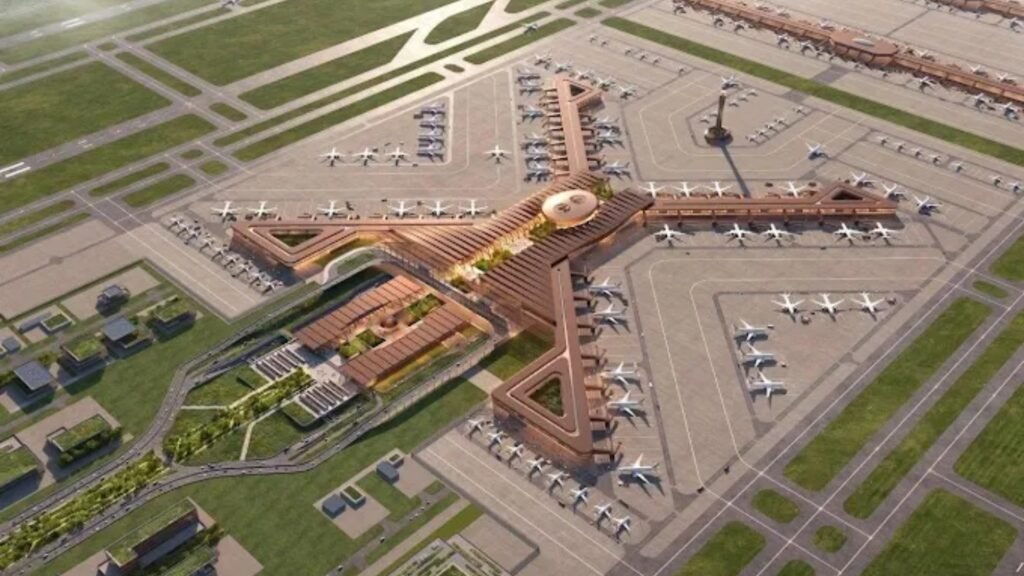
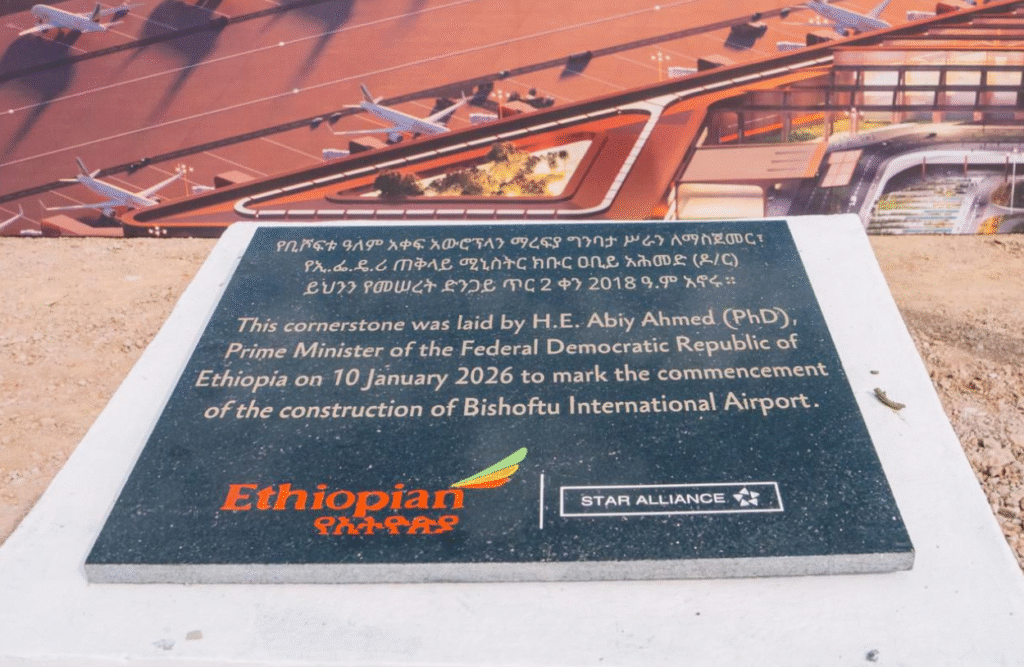
Bishoftu, Ethiopia: Ethiopia has formally launched construction of what is set to become Africa’s largest and most ambitious airport project, with the groundbreaking of the $12.5 billion Bishoftu International Airport, led by Ethiopian Airlines in partnership with the Ethiopian government.
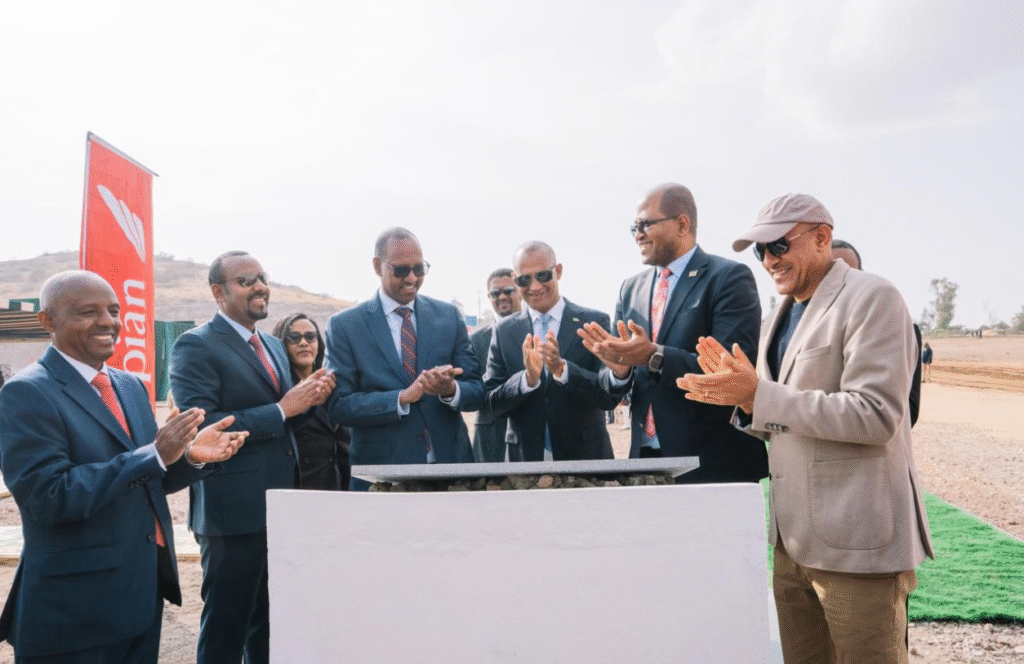
Prime Minister Abiy Ahmed presided over the groundbreaking ceremony earlier this month near Bishoftu, around 45 kilometres southeast of Addis Ababa, marking a major milestone in the country’s long-term aviation and economic development strategy. Ethiopian Airlines Group executives and senior government officials were also present at the event.
Once completed, Bishoftu International Airport is expected to handle up to 110 million passengers annually, far surpassing the current capacity of Addis Ababa Bole International Airport, which is nearing saturation at roughly 25 million passengers per year. The project is designed to position Ethiopia as a global aviation and logistics hub, strengthening its role as a key connector between Africa, Europe, Asia, and the Americas.
The airport will be developed in phases. Phase One, targeted for completion around 2030, aims to accommodate approximately 60 million passengers annually with two runways, while the final master plan envisions four runways, expanded passenger terminals, and large-scale cargo facilities.

The total cost of the project has been revised to $12.5 billion, reflecting expanded capacity and infrastructure scope. Ethiopian Airlines is expected to finance around 30 percent of the investment, with the remainder being mobilised through international lenders and development partners.
The African Development Bank (AfDB) has already committed $500 million and is coordinating additional financing from global partners across the Middle East, Europe, China, and the United States.
Bishoftu International Airport is being planned as a fully integrated “Airport City”, incorporating cargo hubs, logistics parks, maintenance facilities, hotels, and commercial zones. To support seamless access, the project includes a 38-kilometre high-speed rail link connecting the airport to Addis Ababa in approximately 20–25 minutes, along with new multi-lane highway infrastructure.
The airport is also expected to provide parking capacity for around 270 aircraft, supporting Ethiopian Airlines’ rapidly expanding fleet and growing long-haul network.
Ethiopian Airlines, Africa’s largest and most profitable carrier, has described the project as essential to sustaining its long-term growth and maintaining Addis Ababa’s position as the continent’s leading aviation hub. Once operational, Bishoftu International Airport is expected to gradually replace Bole International Airport as Ethiopia’s primary international gateway.
Government officials have highlighted the airport’s broader economic impact, citing job creation, increased tourism, enhanced cargo and trade capacity, and improved regional connectivity as key benefits.
With construction now underway, Bishoftu International Airport stands as one of the most significant aviation infrastructure projects ever undertaken in Africa, reflecting Ethiopia’s ambition to anchor the future of global air connectivity on the continent.