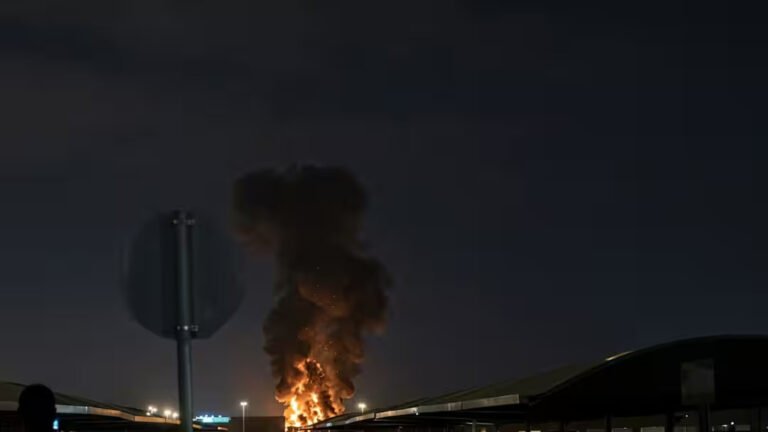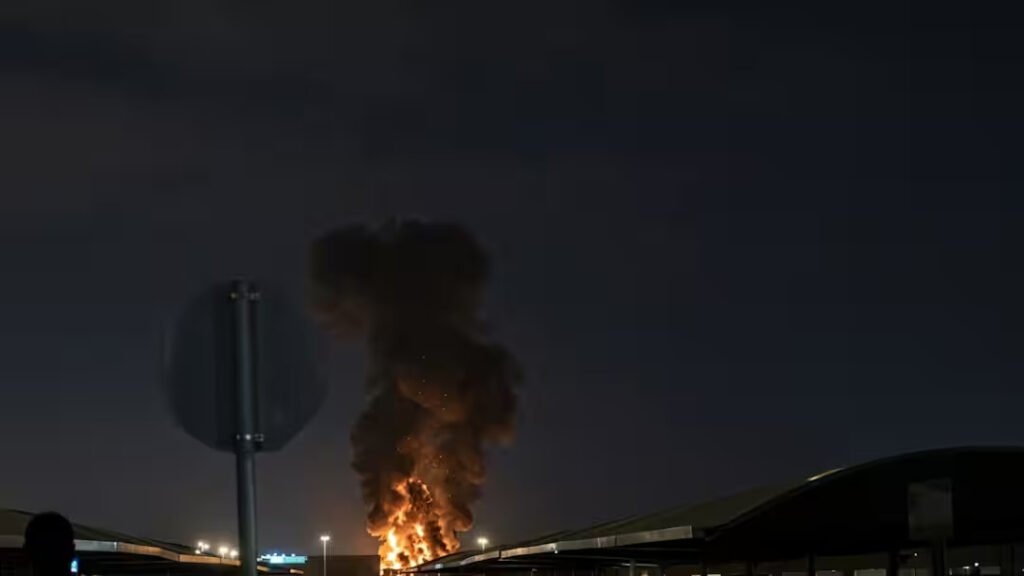
Kuwait City, Kuwait: A drone strike targeting fuel storage infrastructure at Kuwait International Airport triggered a fire on Wednesday, marking the latest escalation in a widening regional conflict linked to the ongoing Iran-U.S.-Israel tensions.
According to Kuwait’s Civil Aviation Authority, the attack struck a fuel tank at the airport, causing a blaze that was swiftly contained by emergency response teams. Authorities confirmed that no casualties or injuries were reported, and initial assessments indicated that the damage was limited to infrastructure.
Emergency protocols were immediately activated, with firefighting units responding to the scene and bringing the situation under control within a short period. Officials have not yet disclosed the origin of the drone or the group responsible, and investigations remain ongoing.
Agency spokesman Abdullah Al-Rajhi said the impact was “limited,” confirming that firefighters were continuing operations to fully extinguish the blaze. Preliminary assessments indicated that the attack caused only material damage.
The incident is not isolated. Kuwait has faced repeated drone and missile attacks in recent weeks, as regional tensions intensified following coordinated military actions involving Iran, the United States, and Israel.
Wednesday’s strike is the latest in a string of attacks targeting Kuwait’s main airport since the conflict intensified on February 28. Earlier incidents include a March 14 drone strike on radar systems and a March 8 attack that damaged fuel storage facilities. A separate strike on a passenger terminal had left several people with minor injuries.
Kuwait’s military has repeatedly reported “waves of hostile drones” entering its airspace, with air defense systems actively intercepting incoming threats.
The attack comes amid a broader escalation in the Middle East, where Iran has launched drone and missile strikes targeting the U.S.-linked assets and allied countries across the Gulf, including Kuwait, Bahrain, and Jordan.
Kuwait, which hosts U.S. military installations, has increasingly found itself exposed to retaliatory strikes as the conflict expands beyond its initial theaters. In recent weeks, the country has also reported casualties among security personnel and damage to infrastructure linked to ongoing aerial attacks, reflecting the persistent threat environment.
Globally, the conflict has begun to impact aviation operations and fuel supply chains, with rising jet fuel prices and early signs of disruptions to flight networks in parts of Asia and beyond.
Kuwaiti authorities continue to assess the full extent of the damage and are working to determine the source and intent behind the attack. No group has officially claimed responsibility so far.