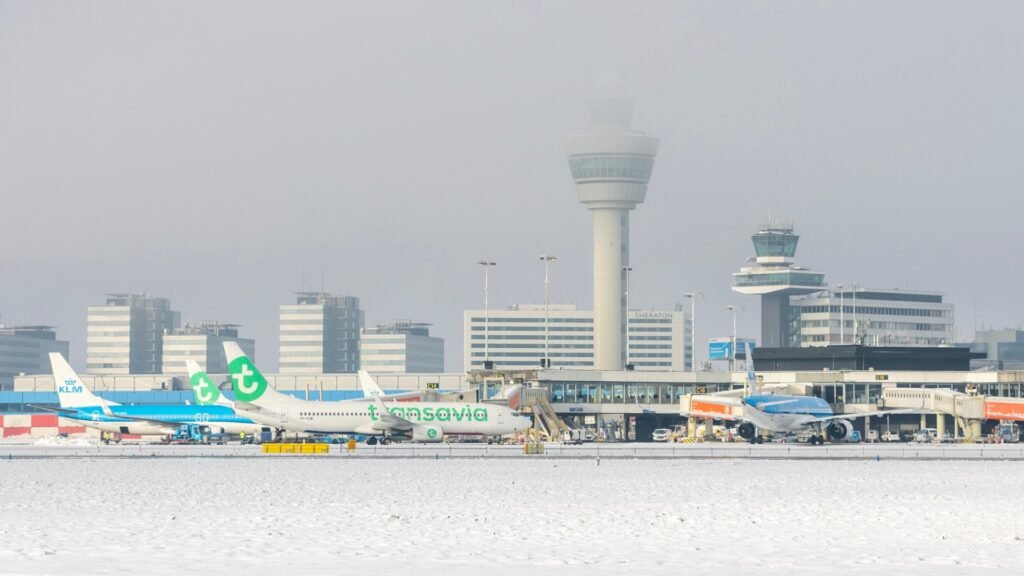
Amsterdam, Netherlands: Amsterdam Schiphol Airport saw a sharp reduction in flight cancellations for Thursday as the prolonged winter storm that crippled Europe’s busiest hub for air travel showed signs of easing, though delay risks remain and residual disruption persists.
Airlines and airport officials reported only a small number of scheduled flights affected for 8 January, marking a significant improvement from the previous days of winter chaos that saw hundreds of flights scrapped daily.
Officials from Schiphol and Dutch flag carrier KLM Royal Dutch Airlines confirmed that around 60 inbound services scheduled for Thursday had been cancelled by late Wednesday afternoon, largely due to aircraft being unable to return after cancellations earlier in the week. Only a handful of departing flights have been removed from the Thursday schedule.
In total, six departures out of 565 scheduled Thursday flights were cancelled by various carriers, and approximately 30 incoming flights were expected to experience delays of varying durations.
A spokesperson for Schiphol emphasised that weather conditions were expected to be milder than earlier in the week, and that airlines “do not expect as many cancellations as in recent days”. However, passengers were urged to plan for delays and to check flight status before arriving at the airport.
The airport’s operational challenges began on 2 January 2026, when persistent snowfall, strong winds and freezing conditions first caused widespread cancellations. Over the following days, airlines cancelled around 3,500 scheduled flights at Schiphol on average hundreds per day as snow and ice compounded staffing and logistical issues.
On 7 January, more than 700 flights were cancelled, again due to heavy snow and high wind, leaving long lines of stranded passengers and disrupted connections across Europe.
A major factor behind the cancellation surge was the strain on de‑icing operations. KLM, responsible for most de‑icing services at Schiphol, reported that its supplies of glycol‑based de‑icing fluid were running critically low after days of continuous usage, prompting emergency procurement efforts from suppliers in Germany.
Airport ground crews worked around the clock to clear runways and taxiways, but continuous snowfall and freezing precipitation created persistent bottlenecks that reduced the airport’s capacity to handle arriving and departing flights.
Travelers faced lengthy delays and cancellations through the week, with many spending nights in airport terminals. Schiphol staff provided cots, blankets, food and beverages for those unable to depart.
Although Thursday’s forecast suggests fewer cancellations than earlier in the week, weather warnings including Code Yellow alerts for freezing rain and sleet remained in place for the Netherlands, raising the possibility of renewed disruption, particularly if conditions deteriorate over the coming days.