Wellington, New Zealand: The New Zealand Government has approved NZ$5.7million (about US$3.37 million) in working-capital grants for regional airlines facing sharply higher operating costs, particularly fuel, with jet fuel and aviation gasoline prices rising by more than 50% since March 2026.
The funding was announced on 5 October 2026 by Regional Development Minister Shane Jones and Associate Transport Minister James Meager. The money will come from the Regional Infrastructure Fund (RIF) and is intended to help operators maintain existing services and protect regional routes that could otherwise become vulnerable.
Jones described the situation as “extraordinary times” and said the fuel-price increase had created significant problems for airlines providing regional connectivity. He stressed that the government support is “temporary, targeted and proportionate”, with the objective of preserving essential links for remote and regional communities.
The government said those connections are important not only for passenger travel but also for access to specialist healthcare, family, education, tourism and business opportunities. The grants will be allocated according to each airline’s annual passenger volumes and flight movements, with individual awards ranging from NZ$300,000 (about US$177,000) to NZ$1.2 million (about US$ 709,000 million).
The new funding is specifically intended for working capital and day-to-day expenses, including fuel and wages. Meager said the grants were being provided with an expectation that airlines would maintain their current service levels. He said the assistance would provide financial relief for the next 12 months.
Importantly, the 5 October government announcement does not identify which airlines will receive each of the new NZ$300,000–NZ$1.2 million grants or how much each will receive. The allocations are to be determined using passenger volumes and flight movements.
The new grants come from the remaining funds of a NZ$30 million (aboutUS$17.72 million) regional air-connectivity package established in 2025 to support vulnerable regional air services. Under the programme, the government has already provided nearly NZ$26 million (about US$15.36 million) in loans for aircraft acquisition or leasing, fleet maintenance and debt refinancing.
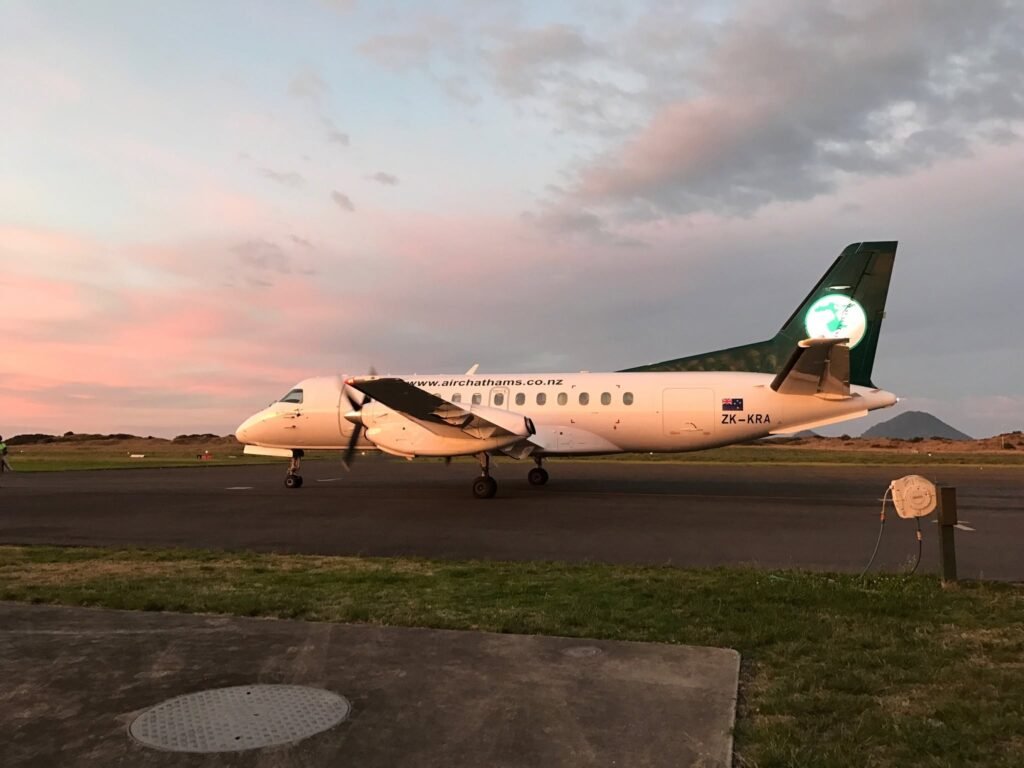
Those loans have gone to Air Chathams NZ$17.2 million (about US$10.16 million) for debt refinancing; Sounds Air NZ$4.5 million (about US$2.66 million) for fleet upgrades and debt refinancing; Island Air NZ$252,000 million (about US$149,000 million) for fleet maintenance; Golden Bay Air NZ$1.1 million (about US$650,000 million) for debt refinancing and essential maintenance; Stewart Island Flights NZ$640,000 million (about US$378,000 million) for aircraft refurbishment; and Sunair NZ$2.08 million (about US$1.23 million) for new aircraft, fleet maintenance and debt refinancing.
The earlier MBIE framework for the regional-air-connectivity package identified Air Chathams, Barrier Air, Golden Bay Air, Originair, Sounds Air, Stewart Island Flights and Sunair as eligible scheduled regional passenger airlines. Air New Zealand and Jetstar were excluded, as were charter-only operators, because the scheme was designed for smaller regional operators with more limited access to affordable capital.
The pressure on the sector predates the latest fuel shock. MBIE records show that the first airline applications for RIF assistance were received in August 2024, with operators describing economic conditions as the most severe they had experienced in more than 35 years. The government said the operating environment subsequently deteriorated further, leading to the development of the regional connectivity intervention in 2025.
The government has continued providing support in recent weeks. On 8 September 2026, it approved a NZ$640,000 million (about US$378,000) RIF loan to South East Air, which owns the aircraft operated by Stewart Island Flights, to refurbish and return an aircraft to service and increase the fleet from four to five aircraft. On 28 September 2026, Sunair received a NZ$2.08 million (about US$1.23 million) RIF loan to potentially acquire two larger aircraft, carry out essential maintenance and refinance existing debt.
For regional communities, the government argues that these airlines provide connections that larger carriers may not find commercially viable. Meager said the latest support is intended to preserve those links while operators deal with the continuing rise in fuel and other operating costs.
The latest NZ$5.7 million package therefore represents operating-cost relief rather than a new fleet-investment programme, airlines will receive working capital for fuel, wages and other day-to-day expenses, while the government expects them to continue their existing regional services over the coming year.