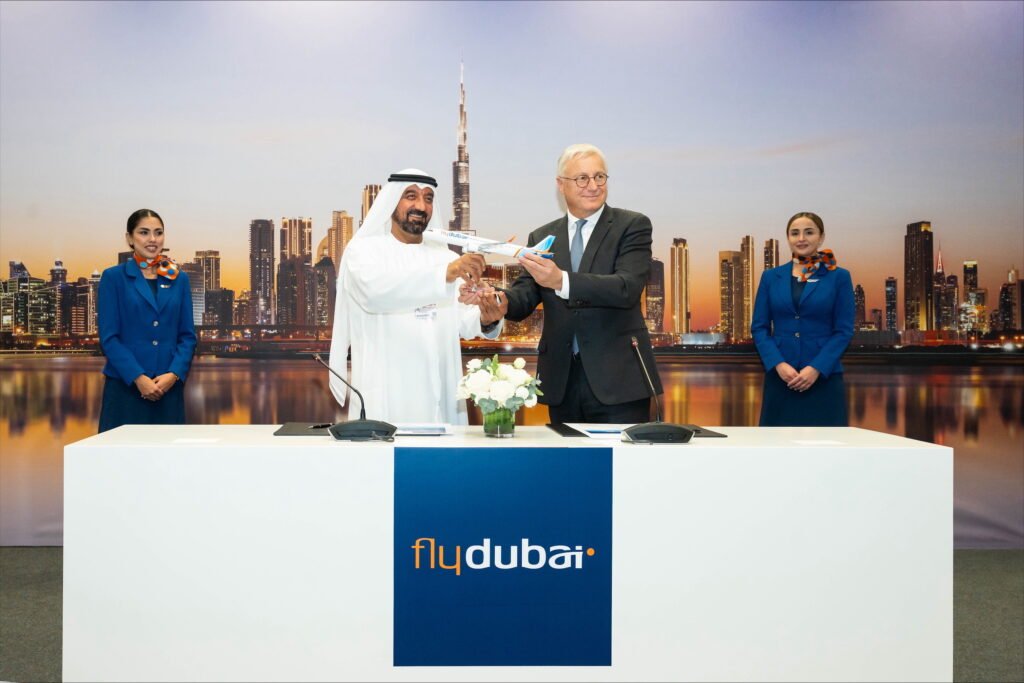
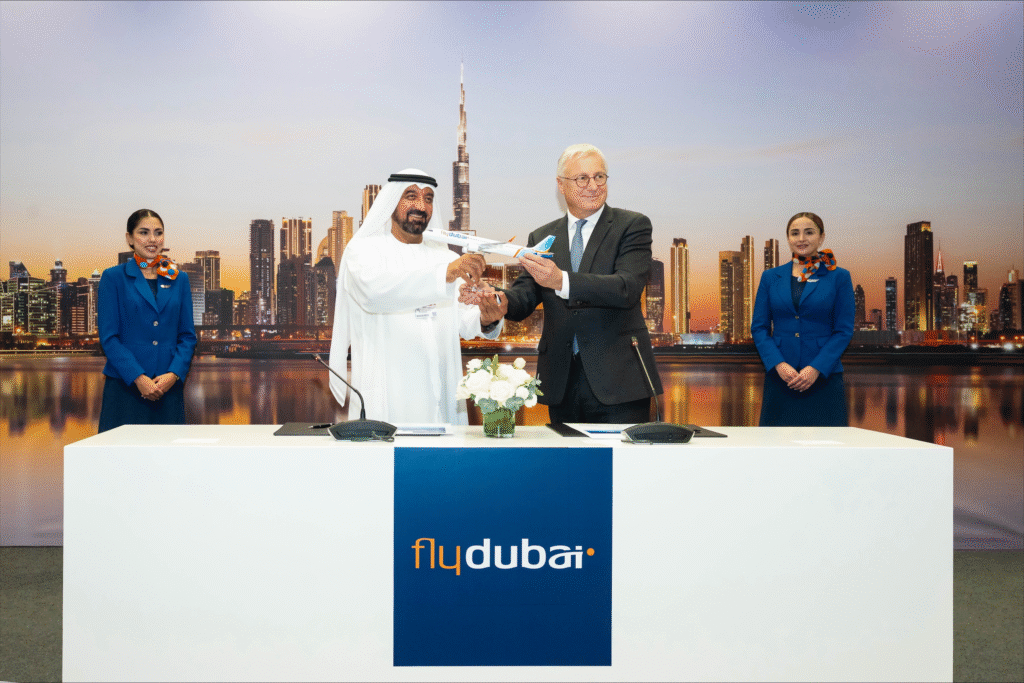
Dubai, United Arab Emirates: Flydubai has signed a Memorandum of Understanding (MoU) with Airbus to acquire 150 A321neo aircraft, representing the airline’s first major commitment to Airbus and ending its historic reliance on Boeing for narrow-body jets. The MoU was announced during the Dubai Airshow 2025, highlighting flydubai’s strategic growth plans aligned with Dubai’s long-term economic vision.
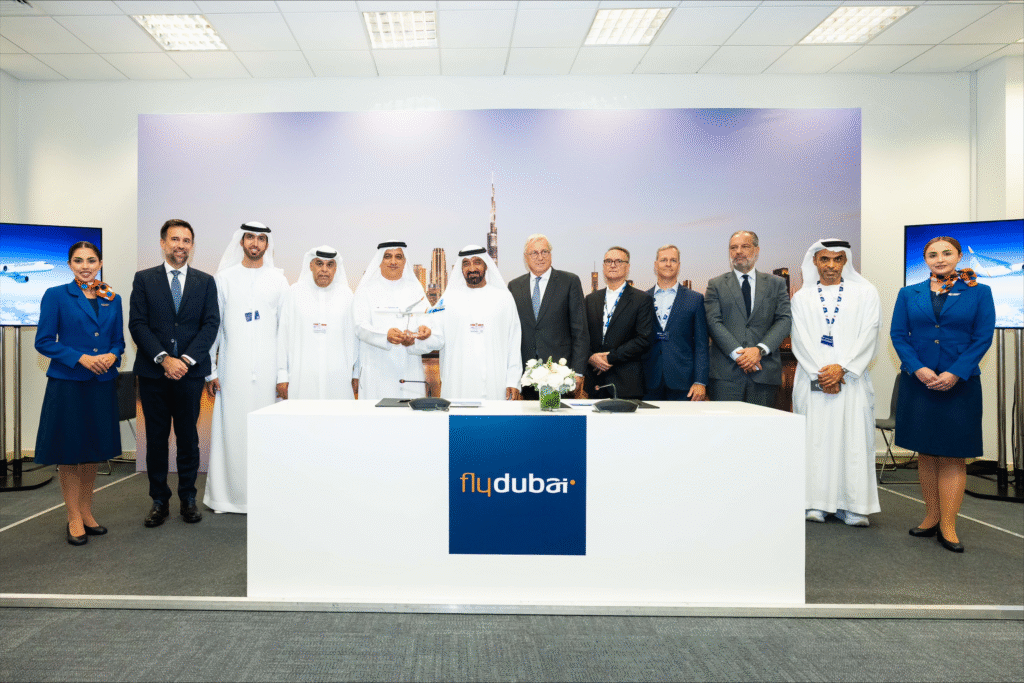
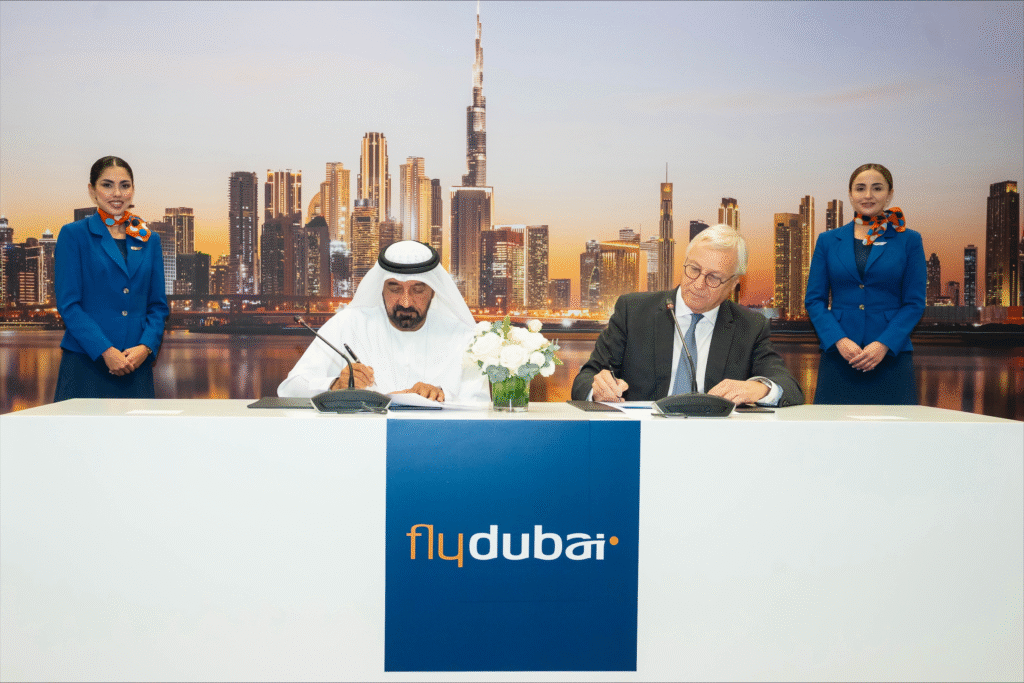
The signing ceremony included Sheikh Ahmed bin Saeed Al Maktoum, Chairman of flydubai, Ghaith Al Ghaith, CEO of flydubai, and Christian Scherer, Airbus Chief Commercial Officer. Sheikh Ahmed described the MoU as a “landmark” agreement that goes beyond fleet expansion, underscoring flydubai’s role in supporting Dubai World Central (DWC), the emirate’s growing aviation hub.
Until now, flydubai has operated an exclusively Boeing 737 fleet. The inclusion of Airbus A321neos marks a strategic diversification of its narrow-body fleet, providing more operational flexibility and positioning the airline to meet increasing demand on regional and international routes. Analysts note that diversifying suppliers reduces dependency risks and strengthens negotiating leverage.
The agreement also includes 100 additional options and carries an estimated value of US$ 24 billion, emphasizing flydubai’s long-term commitment to fleet modernization. Deliveries are scheduled to begin in 2031, reflecting a measured, strategic expansion rather than immediate capacity growth.
The A321neo is Airbus’ latest-generation narrow-body aircraft, equipped with advanced engines, Sharklets, and cabin innovations that deliver over 20% fuel savings and CO₂ reduction compared with previous-generation models. The aircraft also supports operations with up to 50% Sustainable Aviation Fuel (SAF) today, with Airbus targeting full 100% SAF capability by 2030, reflecting the airline’s and manufacturer’s commitment to sustainable aviation.
According to Ghaith Al Ghaith, flydubai’s CEO, the acquisition aligns with Dubai’s Economic Agenda D33, aiming to strengthen connectivity across the Middle East, Asia, and Europe, while supporting the emirate’s infrastructure and aviation growth objectives.
The MoU represents a commercial breakthrough for Airbus, acquiring a customer historically loyal to Boeing. The deal reinforces Airbus’ presence in the Middle East, a region experiencing rapid growth in air travel. For Boeing, the shift signals increasing competitive pressure in the single-aisle segment, as airlines seek more fuel-efficient and flexible fleet options.
Analysts note that while the MoU is not yet a firm order, its size and scope make it one of the largest narrow-body commitments in recent years. Airbus will need to scale up A321neo production to meet the projected delivery schedule, amidst growing global demand for single-aisle jets.
Flydubai’s move to include Airbus A321neos strengthens its long-term growth trajectory, supporting network expansion, operational efficiency, and sustainability goals. The aircraft are expected to serve high-density regional and international routes, positioning the airline to capitalize on the post-pandemic travel recovery and Dubai’s rising role as a global aviation hub.
As deliveries begin in 2031, this landmark agreement sets a precedent in Middle Eastern aviation, highlighting the shift toward modern, fuel-efficient aircraft while reshaping the competitive landscape between Airbus and Boeing in the region.