

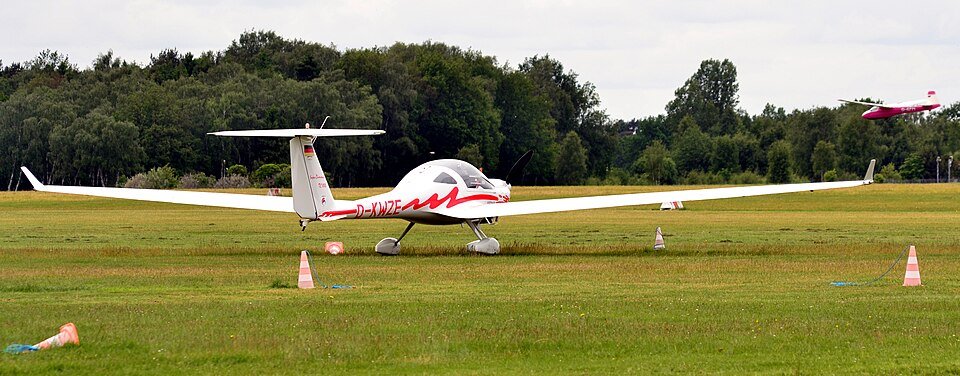
Zadar, Croatia: Two people were killed after a Diamond HK36TC-100 Super Dimona motor glider crashed in Croatia’s Velebit mountains while flying from the Czech Republic to Zadar, with rescuers locating the wreckage only after a nearly six-hour search through extremely difficult terrain and severe weather.
The crash occurred on Friday, August 21, 2026, in the southern Velebit range near Struge inside Paklenica National Park, about 17 nautical miles northeast of Zadar. Croatia’s Air Traffic Control lost contact with the German-registered aircraft, D-KWZE, at around 4:14 p.m. local time. The aircraft had departed Olomouc Airport (LKOL) in the Czech Republic and was bound for Zadar Airport (LDZD), according to Croatia’s Air, Maritime and Railway Accident Investigation Agency.
German media reported that they were members of the Hamburg-based Airbus HFB-Fluggemeinschaft. Croatian reports identified the occupants as a man and a woman, both believed to have been around 80 years old, although their individual identities have not been publicly released in the official accident report reviewed for this report.
The aircraft was travelling toward Zadar when its signal disappeared approximately 17 nautical miles northeast of the city. Croatia’s Civil Protection Directorate immediately activated a search-and-rescue operation after being notified by Croatia Control. Civil Protection personnel from Zadar and Gospić, police officers, firefighters and HGSS mountain rescuers were sent toward the last known position.
The search quickly became difficult because the last known position was in an isolated and rugged section of southern Velebit, around the Veliki Rujno and Struge areas of Paklenica National Park. The weather further complicated the operation. Heavy rain, strong winds and dense fog affected the area, with rescuers reporting visibility of only a few metres in places and approximately two metres at the eventual crash site.
The Croatian Mountain Rescue Service deployed 40 members from seven stations Zadar, Gospić, Zagreb, Osijek, Zlatar Bistrica, Split and Novska. Thirty-five rescuers were deployed in the field, while the remaining personnel provided command, communications and logistical support from the operational base established at the HGSS station in Starigrad-Paklenica. Two members of Paklenica National Park also assisted in the operation.
State Civil Protection intervention units from Split and Rijeka were also activated, bringing a command vehicle, drones and equipment for night searches. However, deteriorating weather prevented aerial searching with drones and also prevented the deployment of helicopters from Croatia’s Interior Ministry and Defence Ministry during the initial search. Ground teams therefore had to work through the difficult terrain.
Petar Prpić of HGSS described the conditions during the search, saying, “Almost 35 people were sent to the field,” while explaining that a separate command base had been established in Starigrad-Paklenica. He said teams approached the search area from both the Gospić and Zadar/Starigrad sides, with two National Park employees also assisting.
HGSS teams eventually narrowed the search area by analysing available aircraft-movement data. That analysis produced a more precise possible crash location around Struge and Veliki Rujno, significantly reducing the area that had to be searched on foot.
At approximately 10 p.m., rescuers reached the aircraft in the Sturge area and found the wreckage along with two people who showed no signs of life. HGSS later stated that its rescuers had reached the location and found “the remains of the ultralight aircraft” and two bodies inside. The search operation was subsequently concluded.
The Lika-Senj Police Department secured the crash site overnight. Police said an on-site investigation would be carried out to establish the circumstances and facts of the accident. In its official statement, the police reported that “two persons were found dead” after the wreckage was located and said officers would secure the site pending the investigation.
The following day, accident investigators, police, the prosecutor’s office and HGSS personnel were involved in the examination of the crash site and recovery operation. A later report said 16 HGSS rescuers from eight stations assisted authorities with the on-site investigation and removal of the victims from the aircraft. Because of the inaccessible terrain, personnel involved in the investigation were transported from the Starigrad-Paklenica area by a Croatian Interior Ministry helicopter once the weather and operational circumstances allowed the subsequent operation.
Croatia’s Air, Maritime and Railway Accident Investigation Agency has now opened a formal safety investigation into the crash. The agency was notified by the Interior Ministry’s operational communications centre and Croatia Control and sent its aircraft-accident investigators to the crash site. The investigation is being conducted under EU Regulation 996/2010, and the agency said the results will eventually be made public in a final report.
At this stage, authorities have not established why or exactly how the aircraft crashed. There has been no official finding that the weather, a mechanical failure, pilot error or the mountainous terrain caused the accident. Reports noting heavy rain, strong winds, dense fog and extremely low visibility describe the conditions faced by rescuers, but those conditions should not be treated as the confirmed cause of the crash until the safety investigation establishes the sequence of events.
The investigation will now focus on reconstructing the Super Dimona’s final flight path and determining what happened between the last recorded aircraft position and the crash. Investigators will examine the wreckage, available flight and radar data, weather conditions, aircraft records and other relevant evidence before determining the cause and contributing factors. The final findings are expected to be published by Croatia’s accident investigation agency once the safety investigation is completed.


















_03.jpg)