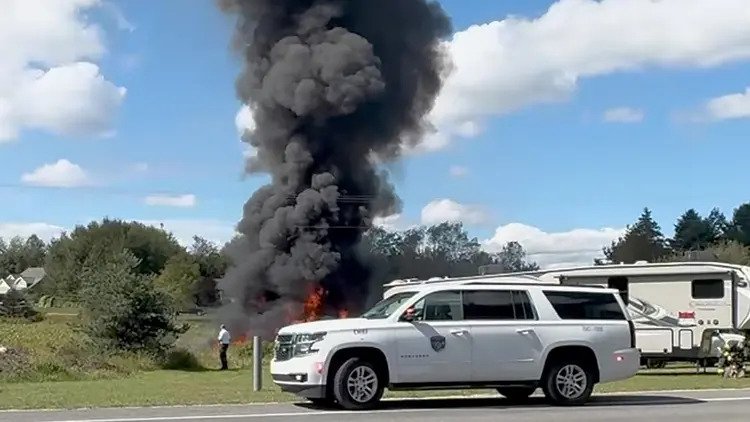
Traverse City, United States: More than 30 people, mostly first responders, were treated for possible exposure to toxic hydrazine after a Texas Air National Guard F-16 fighter jet crashed in Grand Traverse County, Michigan, on 17 September 2026. Six people were kept overnight at Munson Medical Center for observation and treatment, with five later released and one remaining in stable condition for further treatment. The pilot also received medical treatment and was reported stable. The exposure occurred after hydrazine, an emergency power-system fuel carried by the F-16, was released from the wreckage.
Munson Healthcare said the hospital treated people who may have come into contact with the chemical and established an outdoor decontamination area. The hospital said, “some first responders and community members were exposed to a hazardous chemical called hydrazine.” Munson advised people who were within one mile of the crash site and developed symptoms such as coughing, wheezing or difficulty breathing to seek medical evaluation, while those without symptoms were advised to monitor themselves for several days.
Munson Chief Medical Officer Dr. Joe Santangelo said hydrazine “could irritate mucous membranes, either your eyes, your nose, your mouth or throat, but most importantly, the lungs.” He added, “In serious cases, it can cause trouble breathing and fluid in the lungs that can be fatal.” The hospital also consulted military physicians and toxicologists from the Detroit poison-control center because of the nature of the exposure.
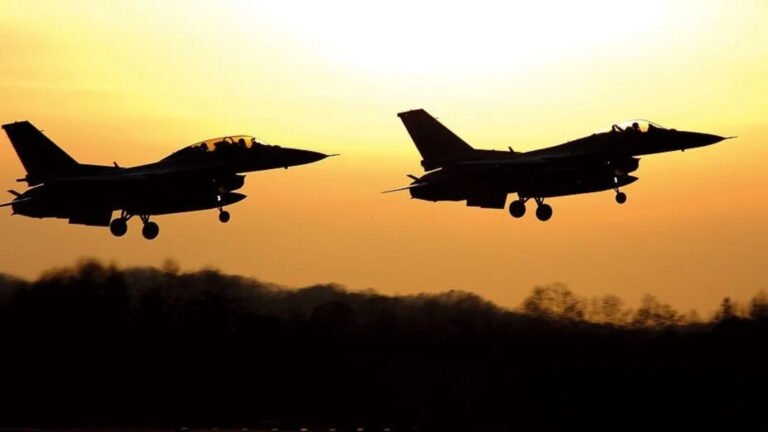
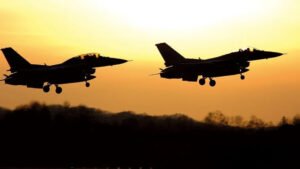
The incident occurred when an F-16 Fighting Falcon assigned to the 149th Fighter Wing of the Texas Air National Guard crashed in a field near County Road 633 and Blair Townhall Road in Blair Township, south of Traverse City. The aircraft was operating from the Alpena Combat Readiness Training Center as part of Operation Northern Cactus, a routine training exercise. The Texas Military Department confirmed that the pilot successfully ejected before the aircraft crashed.
The Texas Military Department said, “A Texas Air National Guard F-16 Fighting Falcon assigned to the 149th Fighter Wing, JBSA-Lackland, Texas, crashed during a routine training mission from the Alpena Combat Readiness Training Center earlier this afternoon near Traverse City, Michigan.” It added, “The pilot successfully ejected from the aircraft. The incident is under investigation.”
The pilot was subsequently reported to be conscious and speaking with law enforcement at the hospital. Grand Traverse County Sheriff Michael D. Shea told the Associated Press that the pilot was conscious and communicating. The pilot’s identity and specific injuries have not been publicly released.
The F-16 was flying as part of the training activity when its wingman contacted air traffic control and reported a possible emergency. According to air-traffic-control audio reviewed by the Associated Press, the other pilot said, “We have a possible Mayday. My wingman I believe may have taken a bird.” The pilot then indicated that his wingman had already crashed.
The possible bird strike has not been confirmed as the cause of the crash. Sgt. Derek Gutierrez, a public affairs specialist with the 149th Fighter Wing, said that he had not heard information about a possible bird strike and said the crash remained under investigation. “Once we get some more information and it’s approved, we can release it to you,” Gutierrez said.
Local witnesses described seeing the fighter flying unusually low and slow before the crash. Witnesses heard a loud bang followed by a fireball and heavy black smoke. A nearby house and camper were reportedly not struck by the aircraft, although debris and continuing explosions were observed at the crash site.
One witness, Nathan Smith, told Associated Press, “It was strange to see a jet flying that low and slow.” He said he heard a loud bang shortly after his video of the aircraft ended. Other witnesses reported a large fireball and black smoke rising from the field.
The pilot ejected before impact. The ejection occurred at low altitude and that the pilot was found awake and alert before being taken for medical treatment.
The crash initially prompted emergency officials to order people near the site to shelter in place. Michigan State Police later ordered an evacuation covering an area within approximately one mile of the crash because of a hazardous chemical spill. The evacuation was lifted later on 17 September, allowing most residents to return.
The chemical was identified as hydrazine, which is used by the F-16’s Emergency Power Unit. The aircraft released just under seven gallons of hydrazine when it crashed. The chemical is highly toxic and can affect the eyes, nose, throat and lungs.
Munson Medical Center converted part of its emergency response area into a decontamination site. People potentially exposed were required to remove contaminated clothing before undergoing washing and decontamination. The hospital declared a mass-casualty incident after the number of people requiring evaluation increased.
Munson emergency physician and EMS medical director Dr. Shaun Ramsey said, “I’ve been an emergency physician and EMS physician now for ten years, and this is the first time something like this is happening in my career.” He described the response as an intensive washing process to remove the chemical from potentially exposed people.
The Texas Air National Guard has not established a cause for the crash, the Air Force is leading the investigation in partnership with the National Transportation Safety Board (NTSB). The Texas Military Department has said additional information will be released as it becomes available.