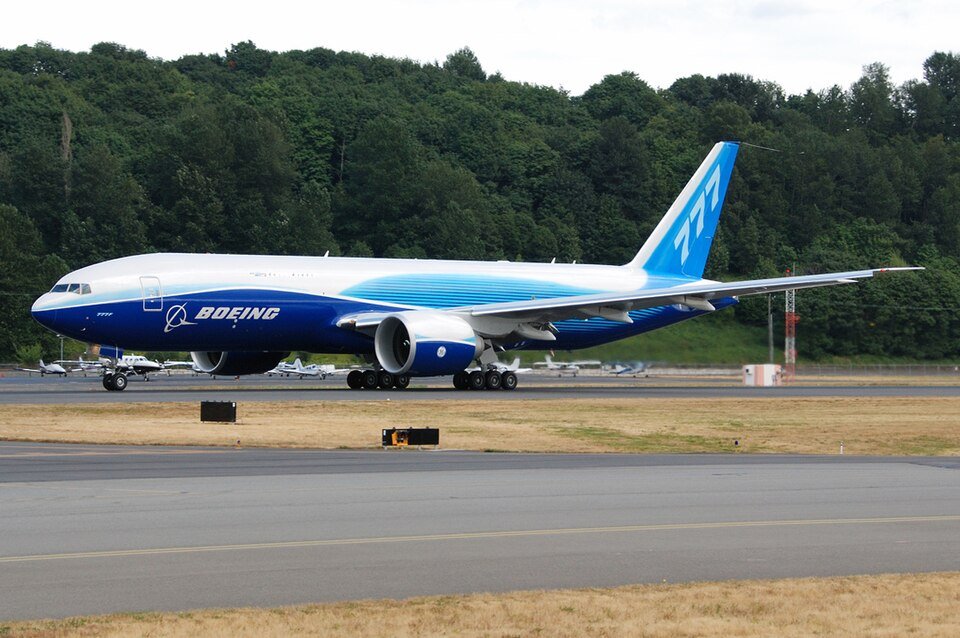
Washington, United States: The US Federal Aviation Administration (FAA) on 17 September 2026 approved an exemption allowing Boeing to sell up to 35 additional 777F freighters after new aircraft emissions requirements take effect on 1 January 2028. The decision provides a temporary bridge for Boeing’s current-generation large freighter while the company works toward certification and entry into service of its next-generation 777-8F.
Boeing had requested the exemption in December 2025, citing strong customer demand for the 777F and delays to certification of the 777-8F. The FAA’s exemption covers aircraft receiving their first certificates of airworthiness during the period beginning 1 January 2028 and extending to 1 January 2031, subject to the conditions of the decision. The exemption was signed on 15 September 2026 and posted to the public docket on 16 September 2026.
The 777F is currently the only large widebody freighter in production. Boeing’s planned replacement, the 777-8F, is not expected to enter service until approximately 2029, while the first 777-9 passenger aircraft is currently targeted for delivery in 2027. Boeing has said the first 777-8F delivery is expected approximately two years after the first 777-9 delivery.
The FAA’s 2024 aircraft fuel-efficiency rules adopt international standards for CO₂ emissions from aircraft. From 1 January 2028, the rules would prevent the issuance of an original certificate of airworthiness for certain aircraft that do not meet the applicable fuel-efficiency and greenhouse-gas emission limits.
Boeing’s petition sought relief specifically for 35 777F aircraft that cannot meet those limits. The FAA’s April 2026 notice described Boeing’s request as necessary to “meet existing customer demand and maintain production continuity” until the more fuel-efficient 777-8F becomes available.
The exemption therefore does not remove the emissions requirement for the 777F generally. Instead, it permits a limited number of additional aircraft to receive their initial airworthiness certification after the 2028 deadline.
The FAA said the decision provides Boeing with “flexibility and accommodating uncertainty in the certification timeline of the replacement dedicated freighter airplane, the 777-8F.”
The exemption allows Boeing to continue producing and selling the existing 777F for the limited number of aircraft covered by the FAA decision. The aircraft will continue to serve the global air-cargo market while Boeing transitions to the 777-8F, which is designed to replace the current-generation freighter.
Boeing has described the 777F as the most fuel-efficient aircraft in the global freight market and the only large widebody freighter currently in production. The company also said the FAA decision would “support cargo carriers as they serve growing demand for air freight with the most efficient large freighter in service today.”
The exemption is particularly significant because a production gap could otherwise have emerged between the end of 777F certification eligibility under the new rules and the availability of the 777-8F. Boeing had warned that such a gap could put more than $15 billion in US exports at risk.
Boeing has also previously said that each 777F exported to a foreign customer at list price contributes about $440 million to the US trade balance. Those figures are Boeing’s estimates rather than FAA calculations.
The FAA’s decision also considered the potential effect of allowing the additional 777Fs to enter service.
The agency estimates that the 35 aircraft could increase global freighter operations by approximately 2% and increase fuel consumption from global freighter operations by approximately 8%, compared with 2024 levels.
The exemption does not apply to 777Fs already operating. The new emissions requirements concern the certification of newly manufactured aircraft, meaning existing aircraft are not required to be removed from service because of the 2028 rule.
The exemption is directly linked to Boeing’s next-generation freighter programme. The 777-8F is intended to replace the current 777F and is based on the 777X family.
Boeing currently expects the first 777-8F to enter service approximately two years after the first 777-9 delivery. With the first 777-9 targeted for 2027, the 777-8F is expected around 2029.
The FAA exemption therefore gives Boeing additional time to maintain 777F production while the successor aircraft moves through certification.
Boeing submitted its exemption request to the FAA in December 2025. The company cited customer demand and the delayed certification of the 777-8F as the main reasons for seeking relief from the upcoming emissions requirements.
The FAA’s public record identified the petition as Docket FAA-2025-5699. Boeing requested relief from 14 CFR §38.1 and 40 CFR §1030.1, which incorporate the International Civil Aviation Organization’s aircraft CO₂ certification standards into US regulations.
The FAA subsequently approved the request as Exemption No. 26705. The decision was signed on 15 September 2026 and made available through the public docket on 16 September.
The 777F decision follows an earlier US exemption for Boeing’s 767 freighter. In 2024, Congress passed legislation allowing Boeing to continue producing the 767 freighter in the United States for another five years, through 2033, despite the incoming FAA efficiency requirements.
For the 777F, however, the FAA has imposed a specific numerical limit of 35 aircraft, linking the exemption to the transition toward the 777-8F rather than allowing unrestricted continuation of the current model.
The FAA’s decision consequently gives Boeing a defined production bridge while leaving the 2028 emissions requirements in place for aircraft outside the exemption.