Tokyo, Japan: Japan scrambled fighter jets after two suspected Russian aircraft violated its territorial airspace northwest of Okinoshima Island, off Fukuoka Prefecture, early on Tuesday, November 17, prompting the government to lodge an extremely stern diplomatic protest with Moscow.
According to Japan’s Ministry of Defense, the first suspected Russian aircraft entered Japanese airspace between approximately 4:07 a.m. and 4:10 a.m. local time, while a second, separate aircraft entered between 4:09 a.m. and 4:12 a.m. Both incursions occurred over Japanese territorial waters northwest of Okinoshima.
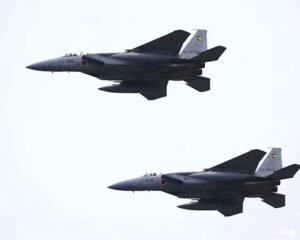
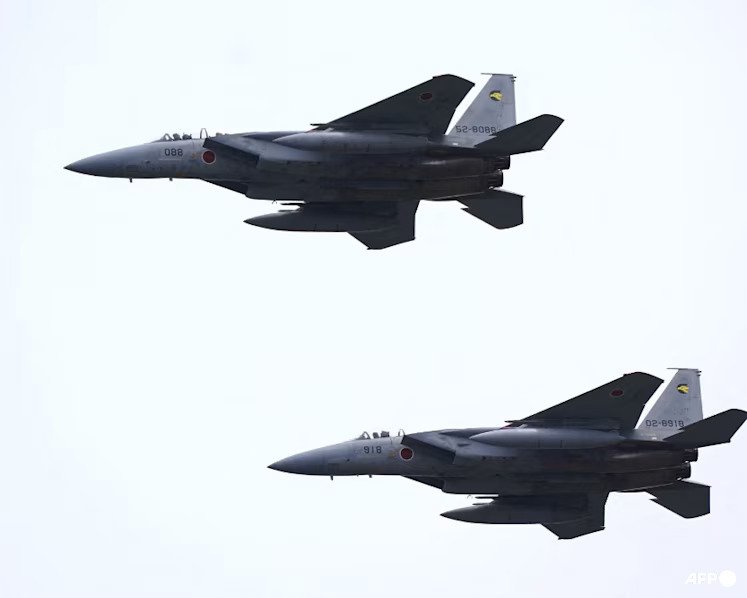
In response, the Japan Air Self-Defense Force (JASDF) scrambled fighter aircraft from its Western Air Defense Force and issued notifications and warnings. The ministry did not disclose the aircraft types or provide further details about their identification.
Japan’s Defence Minister Shinjiro Koizumi addressed the incident during a press conference on November 17, describing the violations as a serious infringement of the country’s sovereignty and a threat to its security.
“The violation of Japan’s airspace by Russian aircraft is not only a grave infringement of Japan’s sovereignty, but also a threat to our safety and is completely unacceptable,” he said. Koizumi confirmed that Tokyo had lodged an extremely stern protest with the Russian government through diplomatic channels and strongly demanded measures to prevent a recurrence.
The Ministry of Defense further confirmed that the suspected Russian aircraft passed through the Tsushima Strait before flying between Yonaguni Island and Taiwan and continuing into the Pacific Ocean.
Addressing the aircraft’s movements, Koizumi said Japan could not establish their specific intentions or objectives with certainty. He added that the ministry and Self-Defense Forces would continue monitoring Russian military activities closely and maintain vigilance and readiness to respond to airspace violations.
Separately, South Korea scrambled fighter jets on November 17, 2026, after several Russian military aircraft entered the Korea Air Defense Identification Zone (KADIZ) over the East Sea. The Joint Chiefs of Staff (JCS) said the military detected the aircraft before they entered the zone and deployed fighters to prepare for any potential contingency. The aircraft later left the zone without violating South Korean sovereign airspace. South Korean officials later confirmed that fewer than 10 aircraft were involved but did not disclose their types or flight paths.
Unlike the Japanese incident, the Russian aircraft did not enter South Korea’s territorial airspace. KADIZ is an identification zone extending beyond a country’s sovereign airspace, where approaching military aircraft are monitored to help prevent potential security incidents. Russia does not recognise South Korea’s jurisdiction over the zone, arguing that it lacks a basis in international law.