Pueblo Rico, Colombia: Five people were killed after a Cessna T206 operated by the Patrulla Aérea Civil Colombiana (PAC) crashed in mountainous terrain in Colombia while returning to Bogotá from a humanitarian medical mission in Chocó, with authorities confirming on 16 September 2026 that there were no survivors.
The aircraft, registration HK-4985, departed from Mandinga Airport in Condoto, Chocó, for Guaymaral Airport in Bogotá on 13 September. It was carrying pilot Mehmet Cankaya and four passengers, Perla Constanza Álvarez, Sandy García, María Victoria Guzmán and Julissa Figueredo. The group had been in Condoto for a medical brigade that began the previous week and provided healthcare to residents of Condoto and nearby communities. The mission was associated with the Patrulla Aérea Civil Colombiana and Colmédica, and reports said the medical team had been providing specialist healthcare as part of its humanitarian work.
The last communication with the aircraft was recorded at about 09:23 local time on 13 September while it was flying between Chocó and Risaralda. An emergency locator beacon was subsequently detected in the vicinity of Cerro Tatamá, prompting the Aeronáutica Civil to activate search-and-rescue procedures. The search area was in difficult mountainous and forested terrain around the Tatamá National Natural Park, close to the border area between Chocó and Risaralda.
The Fuerza Aeroespacial Colombiana (FAC) immediately joined the search through the National Personnel Recovery Centre. The operation involved Bell-212 and UH-60 Black Hawk helicopters as well as C-90 aircraft equipped with specialised geolocation and search equipment. The operation also received assistance from rescue personnel, members of the Indigenous Guard of the Tarena Reserve, local communities and volunteers. Around 170 military personnel, rescuers and local volunteers were involved at different stages of the operation.
On 14 September, at about 07:30 local time, a FAC UH-60 Black Hawk located indications believed to correspond to the missing aircraft near Parque Nacional Natural Tatamá. The FAC initially described the discovery as “indicios correspondientes a la aeronave”, meaning indications corresponding to the aircraft, while teams continued to verify the location and search for the occupants. The search was concentrated around the Oscordó area of Pueblo Rico, Risaralda.
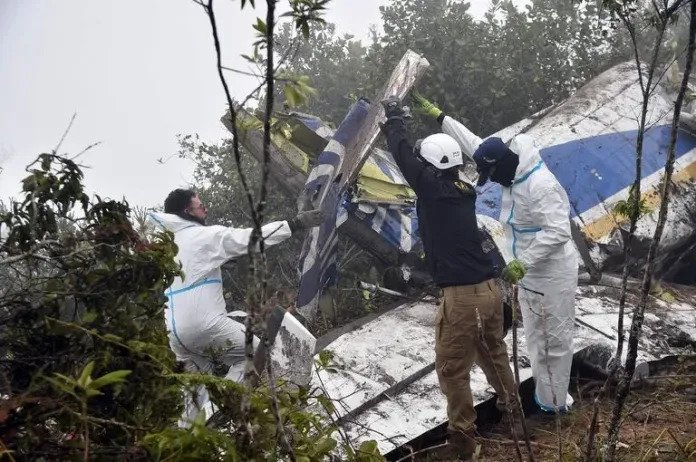
The location presented major difficulties for rescuers. The crash site was in high mountainous terrain at approximately 9,000 feet, with steep slopes, dense vegetation and changing weather conditions. General Luis Miguel Díaz Ríos, commander of Air Combat Command No. 5, said, “Las condiciones del terreno son bastante difíciles” and explained that the steep geography of the Western Cordillera made it difficult for helicopters to approach the site and recover personnel.
Because the helicopter could not safely land directly at the crash location, rescue personnel were inserted using a winch. General Díaz Ríos said, “a specialised search-and-rescue personnel deployed into the area. He also described the location as “una zona de geografía difícil” and said the mountain had a very steep angle that restricted both movement on the ground and helicopter access.
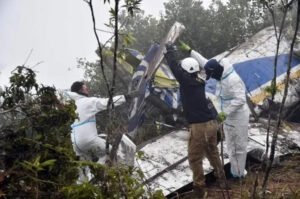
The aircraft was reported to have suffered extensive damage, with parts of the aircraft scattered around the crash area.
The five occupants were eventually found dead. The victims were identified as pilot Mehmet Cankaya and four women who had been part of the medical mission: Perla Constanza Álvarez, Sandy García, María Victoria Guzmán and Julissa Figueredo. PAC and Colmédica later issued a joint condolence message for the medical professionals and pilot.
The organisations said they were mourning the victims’ work providing medical assistance to communities in need. They also expressed condolences to the families and thanked those involved in the search and recovery operation.
The exact sequence that caused the aircraft to crash remains under investigation. Authorities have confirmed the loss of communication. However, no official investigation has established whether the aircraft experienced a mechanical problem, weather-related event, navigational issue, controlled flight into terrain, pilot error or another factor.