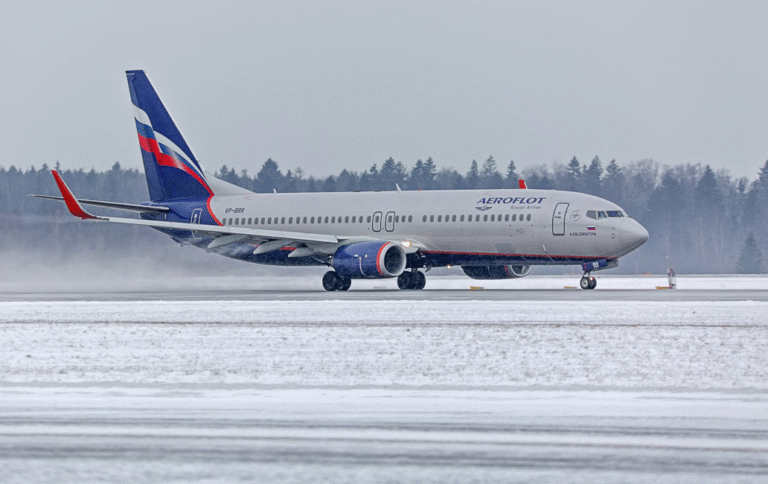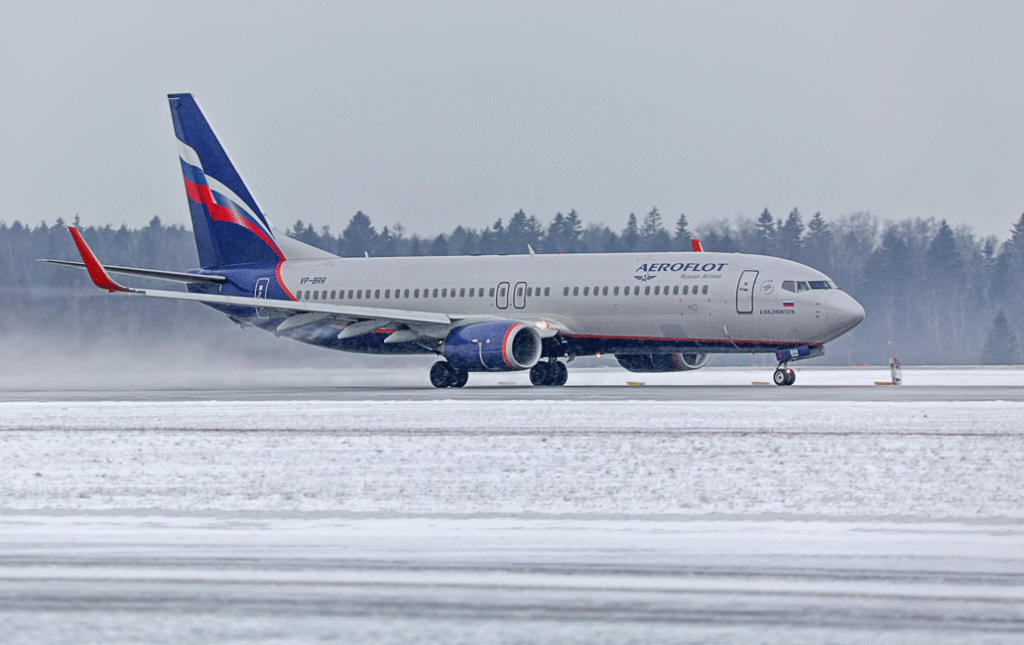
Moscow, Russia: At least 26 major Russian airports had introduced aircraft-refuelling restrictions according to an analysis of aeronautical-information-system notices by independent Russian outlet Verstka. The restrictions, introduced in waves in June and September, range from about one month to almost seven months. The latest available data also show jet-fuel prices reaching 125,703 roubles ($1,492) per tonne on 4 September 2026 according to exchange data. The figure is about 1.6 times the price at the beginning of the year.
The restrictions vary by airport. At St Petersburg’s Pulkovo Airport, from 2 September 2026 to 16 March 2027, aircraft can be refuelled only according to their flight plan, with no additional fuel volumes. A similar rule applies at Kaliningrad’s Khrabrovo Airport from 8 June to 6 December 2026, and both measures apply to Russian and foreign carriers. At 15 of the 26 airports, however, the restrictions apply only to foreign airlines, with NOTAMs stating that their refuelling is limited to the amount required for a single flight.
The affected airports identified by Verstka include Koltsovo in Yekaterinburg, Balandino in Chelyabinsk, Roshchino in Tyumen and Magnitogorsk in the Urals. In the Volga region, the report names Kazan, Saratov, Cheboksary, Perm, Orsk and Ufa, while Orenburg has restrictions applying to all airlines. In Siberia, restrictions affect foreign carriers at Abakan, while Irkutsk and Novokuznetsk have measures applying to all airlines. In the Russian Far East, foreign carriers face restrictions at Vladivostok, Khabarovsk, Petropavlovsk-Kamchatsky and Yakutsk.
The southern region has some of the broadest restrictions. Sochi, Volgograd and Astrakhan have limits applying to both Russian and foreign carriers, while Krasnodar has restrictions affecting foreign airlines. In the North Caucasus, restrictions for foreign aircraft were reported at Mineralnye Vody and Vladikavkaz (Beslan). Verstka also noted that earlier restrictions had appeared at Makhachkala and Nizhny Novgorod, but those notices were no longer active in its 7 September review.
There is, however, a qualification to the reported list. On 11 September, Kazan Airport publicly rejected reports that it had introduced fuel limits. Its press service said, “No restrictions concerning the refuelling of aircraft with fuel have been introduced at Kazan International Airport and none are planned.” The 26-airport figure should therefore be treated as the minimum identified from the NOTAM review as of 7 September, rather than as confirmation that every named airport still had an active restriction.
The restrictions come amid a wider Russian fuel-supply crisis linked to disruptions at oil refineries. Reuters reported that Russian gasoline production fell to about 80,000 tonnes per day by the end of August, against estimated summer demand of about 115,000 tonnes per day, leaving a gap of roughly 35,000 tonnes per day. Production for August averaged about 90,000 tonnes per day, or around 80% of estimated demand.
Russian refineries have faced repeated disruptions following drone attacks. Russian media reported that Ukrainian drones had attacked Russian refineries more than 70 times since the beginning of 2026, with several dozen facilities affected. In August alone, major plants including facilities in Perm, Nizhny Novgorod, Volgograd, Orsk, Saratov and elsewhere were reported to have faced shutdowns or repair work.
The pressure has also pushed Russia to increase imports of refined petroleum products. The Centre for Research on Energy and Clean Air reported that Russia imported 172,000 tonnes of oil products in August, worth €114 million, more than seven times its previous monthly high since the full-scale invasion and three times its total imports during 2025. Gasoline represented 74% of those imports, while India supplied 70% of Russia’s imported oil products, including 120,000 tonnes of gasoline worth €78 million.
Russia has also taken direct measures to protect domestic fuel supplies. On 1 June, the government introduced a temporary ban on jet-fuel exports through 30 November 2026, including aviation fuel purchased through exchange trading. The government said the measure was intended “to ensure stability in the domestic fuel market.”
The fuel situation had already surfaced as an aviation-specific problem in June. Azimuth Airlines warned that its main supplier had asked it to cut consumption by roughly one-third of agreed volumes because of disruptions at refineries. The airline said average aviation-fuel prices at Russian airports had risen by more than 17% since the beginning of June, while the price at Makhachkala had increased by 64% to 157,000 roubles ($1,863) per tonne, excluding VAT. Azimuth subsequently said it had to adjust its flight schedule because of logistical difficulties.
Russian authorities have repeatedly rejected the description of a nationwide aviation-fuel shortage. On 2 September, Transport Minister Andrei Nikitin said: “It is, let’s say, not ideal, but it is a working situation. We see jet fuel reserves, and these reserves appear in airports in a timely manner.” He added: “But I want to say again that thanks to coordinated joint work with the energy ministry, these problems are being resolved promptly. Airlines are provided with fuel.”
Rosaviatsia chief Dmitry Yadrov had similarly said in July: “Minenergo jointly with the Transport Ministry and other agencies are keeping the supply of kerosene to airports under control. As you can see, planes are flying and the schedule is being maintained.”
The contrast between those official assurances and the refuelling restrictions documented in NOTAMs points to a supply system under pressure rather than a formally acknowledged nationwide shutdown. For airlines, particularly foreign carriers, the practical effect is that some airports are limiting the amount of fuel that can be uplifted, potentially reducing the ability to carry additional fuel beyond the immediate flight requirement.