News
Civil Aviation
Pilot Training
Flight School Analysis
Aviation Jobs
Training
Services
About Us
Contact Us

Korean Air Sued Over Alleged In-Flight Medical Lapses After U.S. Defense Employee Death

Picture of Aviation Today News Desk

Aviation Today News Desk

Washington, United States: A fatal incident lawsuit has been filed against Korean Air following the death of a 33-year-old U.S. Department of Defense employee during a long-haul international flight, with court filings alleging a series of critical failures by cabin crew in responding to an in-flight medical emergency. The incident occurred on March 29, 2024, aboard Korean Air Flight KE94, operating from Washington Dulles International Airport to Incheon International Airport. Approximately 12 hours into the 15-hour journey, passenger Porscha Tynisha Brown, 33, reportedly began experiencing severe distress after returning from the lavatory, prompting a call for medical assistance over the aircraft’s public address system. According to the lawsuit and multiple witness accounts cited in filings, Brown collapsed in the aisle and complained of difficulty breathing, repeatedly stating that she could not breathe. Fellow passengers, including those with medical training, responded to assist as cabin crew attempted to manage the situation using onboard emergency equipment. The complaint alleges that although crew members provided an oxygen mask, it was not connected to a functioning oxygen supply, effectively rendering it useless during a critical period of respiratory distress. The lawsuit further claims that an automated external defibrillator (AED) was brought to the scene but was not properly operated, and passengers assisting Brown were not given clear instructions on how to use the device. Despite indications that a shock may have been required, none was delivered. Attorneys representing the victim’s estate argue that the cabin crew failed to take command of the situation, did not effectively coordinate the emergency response, and delayed communication with the flight deck, which in turn slowed the decision to divert the aircraft. While some emergency medical interventions, including the administration of epinephrine, were reportedly attempted by passengers, Brown’s condition continued to deteriorate. The aircraft eventually diverted to Osaka, where emergency services met the flight upon landing. Brown was transported to a local medical facility and was pronounced dead shortly thereafter. The reported cause of death was acute cardiac failure. The lawsuit, filed in the United States District Court for the Eastern District of Virginia, invokes provisions of the Montreal Convention, which governs airline liability in international travel. It alleges negligence, failure to adhere to established safety and emergency protocols, and inadequate training or execution by the airline’s crew. The filing asserts that Brown “likely would have survived” had proper procedures been followed and describes the incident as a “cascade of preventable failures.” Brown, a Maryland resident, worked as a civilian safety specialist with the U.S. Department of Defense at Fort Belvoir. Colleagues and family members describe her as a highly accomplished professional who had recently received an award of excellence and was planning to pursue further academic advancement. Her death has prompted calls for closer scrutiny of in-flight medical response standards and crew preparedness on long-haul international routes. In a statement, Korean Air acknowledged the lawsuit and said it would cooperate with legal proceedings but declined to comment further, citing the ongoing nature of the case.

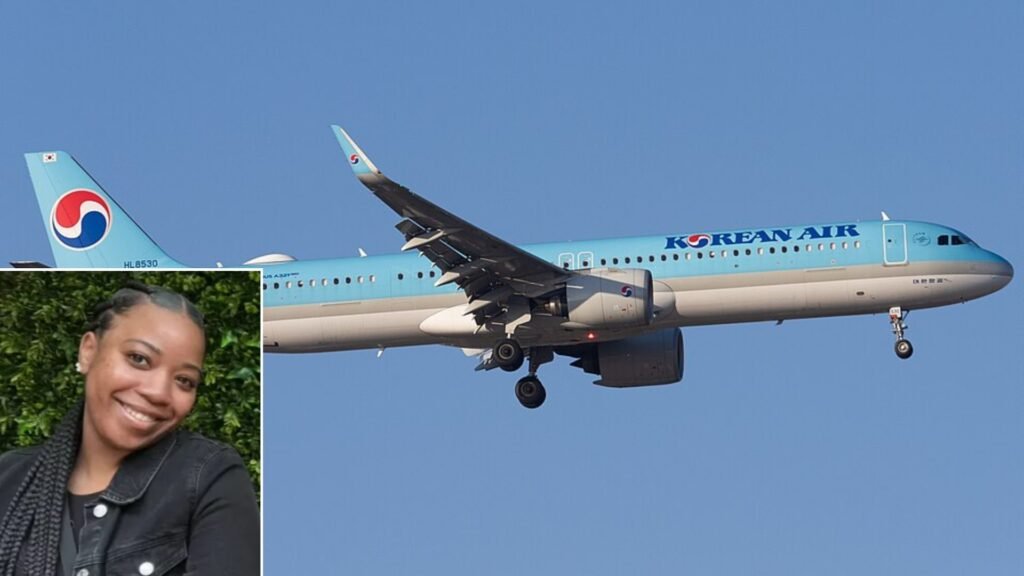
Image: N509FZ (Wikimedia)

Washington, United States: A fatal incident lawsuit has been filed against Korean Air following the death of a 33-year-old U.S. Department of Defense employee during a long-haul international flight, with court filings alleging a series of critical failures by cabin crew in responding to an in-flight medical emergency.

The incident occurred on March 29, 2024, aboard Korean Air Flight KE94, operating from Washington Dulles International Airport to Incheon International Airport. Approximately 12 hours into the 15-hour journey, passenger Porscha Tynisha Brown, 33, reportedly began experiencing severe distress after returning from the lavatory, prompting a call for medical assistance over the aircraft’s public address system.

According to the lawsuit and multiple witness accounts cited in filings, Brown collapsed in the aisle and complained of difficulty breathing, repeatedly stating that she could not breathe. Fellow passengers, including those with medical training, responded to assist as cabin crew attempted to manage the situation using onboard emergency equipment.

The complaint alleges that although crew members provided an oxygen mask, it was not connected to a functioning oxygen supply, effectively rendering it useless during a critical period of respiratory distress. The lawsuit further claims that an automated external defibrillator (AED) was brought to the scene but was not properly operated, and passengers assisting Brown were not given clear instructions on how to use the device. Despite indications that a shock may have been required, none was delivered.

Attorneys representing the victim’s estate argue that the cabin crew failed to take command of the situation, did not effectively coordinate the emergency response, and delayed communication with the flight deck, which in turn slowed the decision to divert the aircraft. While some emergency medical interventions, including the administration of epinephrine, were reportedly attempted by passengers, Brown’s condition continued to deteriorate.

The aircraft eventually diverted to Osaka, where emergency services met the flight upon landing. Brown was transported to a local medical facility and was pronounced dead shortly thereafter. The reported cause of death was acute cardiac failure.

The lawsuit, filed in the United States District Court for the Eastern District of Virginia, invokes provisions of the Montreal Convention, which governs airline liability in international travel. It alleges negligence, failure to adhere to established safety and emergency protocols, and inadequate training or execution by the airline’s crew. The filing asserts that Brown “likely would have survived” had proper procedures been followed and describes the incident as a “cascade of preventable failures.”

Brown, a Maryland resident, worked as a civilian safety specialist with the U.S. Department of Defense at Fort Belvoir. Colleagues and family members describe her as a highly accomplished professional who had recently received an award of excellence and was planning to pursue further academic advancement. Her death has prompted calls for closer scrutiny of in-flight medical response standards and crew preparedness on long-haul international routes.

In a statement, Korean Air acknowledged the lawsuit and said it would cooperate with legal proceedings but declined to comment further, citing the ongoing nature of the case.


Leave a Comment

Subscribe to our Newsletter

Recent News