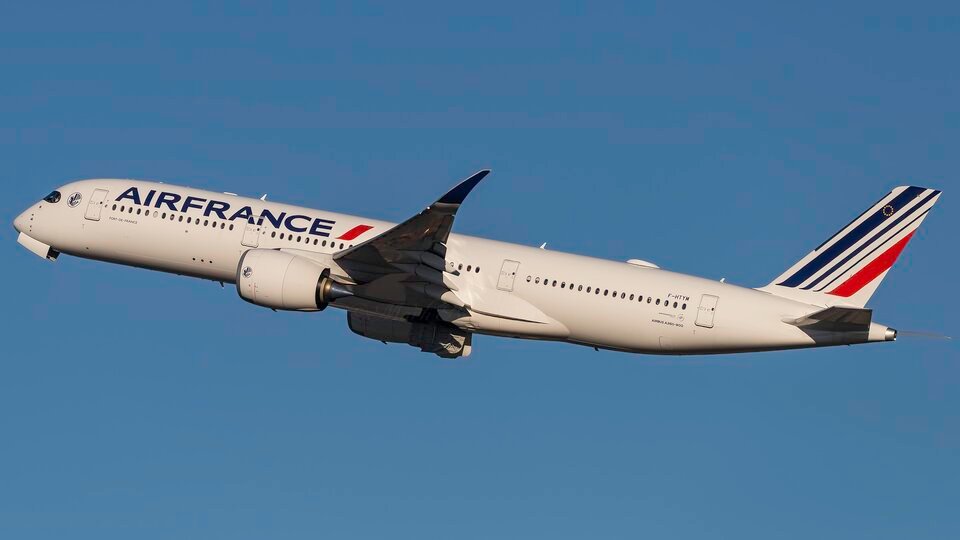
Abidjan, Côte d’Ivoire: An Air France Airbus A350-900 carrying 283 passengers and 12 crew members inadvertently taxied into a restricted military zone at Félix Houphouët-Boigny International Airport on February 3, prompting a security alert, lengthy recovery efforts and the cancellation of its scheduled return flight.
Air France Flight AF702 had completed a routine six-hour flight from Paris-Charles de Gaulle and touched down safely on Runway 03 at 19:27 GMT. The aircraft, registered F-HUVM, entered a designated taxi route for the civilian terminal after landing. However, during ground movement, it deviated from the assigned taxiway and proceeded into an adjoining military airfield area exclusively reserved for defence operations.
Airport and military officials quickly recognised the aircraft’s presence in the high-security zone. Due to the restricted access and narrow taxiway design, the wide-body A350 became effectively immobilised, complicating efforts to reposition the jet.
Emergency ground crews and specialised towing equipment were deployed in coordination with airport authorities to safely extricate the aircraft. Passengers remained on board for several hours before ground crews successfully guided the aircraft back to a civilian parking stand.
Though the aircraft landed without incident and no injuries to passengers or crew were reported, the error had significant operational consequences. Air France cancelled the return service, Flight AF703, to Paris as technicians flew in from France to conduct comprehensive safety inspections focusing particularly on the landing gear, tyres and structural components after the unplanned taxiway incursion.
Ivorian aviation authorities have opened a formal investigation into the ground movement miscue. Early inquiries are concentrating on ground-to-cockpit communications, taxiway signage clarity, and compliance with air traffic control instructions during the post-landing phase. Authorities are expected to release findings once the investigative review concludes.
Taxiway deviations are relatively rare in commercial operations, complex airport layouts particularly where civilian and military zones are in proximity increase the potential for navigational confusion during ground handling.