Bogota, Colombia: A scheduled domestic flight operated by state-owned airline SATENA crashed in the mountainous Norte de Santander region of northeastern Colombia on 28 January 2026, killing all 15 people on board, authorities confirmed.
The twin-engine Beechcraft 1900D turboprop, registered HK-4709, was flying as SATENA Flight 8849 from Camilo Daza International Airport in Cúcuta toward Aguas Claras Airport in Ocaña when it lost radio and radar contact with air traffic control at about 11:54 a.m. local time, roughly 12 minutes into the short domestic service.
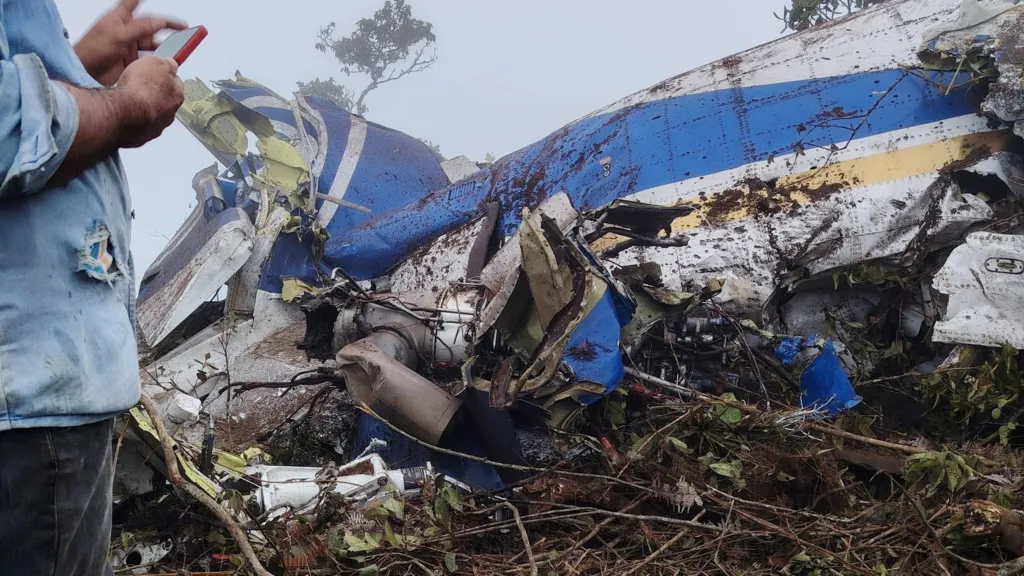
Search and rescue teams later located the wreckage on a cloud-covered mountainside near Curasica in the municipality of Playa de Belén, confirming there were no survivors among the 13 passengers and two crew members.
Among those killed were Diógenes Quintero Amaya, a 36-year-old member of Colombia’s House of Representatives representing the Catatumbo region, and Carlos Salcedo, a candidate in the upcoming congressional elections, according to passenger lists released by SATENA. Colombian authorities and local media also reported that members of Quintero’s team were on board.
SATENA said flight crews lost contact with the aircraft shortly before its scheduled landing in Ocaña. The plane’s emergency locator transmitter did not activate, which delayed initial detection of the crash site.
Once located, national authorities, including the Civil Aeronautics Authority (Aerocivil), the Colombian Aerospace Force, and military personnel, coordinated search and recovery operations in difficult terrain, hampered by dense fog and rugged mountains.
No definitive cause for the crash has yet been released. Colombian aviation regulators have opened a technical investigation to determine the sequence of events leading to the accident and any contributing factors.
Officials have not ruled out weather or terrain as influences, given the flight path over challenging mountainous territory near the Venezuela border.
The Beechcraft 1900D involved was operated under a wet-lease arrangement by SEARCA on behalf of SATENA. The aircraft type is widely used on short regional routes for its capability to operate in and out of airports with limited infrastructure.
The Cúcuta–Ocaña sector is a routine domestic service typically lasting under an hour. Radar data showed the aircraft climbed to approximately 12,900 feet before beginning its descent toward Ocaña, with its last known altitude recorded near 7,900 feet shortly before contact was lost.
Colombian officials, including President Gustavo Petro, expressed condolences to the families of the victims, describing the crash as a national tragedy.