News
Civil Aviation
Pilot Training
Flight School Analysis
Aviation Jobs
Training
Services
About Us
Contact Us

JetBlue Flight Makes Emergency Landing In Florida After Mid-Air Engine Failure

Picture of Aviation Today News Desk

Aviation Today News Desk

Florida, United States: JetBlue Airways flight B61058, operating from Oranjestad, Aruba (AUA) to New York’s John F. Kennedy International Airport (JFK), was forced to divert and make an emergency landing at Fort Lauderdale-Hollywood International Airport (FLL) on Sunday, January 18, 2026, after suffering an engine failure shortly after takeoff, airline and flight tracking sources confirmed. The aircraft, an Airbus A321neo registered N2086J, departed Aruba’s Queen Beatrix International Airport at approximately 1:59 PM Atlantic Standard Time (AST). Shortly after leaving the runway, pilots reported a “loud bang” and identified a malfunction in the right engine, prompting an immediate emergency declaration using the internationally recognized distress transponder code 7700, according to aviation reports. Following standard safety protocols, the flight crew elected to maintain a holding pattern near Aruba to burn and, as necessary, dump fuel to reduce weight ahead of landing. Once stabilized and in communication with air traffic control, the decision was made to divert to Fort Lauderdale, a major JetBlue maintenance hub with full emergency response capabilities. The aircraft landed safely at 5:21 PM local time (EST). Emergency response teams were positioned on standby at the airport, though no injuries were reported among the 180 passengers and six crew members aboard. Passengers were subsequently disembarked and provided assistance, with the airline arranging rebooking or alternative flights to New York to minimize disruption to travel plans. In the aftermath of the diversion, the aircraft was moved to a secure area of FLL where JetBlue’s technical personnel, supported by federal and aviation authorities, began a detailed inspection to determine the exact cause of the engine failure. The investigation will assess whether the issue stemmed from a mechanical fault within the engine, a related component malfunction, or other technical factors. JetBlue has placed the aircraft out of service pending completion of this assessment. It is standard practice in such incidents for airlines to work with regulatory and manufacturer stakeholders to analyze flight data, conduct engine examinations, and ensure that corrective actions or maintenance directives are implemented as needed.
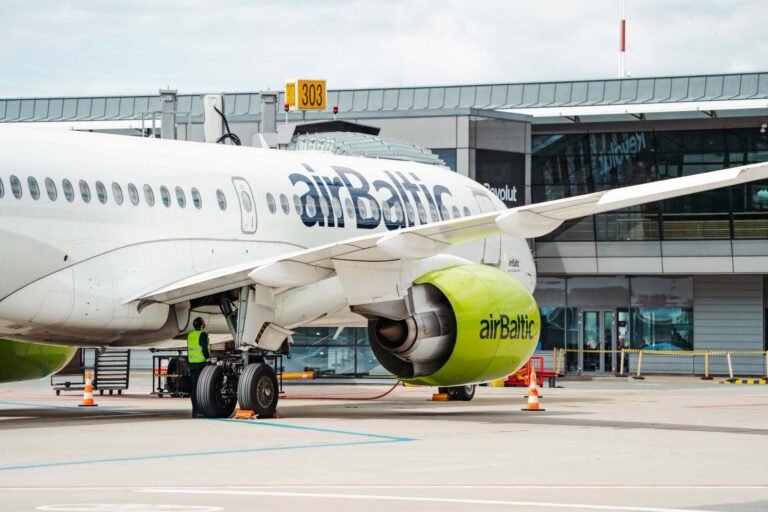
Image: 4300streetcar (Wikimedia) 

Florida, United States: JetBlue Airways flight B61058, operating from Oranjestad, Aruba (AUA) to New York’s John F. Kennedy International Airport (JFK), was forced to divert and make an emergency landing at Fort Lauderdale-Hollywood International Airport (FLL) on Sunday, January 18, 2026, after suffering an engine failure shortly after takeoff, airline and flight tracking sources confirmed.

The aircraft, an Airbus A321neo registered N2086J, departed Aruba’s Queen Beatrix International Airport at approximately 1:59 PM Atlantic Standard Time (AST). Shortly after leaving the runway, pilots reported a “loud bang” and identified a malfunction in the right engine, prompting an immediate emergency declaration using the internationally recognized distress transponder code 7700, according to aviation reports.

Following standard safety protocols, the flight crew elected to maintain a holding pattern near Aruba to burn and, as necessary, dump fuel to reduce weight ahead of landing. Once stabilized and in communication with air traffic control, the decision was made to divert to Fort Lauderdale, a major JetBlue maintenance hub with full emergency response capabilities.

The aircraft landed safely at 5:21 PM local time (EST). Emergency response teams were positioned on standby at the airport, though no injuries were reported among the 180 passengers and six crew members aboard. Passengers were subsequently disembarked and provided assistance, with the airline arranging rebooking or alternative flights to New York to minimize disruption to travel plans.

In the aftermath of the diversion, the aircraft was moved to a secure area of FLL where JetBlue’s technical personnel, supported by federal and aviation authorities, began a detailed inspection to determine the exact cause of the engine failure. The investigation will assess whether the issue stemmed from a mechanical fault within the engine, a related component malfunction, or other technical factors.

JetBlue has placed the aircraft out of service pending completion of this assessment. It is standard practice in such incidents for airlines to work with regulatory and manufacturer stakeholders to analyze flight data, conduct engine examinations, and ensure that corrective actions or maintenance directives are implemented as needed.

Leave a Comment

Subscribe to our Newsletter

Recent News

error: Unauthorized copying is not permitted