News
Civil Aviation
Pilot Training
Flight School Analysis
Aviation Jobs
Training
Services
About Us
Contact Us

Aviation Sector Drives $1.8B Into Oman’s Economy; Tourism Contribution Hits $710M

Picture of Aviation Today News Desk

Aviation Today News Desk

Muscat, Oman: Oman’s aviation industry has emerged as a significant economic pillar, contributing an estimated USD 1.8 billion to the Sultanate’s gross domestic product (GDP) in 2023, according to a recent economic impact assessment by the International Air Transport Association (IATA). The comprehensive IATA study, “The Value of Air Transport to Oman,” highlights the broad economic footprint of air transport across direct, indirect, and induced activities including airlines, airports, air navigation providers, supply chain partners, employee spending, and aviation‑facilitated tourism. Direct aviation activities encompassing Oman’s airlines, airport operators and on‑site service firms accounted for approximately USD 629.5 million in economic output, representing about 0.6 % of national GDP. When broader supply chain effects and tourism spillovers are included, the sector’s total contribution rises to 1.7 % of GDP. The sector is a material source of employment. Roughly 17,000 individuals work directly in aviation, while 42,000 jobs across the wider economy are supported when tourism, supporting industries and induced effects are factored in. Aviation‑supported tourism stands out as a major driver of economic value. In 2023, tourism linked to air transport contributed approximately USD 710 million to Oman’s GDP and supported about 18,000 jobs. International visitors arriving by air are estimated to have injected nearly USD 2.9 billion into the economy via spending on accommodation, transport services, retail and local hospitality sectors. These figures emphasize the synergy between aviation and tourism, a strategic focus for Oman as it diversifies away from hydrocarbon‑dependent growth and strengthens its services industries. Passenger traffic patterns reflect Oman’s international role. In 2023, international departures accounted for 80 % of total origin‑destination passenger movements, with 3.8 million passenger departures recorded. The Asia‑Pacific region constituted the largest market share at 48 %, followed by the Middle East at 33 % and Europe at 12 %. Air cargo also plays an important economic role. Omani airports handled 169,500 tonnes of air freight in 2023, bolstering the nation’s trade, supply chain logistics and time‑sensitive import/export activities. The civil aviation sector’s performance aligns with national strategic priorities to enhance global connectivity and attract foreign visitors, supporting the broader Oman Vision 2040 economic diversification agenda. Recent growth in operational metrics including aircraft movements and revenue increases reported by the Civil Aviation Authority reinforces the sector’s expanding role in national economic planning. Government and industry stakeholders continue to invest in infrastructure upgrades, expanded route networks and private‑sector partnerships in ground handling, maintenance, and cargo services to deepen Oman’s logistical and tourism appeal.
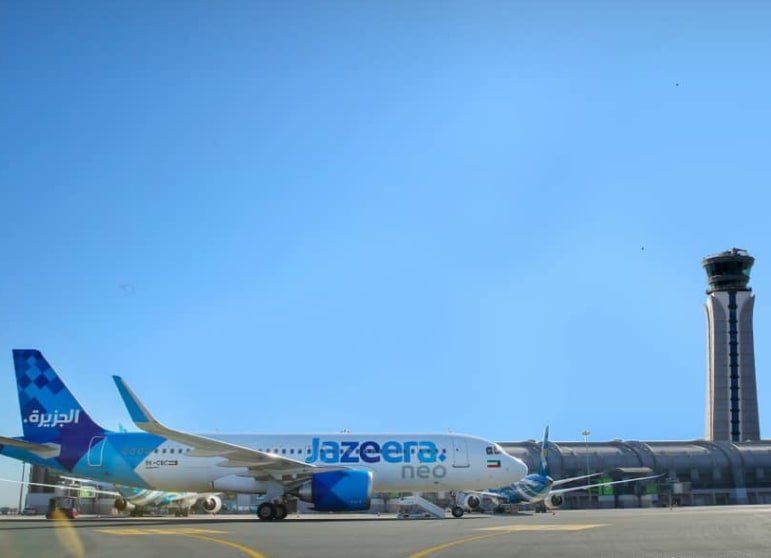
Image: Muscat International Airport

Muscat, Oman: Oman’s aviation industry has emerged as a significant economic pillar, contributing an estimated USD 1.8 billion to the Sultanate’s gross domestic product (GDP) in 2023, according to a recent economic impact assessment by the International Air Transport Association (IATA). 

The comprehensive IATA study, “The Value of Air Transport to Oman,” highlights the broad economic footprint of air transport across direct, indirect, and induced activities including airlines, airports, air navigation providers, supply chain partners, employee spending, and aviation‑facilitated tourism. 

Direct aviation activities encompassing Oman’s airlines, airport operators and on‑site service firms accounted for approximately USD 629.5 million in economic output, representing about 0.6 % of national GDP. When broader supply chain effects and tourism spillovers are included, the sector’s total contribution rises to 1.7 % of GDP. 

The sector is a material source of employment. Roughly 17,000 individuals work directly in aviation, while 42,000 jobs across the wider economy are supported when tourism, supporting industries and induced effects are factored in.

Aviation‑supported tourism stands out as a major driver of economic value. In 2023, tourism linked to air transport contributed approximately USD 710 million to Oman’s GDP and supported about 18,000 jobs. International visitors arriving by air are estimated to have injected nearly USD 2.9 billion into the economy via spending on accommodation, transport services, retail and local hospitality sectors. 

These figures emphasize the synergy between aviation and tourism, a strategic focus for Oman as it diversifies away from hydrocarbon‑dependent growth and strengthens its services industries.

Passenger traffic patterns reflect Oman’s international role. In 2023, international departures accounted for 80 % of total origin‑destination passenger movements, with 3.8 million passenger departures recorded. The Asia‑Pacific region constituted the largest market share at 48 %, followed by the Middle East at 33 % and Europe at 12 %. 

Air cargo also plays an important economic role. Omani airports handled 169,500 tonnes of air freight in 2023, bolstering the nation’s trade, supply chain logistics and time‑sensitive import/export activities. 

The civil aviation sector’s performance aligns with national strategic priorities to enhance global connectivity and attract foreign visitors, supporting the broader Oman Vision 2040 economic diversification agenda. Recent growth in operational metrics including aircraft movements and revenue increases reported by the Civil Aviation Authority reinforces the sector’s expanding role in national economic planning. 

Government and industry stakeholders continue to invest in infrastructure upgrades, expanded route networks and private‑sector partnerships in ground handling, maintenance, and cargo services to deepen Oman’s logistical and tourism appeal.


Leave a Comment

Subscribe to our Newsletter

Recent News

error: Unauthorized copying is not permitted