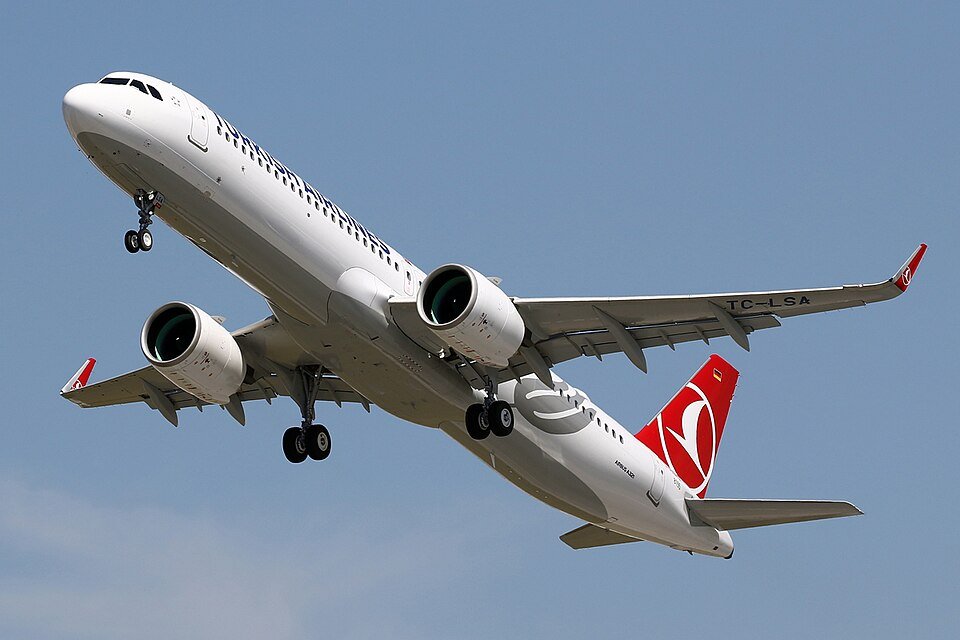
Muscat, Oman: A Turkish Airlines flight from Istanbul to Muscat International Airport (MCT) became the centre of an unusual aviation exchange on Sunday when the aircraft’s flight crew and Muscat air traffic control (ATC) disagreed over a descent clearance during the approach phase.
The Airbus A321neo was being vectored for an Instrument Landing System (ILS) approach when Muscat ATC instructed the crew to descend to 2,200 feet, identified by controllers as a minimum safe altitude suitable for sequencing and terrain clearance in that segment of airspace.
The pilot responded that the airline’s company-approved navigation charts did not list 2,200 feet as an acceptable minimum altitude in that sector and that his flight crew could only descend to 3,600 feet in accordance with their procedures and published minimum vectoring altitudes (MVAs).
In recorded ATC transmissions that have circulated within aviation safety analysis communities, the exchange became tense as the pilot repeatedly stated he was “unable to accept vectors” below the charted limit. The controller, while asserting that “our minimum safe altitude is 2,200,” urged the flight crew to comply with ATC instructions.
Despite the firm tone in radio exchanges, both sides maintained professional conduct, and the disagreement did not escalate into an unsafe operational situation. The pilot proposed alternative vectors that would allow the aircraft to remain at or above 3,600 feet while aligning for the approach sequence.
Minimum vectoring altitude and minimum safe altitude figures are critical safety parameters that provide required terrain and obstacle clearance during radar vectoring. Air traffic controllers and pilots derive these altitudes from different sources controllers from their local surveillance and obstacle databases, and pilots from company-approved charts often supplied by third-party aeronautical data providers.
International aviation regulations and standard operating procedures emphasise that the pilot in command retains ultimate responsibility for the safety of the aircraft. When an ATC-issued clearance conflicts with a pilot’s verified safety limits, the flight crew may lawfully decline and request clarification or alternative instructions.
The Turkish Airlines aircraft remained at or above the altitude the crew could accept until it was safely established on the final approach. There were no reported safety incidents, and the flight landed without further operational disruption.