News
Civil Aviation
Pilot Training
Flight School Analysis
Aviation Jobs
Training
Services
About Us
Contact Us

IndiGo To Hire 900 Pilots In Record Drive Ahead Of DGCA Night-Flight Deadline

Picture of Aviation Today News Desk

Aviation Today News Desk

New Delhi, India: India’s largest airline, IndiGo, is gearing up for a record-scale pilot recruitment drive to meet the February 10 DGCA deadline under revised flight duty regulations, following a surge in flight cancellations due to operational strain. Pilot Availability and Recruitment Plan For its Airbus fleet, IndiGo reported 2,357 captains and 2,194 first officers as of December. The airline plans to bolster its crew numbers in the coming months as follows: By end-December 2025: 25 captains and 35 first officers January 2026: 28 captains and 35 first officers By February 10, 2026: 15 captains and 20 first officers This recruitment would raise the total to 2,425 captains and 2,284 first officers by the February compliance date. As per its FY25 annual report, IndiGo had 5,456 pilots in total, including captains and first officers. India’s civil-aviation regulator, DGCA, has granted a one-time relaxation of certain night-duty and crew-rest provisions under the revised Flight Duty Time Limitation (FDTL) norms to help stabilize operations after hundreds of flight cancellations last week by IndiGo. The relaxation, valid until 10 February 2026, covers night-flying limits and allows leave to count as part of weekly rest periods. The disruption began after the second phase of FDTL norms took effect on 1 November 2025, introducing stricter duty-hour caps, night-flying restrictions, and extended weekly rest measures to reduce pilot fatigue and improve safety. Airlines struggled with roster planning and crew availability under the new rules, leading to widespread cancellations. Thousands of passengers at major airports including Delhi, Mumbai, Bengaluru, and Hyderabad faced delays, long queues, and frustration. Airlines warned disruptions would continue for a few more days and began scaling down operations from 8 December to restore normal service. To manage crew shortages, IndiGo announced it would cancel 300–400 flights daily between 5 and 8 December to reset its roster, followed by a revised schedule from 10 to 31 December. Analysts have flagged that the scale and speed of recruitment may be difficult to achieve. Elara Securities estimates IndiGo may need to hire at least 900 pilots to comply fully by February. “Meeting this target could be challenging, as poaching talent is difficult due to long notice periods, six months for co-pilots and 12 months for captains,” said Gagan Dixit, Senior Vice President at Elara Securities. Mark D Martin, CEO of Martin Consulting, added that immediate availability remains a key constraint, noting that foreign pilot hiring requires a minimum of three months for regulatory clearances. IndiGo operates 417 aircraft, including A320s, ATRs, a Boeing jet on wet lease, and freighters. Nearly 40 A320 aircraft remain grounded due to engine issues with Pratt & Whitney, reducing the effective A320 fleet to about 325 aircraft. These aircraft are flown for about 14 hours daily, significantly higher than the industry norm of 8.5 hours. At this utilisation, IndiGo requires 17 pilot-and-copilot sets per aircraft, versus the usual 14. Martin Consulting estimates the crew requirement at 5,525, while DGCA filings show 4,551 crew available in December, a shortfall of 974 pilots. IndiGo operates with 2.5 pilots per departure, compared to 5.4 pilots for Air India and Akasa Air. This reflects both IndiGo’s fleet concentration on narrow-body A320s and higher aircraft utilisation. The airline’s heavy reliance on high-utilisation A320 operations means that each additional flying hour amplifies its pilot requirement. With nearly 40 aircraft grounded, IndiGo is attempting to maintain schedules with fewer pilots, compounding the challenge just as night-operation curbs tighten. Analysts warn that bridging the gap will require aggressive recruitment, expedited training, and regulatory approvals, all while maintaining operational safety.
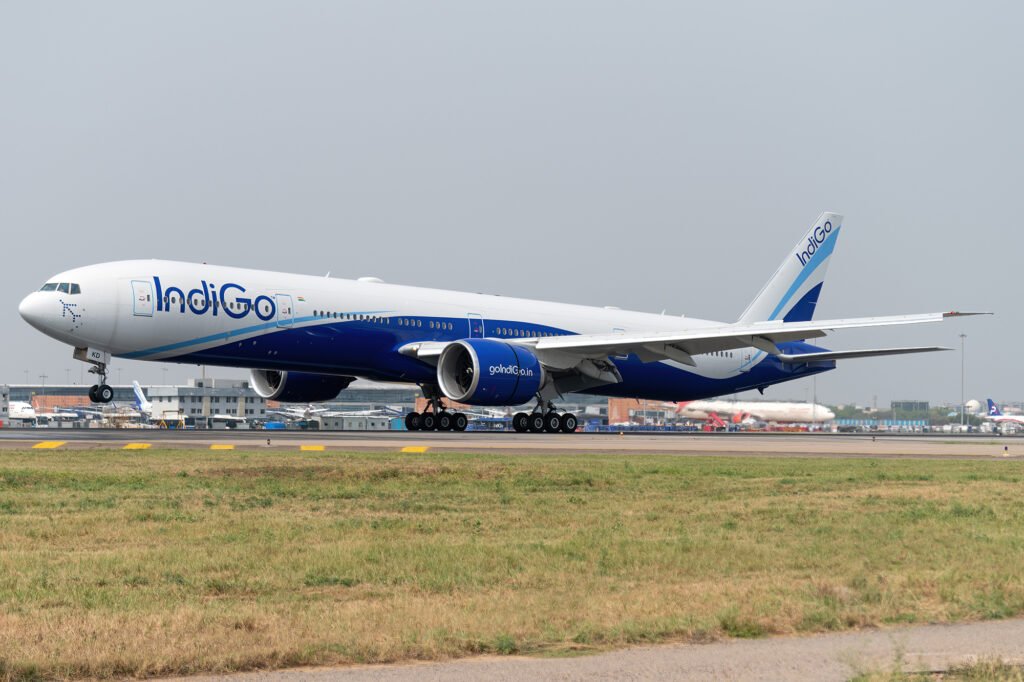
Image: IndiGo

New Delhi, India: India’s largest airline, IndiGo, is gearing up for a record-scale pilot recruitment drive to meet the February 10 DGCA deadline under revised flight duty regulations, following a surge in flight cancellations due to operational strain.

Pilot Availability and Recruitment Plan

For its Airbus fleet, IndiGo reported 2,357 captains and 2,194 first officers as of December. The airline plans to bolster its crew numbers in the coming months as follows:

  • By end-December 2025: 25 captains and 35 first officers
  • January 2026: 28 captains and 35 first officers
  • By February 10, 2026: 15 captains and 20 first officers

This recruitment would raise the total to 2,425 captains and 2,284 first officers by the February compliance date. As per its FY25 annual report, IndiGo had 5,456 pilots in total, including captains and first officers.

India’s civil-aviation regulator, DGCA, has granted a one-time relaxation of certain night-duty and crew-rest provisions under the revised Flight Duty Time Limitation (FDTL) norms to help stabilize operations after hundreds of flight cancellations last week by IndiGo. The relaxation, valid until 10 February 2026, covers night-flying limits and allows leave to count as part of weekly rest periods.

The disruption began after the second phase of FDTL norms took effect on 1 November 2025, introducing stricter duty-hour caps, night-flying restrictions, and extended weekly rest measures to reduce pilot fatigue and improve safety. Airlines struggled with roster planning and crew availability under the new rules, leading to widespread cancellations.

Thousands of passengers at major airports including Delhi, Mumbai, Bengaluru, and Hyderabad faced delays, long queues, and frustration. Airlines warned disruptions would continue for a few more days and began scaling down operations from 8 December to restore normal service.

To manage crew shortages, IndiGo announced it would cancel 300–400 flights daily between 5 and 8 December to reset its roster, followed by a revised schedule from 10 to 31 December. Analysts have flagged that the scale and speed of recruitment may be difficult to achieve. The airline detailed its hiring ramp-up in a submission to the DGCA, according to documents reviewed by Mint, stating it plans to induct 158 pilots by February, while the remaining 742 will be hired gradually by December next year, underlining the scale of the staffing challenge.

“Meeting this target could be challenging, as poaching talent is difficult due to long notice periods, six months for co-pilots and 12 months for captains,” said Gagan Dixit, Senior Vice President at Elara Securities.

Mark D Martin, CEO of Martin Consulting, added that immediate availability remains a key constraint, noting that foreign pilot hiring requires a minimum of three months for regulatory clearances.

IndiGo operates 417 aircraft, including A320s, ATRs, a Boeing jet on wet lease, and freighters. Nearly 40 A320 aircraft remain grounded due to engine issues with Pratt & Whitney, reducing the effective A320 fleet to about 325 aircraft.

These aircraft are flown for about 14 hours daily, significantly higher than the industry norm of 8.5 hours. At this utilisation, IndiGo requires 17 pilot-and-copilot sets per aircraft, versus the usual 14. Martin Consulting estimates the crew requirement at 5,525, while DGCA filings show 4,551 crew available in December, a shortfall of 974 pilots.

IndiGo operates with 2.5 pilots per departure, compared to 5.4 pilots for Air India and Akasa Air. This reflects both IndiGo’s fleet concentration on narrow-body A320s and higher aircraft utilisation.

The airline’s heavy reliance on high-utilisation A320 operations means that each additional flying hour amplifies its pilot requirement. With nearly 40 aircraft grounded, IndiGo is attempting to maintain schedules with fewer pilots, compounding the challenge just as night-operation curbs tighten.

Analysts warn that bridging the gap will require aggressive recruitment, expedited training, and regulatory approvals, all while maintaining operational safety.

Leave a Comment

Subscribe to our Newsletter

Recent News