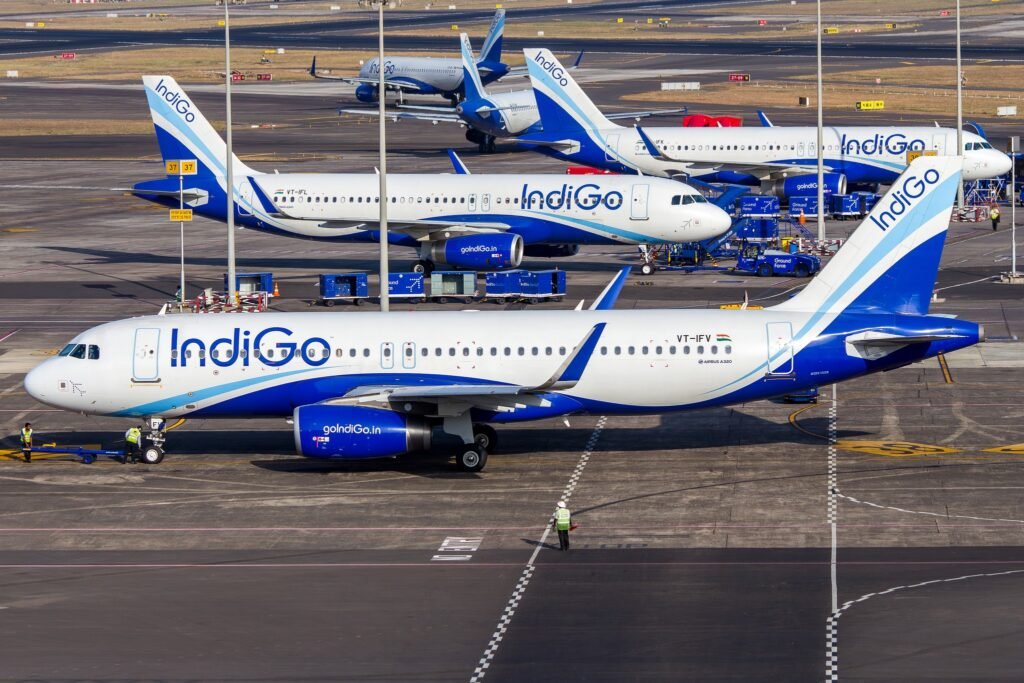
New Delhi, India: India’s largest airline, IndiGo, faced severe operational disruption on Thursday as flight cancellations mounted for a fourth consecutive day, with media reports estimating that cumulative cancellations during the multi-day disruption crossed the 550 flight mark nationwide.
The impact was most visible at major airports including Delhi, Mumbai, Ahmedabad and Hyderabad, where nearly 200 flights were cancelled during the day, according to airport-level data. Long queues, missed connections and delayed rebookings were reported across terminals as the airline struggled to stabilise operations.
IndiGo issued a public apology for the disruption and said it was working closely with airport authorities and regulators to restore normal schedules and minimise passenger inconvenience.
The airline has been grappling with mounting operational stress over the past several days, driven largely by crew availability constraints and scheduling challenges following the implementation of stricter pilot duty and rest norms. Officials said the cascading effect of earlier cancellations further worsened aircraft and crew rotations across the network.
Airport-wise data showed that Mumbai alone accounted for 86 cancellations, Bengaluru saw 73, and Delhi recorded over 30 cancellations, highlighting the scale of network-wide disruption at India’s busiest aviation hubs. The multi-day turmoil has left thousands of passengers stranded, with severe delays, missed connections, and cascading operational failures across the carrier’s domestic network.
The flight cancellations followed a dramatic collapse in punctuality earlier in the week. On Wednesday, December 3, IndiGo’s on-time performance (OTP) plunged to just 19.7%, its lowest level in years. This marked a steep fall from 35% recorded a day earlier, indicating a rapid deterioration in schedule reliability. With fewer than one in five flights operating on time, IndiGo, once regarded as India’s most punctual airline, saw its reputation for schedule discipline severely eroded within 48 hours. For Thursday, December 4, sustained cancellations, rolling delays and aircraft rotation failures across multiple cities throughout the day indicated that punctuality remained under acute pressure.
The crisis has been triggered primarily by an acute shortage of available pilots following the implementation of stricter crew duty and rest regulations. IndiGo underestimated the number of additional pilots required to sustain its high-frequency schedule under the new regulatory framework. As a result, the airline was left with little buffer once the stricter rest rules became enforceable.
Once the first wave of cancellations began, the crisis escalated rapidly through cascading operational failures, including aircraft misplacement, delayed crew handovers, disrupted maintenance windows, and congestion at high-density airports. These knock-on effects compounded recovery efforts and caused rolling delays across multiple flight banks through the day.
The underlying trigger for the disruption lies in the revised Flight Duty Time Limitation (FDTL) norms introduced by the DGCA, aimed at strengthening aviation safety by reducing fatigue-related risks for pilots. The second and most stringent phase of these rules came into force on November 1, 2025. Under the revised framework, pilots are mandated to receive 48 consecutive hours of weekly rest, face tighter limits on consecutive night duties, and are subject to caps on night landings and duty extensions.
While the industry had advance notice of the regulatory changes, IndiGo’s internal staffing preparedness appears to have fallen short. Officials said the airline had operated with a very thin standby crew margin even before the new norms were enforced, leaving it vulnerable to large-scale disruption once pilot availability dropped.
With passenger inconvenience mounting and network stability deteriorating, the DGCA has now stepped in to closely supervise IndiGo’s recovery plan. The regulator has directed the airline to submit a detailed mitigation strategy covering crew hiring, training schedules and revised rostering practices.
DGCA is planning to grant airlines a temporary, conditional waiver from certain pilot rest provisions to arrest further operational collapse. The regulator has relaxed its earlier instruction that prohibited substituting weekly rest with leave, withdrawing that condition with immediate effect to help airlines maintain operational stability amid widespread disruptions.
Simultaneously, DGCA has issued a formal appeal to IndiGo and the wider pilot community seeking full cooperation to manage the ongoing flight disruptions driven by operational constraints, unpredictable weather, rising seasonal demand, and the approaching fog and holiday travel season. DGCA urged IndiGo’s pilots to support smooth operations, minimize avoidable delays and cancellations, prevent further passenger inconvenience, and strengthen coordination with the airline, while reaffirming that safety and strict compliance with Flight Duty Time Limitation (FDTL) norms remain non-negotiable.
The proposed relief is expected to be short-term and tightly monitored, with compliance milestones linked to crew augmentation and scheduling corrections. The regulator has made it clear that safety standards will not be permanently diluted and that any relaxation will be transitional.
IndiGo has informed authorities that it expects phased stabilisation of its network by February 10, 2026, subject to successful induction of additional crew and progressive restoration of flight rotations.
The disruption at IndiGo which operates over 2,000 flights daily and carries more than half of India’s domestic air passengers has sent ripples through the aviation sector. While the FDTL norms are widely seen as a necessary safety reform, the crisis has exposed the operational vulnerability of airlines that expand capacity faster than manpower buffers.
For passengers, uncertainty is likely to continue in the near term. Aviation officials have advised travellers to monitor flight status closely and exercise refund and rebooking rights in the event of cancellations as IndiGo works to stabilise its schedule.