News
Civil Aviation
Pilot Training
Flight School Analysis
Aviation Jobs
Training
Services
About Us
Contact Us

IAG Cuts 2026 Capacity Growth Outlook As Middle East Crisis Drives Fuel Cost Surge

Picture of Aviation Today News Desk

Aviation Today News Desk

London, United Kingdom: International Airlines Group (IAG), the parent company of British Airways, Iberia, Aer Lingus, Vueling and LEVEL, has revised its 2026 capacity outlook to flat, abandoning its earlier plan to grow capacity by around 3% this year after the conflict in the Middle East disrupted operations, pushed jet fuel prices sharply higher and altered global travel patterns. The revised guidance was announced alongside the group's first-half 2026 financial results, which showed resilient passenger demand despite mounting geopolitical and cost pressures. The airline group now expects available seat kilometres (ASKs) in 2026 to remain unchanged from 2025, a significant downgrade from the growth forecast it had maintained at the end of the first quarter. According to the company, the revision reflects lower-than-planned flying caused by the Middle East conflict, aircraft availability constraints linked to engine issues, and a strategy aimed at protecting profitability amid higher operating costs. Despite the weaker capacity outlook, IAG Chief Executive Officer Luis Gallego said the group remained confident about long-term demand and the resilience of its business model. "With these results IAG has again demonstrated that its excellent fundamentals are supporting continued value creation for our shareholders, despite the impact of the crisis in the Middle East and wider geopolitical events. "We are well-positioned to deal with these near-term headwinds with a diverse portfolio of world-class brands in large and attractive markets; industry-leading margins; significant free cash flow and a strong balance sheet; and attractive shareholder returns. "Our long-term transformation programme has created the resilience that we are now benefiting from - products and services that our customers value, efficient and punctual operations and a low cost base." Gallego added that the company remained confident in its strategy, stating, "We remain confident in our business model and strategy that has made us one of the best-performing airline groups in the world." The company also reaffirmed that travel demand across its network continues to remain strong despite recent geopolitical volatility. IAG said bookings for the second half of 2026 remained encouraging, with approximately 57% of second-half capacity already booked and booked revenue broadly in line with the same period last year. While long-haul markets are expected to remain healthy, management warned that European short-haul markets are becoming increasingly competitive as airlines redeploy aircraft from disrupted Middle East routes into other regions. Financially, IAG reported first-half revenue of €16.064 billion, up 1% year-on-year, driven by continued strong passenger demand across its portfolio of airlines. Operating profit before exceptional items stood at €1.757 billion, compared with €1.878 billion a year earlier, while operating margin before exceptional items declined from 11.8% to 10.9%. Reported operating profit fell 14.4% to €1.608 billion, and profit after tax declined 20.6% to €1.033 billion, reflecting higher fuel costs, restructuring expenses and adverse foreign exchange impacts. The group's fuel bill emerged as one of the biggest challenges during the first half of the year. Fuel costs and emissions charges increased by 12.3% to €3.956 billion, largely because commodity fuel prices climbed sharply following the outbreak of conflict in the Middle East and disruptions to oil exports through the Strait of Hormuz. Although IAG's hedging strategy helped offset part of the increase, management expects total fuel costs for 2026 to range between €8.3 billion and €8.6 billion, depending on market prices during the remainder of the year. According to the company, around 60% of the higher fuel costs are expected to be recovered through a combination of higher fares and cost-saving initiatives, while the remaining increase will continue to weigh on profitability. Management said its fuel hedging policy remains unchanged and continues to provide protection against commodity price volatility. The Middle East conflict significantly disrupted IAG's operations, forcing the suspension of flights to Abu Dhabi, Amman, Bahrain, Doha, Dubai, Tel Aviv and Jeddah. In response, British Airways redeployed aircraft to destinations including Bangkok, Bengaluru, Delhi, Malé, Nairobi and Singapore, while Iberia shifted capacity to Japan, Latin America, North America and the Spanish Islands. Despite the disruption, demand remained resilient across the group's network. British Airways continued to benefit from strong premium and corporate travel on North Atlantic routes, while Iberia expanded its long-haul network with Airbus A321XLR aircraft. Latin America also remained a growth market, although IAG said competition in European short-haul markets intensified as airlines redeployed aircraft from the Middle East, limiting fare increases to offset higher fuel costs. The group said it would continue reviewing winter capacity to protect profitability. IAG also continued its transformation programme, with British Airways rolling out its new digital booking platform and mobile app, while Iberia and Vueling advanced fleet and network modernisation initiatives. The group is also expanding Starlink high-speed connectivity across its long-haul fleet. Looking ahead, IAG expects long-haul demand to remain strong while short-haul markets remain highly competitive. The group reaffirmed its target of delivering a 12% to 15% operating margin, generating significant free cash flow and maintaining a strong balance sheet despite ongoing geopolitical uncertainty and elevated fuel costs.

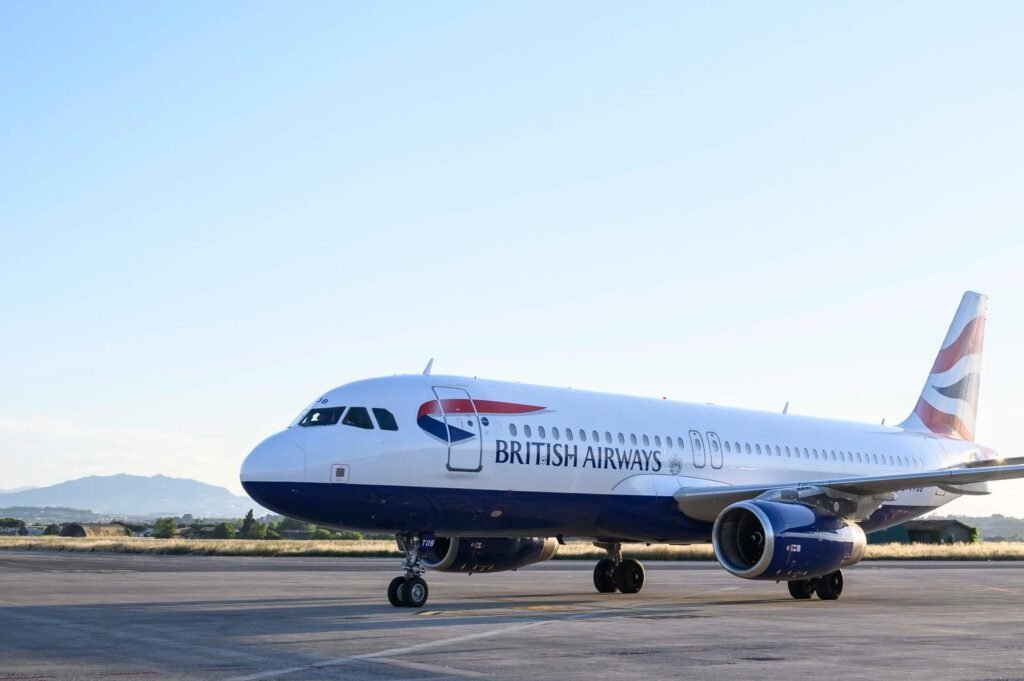
Image: British Airways

London, United Kingdom: International Airlines Group (IAG), the parent company of British Airways, Iberia, Aer Lingus, Vueling and LEVEL, has revised its 2026 capacity outlook to flat, abandoning its earlier plan to grow capacity by around 3% this year after the conflict in the Middle East disrupted operations, pushed jet fuel prices sharply higher and altered global travel patterns. The revised guidance was announced alongside the group’s first-half 2026 financial results, which showed resilient passenger demand despite mounting geopolitical and cost pressures.

The airline group now expects available seat kilometres (ASKs) in 2026 to remain unchanged from 2025, a significant downgrade from the growth forecast it had maintained at the end of the first quarter. According to the company, the revision reflects lower-than-planned flying caused by the Middle East conflict, aircraft availability constraints linked to engine issues, and a strategy aimed at protecting profitability amid higher operating costs.

Despite the weaker capacity outlook, IAG Chief Executive Officer Luis Gallego said the group remained confident about long-term demand and the resilience of its business model. “With these results IAG has again demonstrated that its excellent fundamentals are supporting continued value creation for our shareholders, despite the impact of the crisis in the Middle East and wider geopolitical events. 

“We are well-positioned to deal with these near-term headwinds with a diverse portfolio of world-class brands in large and attractive markets; industry-leading margins; significant free cash flow and a strong balance sheet; and attractive shareholder returns.

 “Our long-term transformation programme has created the resilience that we are now benefiting from – products and services that our customers value, efficient and punctual operations and a low cost base.”

Gallego added that the company remained confident in its strategy, stating, “We remain confident in our business model and strategy that has made us one of the best-performing airline groups in the world.”

The company also reaffirmed that travel demand across its network continues to remain strong despite recent geopolitical volatility. IAG said bookings for the second half of 2026 remained encouraging, with approximately 57% of second-half capacity already booked and booked revenue broadly in line with the same period last year. While long-haul markets are expected to remain healthy, management warned that European short-haul markets are becoming increasingly competitive as airlines redeploy aircraft from disrupted Middle East routes into other regions.

Financially, IAG reported first-half revenue of €16.064 billion, up 1% year-on-year, driven by continued strong passenger demand across its portfolio of airlines. Operating profit before exceptional items stood at €1.757 billion, compared with €1.878 billion a year earlier, while operating margin before exceptional items declined from 11.8% to 10.9%. Reported operating profit fell 14.4% to €1.608 billion, and profit after tax declined 20.6% to €1.033 billion, reflecting higher fuel costs, restructuring expenses and adverse foreign exchange impacts.

The group’s fuel bill emerged as one of the biggest challenges during the first half of the year. Fuel costs and emissions charges increased by 12.3% to €3.956 billion, largely because commodity fuel prices climbed sharply following the outbreak of conflict in the Middle East and disruptions to oil exports through the Strait of Hormuz. Although IAG’s hedging strategy helped offset part of the increase, management expects total fuel costs for 2026 to range between €8.3 billion and €8.6 billion, depending on market prices during the remainder of the year.

According to the company, around 60% of the higher fuel costs are expected to be recovered through a combination of higher fares and cost-saving initiatives, while the remaining increase will continue to weigh on profitability. Management said its fuel hedging policy remains unchanged and continues to provide protection against commodity price volatility.

The Middle East conflict significantly disrupted IAG’s operations, forcing the suspension of flights to Abu Dhabi, Amman, Bahrain, Doha, Dubai, Tel Aviv and Jeddah. In response, British Airways redeployed aircraft to destinations including Bangkok, Bengaluru, Delhi, Malé, Nairobi and Singapore, while Iberia shifted capacity to Japan, Latin America, North America and the Spanish Islands.

Despite the disruption, demand remained resilient across the group’s network. British Airways continued to benefit from strong premium and corporate travel on North Atlantic routes, while Iberia expanded its long-haul network with Airbus A321XLR aircraft. Latin America also remained a growth market, although IAG said competition in European short-haul markets intensified as airlines redeployed aircraft from the Middle East, limiting fare increases to offset higher fuel costs. The group said it would continue reviewing winter capacity to protect profitability.

IAG also continued its transformation programme, with British Airways rolling out its new digital booking platform and mobile app, while Iberia and Vueling advanced fleet and network modernisation initiatives. The group is also expanding Starlink high-speed connectivity across its long-haul fleet.

Looking ahead, IAG expects long-haul demand to remain strong while short-haul markets remain highly competitive. The group reaffirmed its target of delivering a 12% to 15% operating margin, generating significant free cash flow and maintaining a strong balance sheet despite ongoing geopolitical uncertainty and elevated fuel costs.

Leave a Comment

Subscribe to our Newsletter

Recent News

Aviation Today Perspectives