News
Civil Aviation
Pilot Training
Flight School Analysis
Aviation Jobs
Training
Services
About Us
Contact Us

Southwest Boeing 737-800 Diverts To Charleston After Suspected Fuel Leak Mid-Air

Picture of Aviation Today News Desk

Aviation Today News Desk

South Carolina, United States: A Southwest Airlines Boeing 737-800 operating Flight WN4761 from Orlando International Airport (MCO) to Manchester-Boston Regional Airport (MHT) diverted to Charleston International Airport (CHS) on Monday, July 20, after the flight crew detected indications of a suspected fuel leak while cruising over South Carolina. No injuries were reported among the passengers or crew. Flight WN4761 departed Orlando International Airport at 8:54 a.m. ET from Terminal A, Gate 125, on a scheduled nonstop service to Manchester, New Hampshire. The aircraft climbed normally for approximately one hour before reaching a cruising altitude of 37,000 feet over South Carolina. The aircraft involved was an 11-year-old Boeing 737-8H4, registered as N8662F. While the aircraft was at cruise altitude, the crew identified indications of a possible fuel leak and declared an emergency by transmitting the 7700 transponder code. The code is the internationally recognized general emergency squawk used by flight crews to alert air traffic control that an aircraft requires immediate priority handling. Following the emergency declaration, air traffic control cleared the aircraft for an expedited descent and arranged for the flight to divert to Charleston International Airport. The Boeing 737-800 subsequently landed safely on Runway 15, with emergency response vehicles standing by as a precaution. No injuries were reported among those onboard. The precise nature of the fuel leak indication remains unclear. It has not been established whether the aircraft experienced an actual structural or mechanical fuel leak or whether the warning resulted from a sensor or valve-related anomaly. The aircraft remained at Charleston after the diversion, where maintenance personnel began a detailed inspection to determine the root cause of the suspected fuel leak indication. Southwest Airlines had not publicly disclosed the cause of the issue or confirmed when the Boeing 737-800, N8662F, would return to service at the time of the report. Southwest arranged a replacement aircraft to continue the disrupted service. A newer Boeing 737 MAX 8, registered as N8881L, was dispatched to Charleston to transport the affected passengers to Manchester-Boston Regional Airport. Passengers reportedly waited approximately four hours on the ground before boarding the replacement aircraft. The flight eventually continued to Manchester, arriving about five hours later than its originally scheduled arrival time of 11:50 a.m. ET.

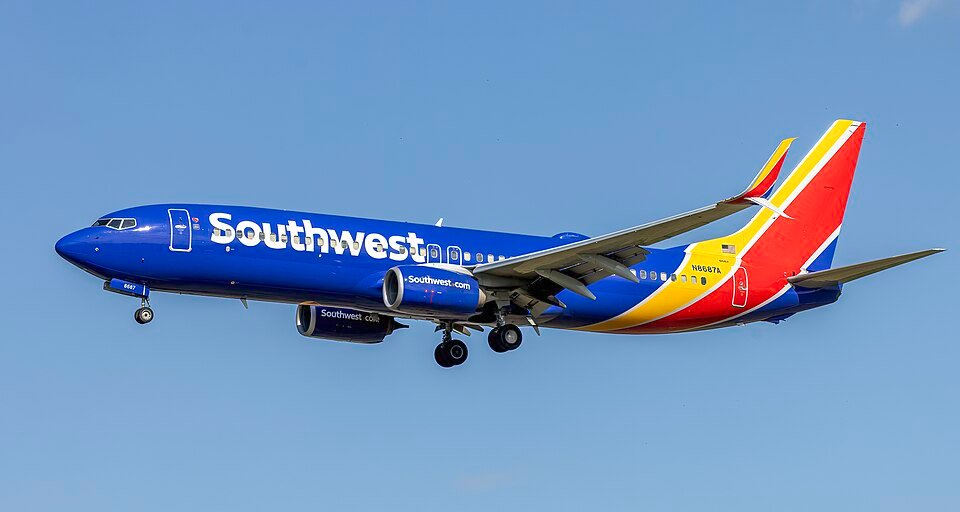
Image: Acroterion (Wikimedia)

South Carolina, United States: A Southwest Airlines Boeing 737-800 operating Flight WN4761 from Orlando International Airport (MCO) to Manchester-Boston Regional Airport (MHT) diverted to Charleston International Airport (CHS) on Monday, July 20, after the flight crew detected indications of a suspected fuel leak while cruising over South Carolina. No injuries were reported among the passengers or crew.

Flight WN4761 departed Orlando International Airport at 8:54 a.m. ET from Terminal A, Gate 125, on a scheduled nonstop service to Manchester, New Hampshire. The aircraft climbed normally for approximately one hour before reaching a cruising altitude of 37,000 feet over South Carolina.

The aircraft involved was an 11-year-old Boeing 737-8H4, registered as N8662F. While the aircraft was at cruise altitude, the crew identified indications of a possible fuel leak and declared an emergency by transmitting the 7700 transponder code. The code is the internationally recognized general emergency squawk used by flight crews to alert air traffic control that an aircraft requires immediate priority handling.

Following the emergency declaration, air traffic control cleared the aircraft for an expedited descent and arranged for the flight to divert to Charleston International Airport. The Boeing 737-800 subsequently landed safely on Runway 15, with emergency response vehicles standing by as a precaution. No injuries were reported among those onboard.

The precise nature of the fuel leak indication remains unclear. It has not been established whether the aircraft experienced an actual structural or mechanical fuel leak or whether the warning resulted from a sensor or valve-related anomaly. 

The aircraft remained at Charleston after the diversion, where maintenance personnel began a detailed inspection to determine the root cause of the suspected fuel leak indication. Southwest Airlines had not publicly disclosed the cause of the issue or confirmed when the Boeing 737-800, N8662F, would return to service at the time of the report.

Southwest arranged a replacement aircraft to continue the disrupted service. A newer Boeing 737 MAX 8, registered as N8881L, was dispatched to Charleston to transport the affected passengers to Manchester-Boston Regional Airport.

Passengers reportedly waited approximately four hours on the ground before boarding the replacement aircraft. The flight eventually continued to Manchester, arriving about five hours later than its originally scheduled arrival time of 11:50 a.m. ET.


Leave a Comment

Subscribe to our Newsletter

Recent News

Aviation Today Perspectives