News
Civil Aviation
Pilot Training
Flight School Analysis
Aviation Jobs
Training
Services
About Us
Contact Us

SAS’ First India Service In 17 Years Turns Back Mid-Air Over Pending Regulatory Approval

Picture of Aviation Today News Desk

Aviation Today News Desk

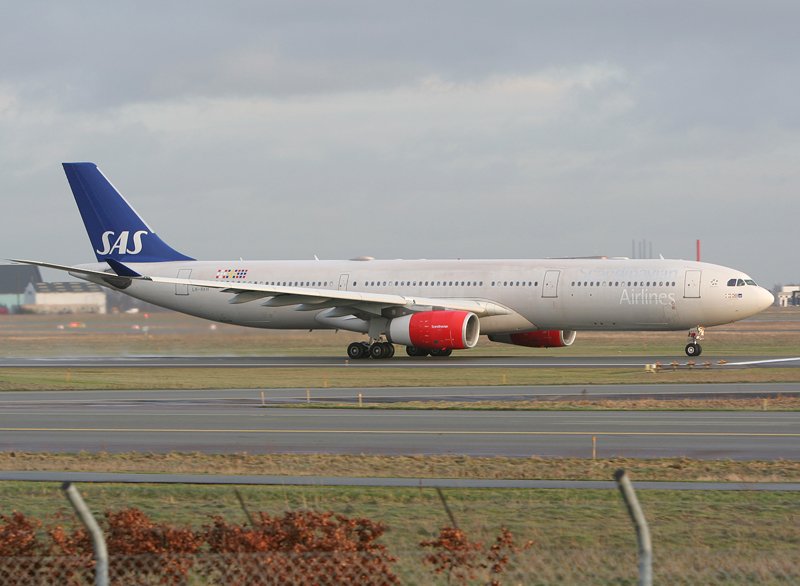
Copenhagen, Denmark: Scandinavian Airlines' long-awaited return to India after a 17-year absence suffered an unexpected setback when its inaugural Copenhagen–Mumbai service was forced to return to Denmark after spending nearly four hours in the air due to a pending regulatory approval. Flight SK969, operated by an Airbus A330-300, departed Copenhagen Airport on June 2, 2026, for what was intended to be the carrier's first scheduled service to India since 2009. However, the aircraft left approximately four to four-and-a-half hours behind schedule before beginning its journey toward Mumbai. According to flight-tracking data, the aircraft continued southeast across Europe and into the Caucasus region before reversing course while over Azerbaijan. After remaining airborne for roughly four hours, the aircraft returned to Copenhagen, turning the launch flight into what several aviation observers described as an "eight-hour flight to nowhere." SAS confirmed that the aircraft returned because a final regulatory approval required for the service had not been received as anticipated. "The flight returned to Copenhagen because the final approval from the relevant authorities was not issued as expected," the airline said. The carrier indicated that it had completed months of preparations for the route and had expected the remaining authorization to be finalized before the flight reached Indian airspace. However, that approval had not been secured by the time the aircraft was approaching the latter stages of its journey toward India. Neither SAS nor Indian regulators have publicly identified the specific authorization that remained outstanding. As a result, the exact nature of the missing clearance remains unclear. The incident overshadowed what had been planned as a significant milestone for the Scandinavian carrier. The Copenhagen-Mumbai route marks SAS's first India service in 17 years and forms part of the airline's broader strategy to expand its long-haul network following its transition into the SkyTeam alliance. SAS had positioned Mumbai as a key destination linking Scandinavia with one of the world's fastest-growing aviation markets. The airline had planned to operate the route five times weekly using Airbus A330 aircraft, strengthening connections between Northern Europe, India and North America through its Copenhagen hub. The route also represented SAS's return to a market it exited in 2009 during a period of restructuring and changing long-haul economics. Passengers onboard the inaugural service ultimately returned to Copenhagen instead of reaching Mumbai, creating significant disruption for travelers who had boarded what was expected to be a historic relaunch flight. Following the incident, reports indicated that SAS temporarily suspended subsequent Mumbai services while working with authorities to resolve the approval issue. The airline stated that it was actively engaged with regulators and expected operations to begin once all necessary authorizations were secured. As of the latest updates, SAS continues to work toward obtaining the remaining clearance required to fully launch the service, though neither the airline nor authorities have announced a definitive timeline for regular operations to commence.

India: Johnpsolis (Wikimedia)

Copenhagen, Denmark: Scandinavian Airlines’ long-awaited return to India after a 17-year absence suffered an unexpected setback when its inaugural Copenhagen–Mumbai service was forced to return to Denmark after spending nearly four hours in the air due to a pending regulatory approval.

Flight SK969, operated by an Airbus A330-300, departed Copenhagen Airport on June 2, 2026, for what was intended to be the carrier’s first scheduled service to India since 2009. However, the aircraft left approximately four to four-and-a-half hours behind schedule before beginning its journey toward Mumbai.

According to flight-tracking data, the aircraft continued southeast across Europe and into the Caucasus region before reversing course while over Azerbaijan. After remaining airborne for roughly four hours, the aircraft returned to Copenhagen, turning the launch flight into what several aviation observers described as an “eight-hour flight to nowhere.”

SAS confirmed that the aircraft returned because a final regulatory approval required for the service had not been received as anticipated. “The flight returned to Copenhagen because the final approval from the relevant authorities was not issued as expected,” the airline said.

The carrier indicated that it had completed months of preparations for the route and had expected the remaining authorization to be finalized before the flight reached Indian airspace. However, that approval had not been secured by the time the aircraft was approaching the latter stages of its journey toward India.

Neither SAS nor Indian regulators have publicly identified the specific authorization that remained outstanding. As a result, the exact nature of the missing clearance remains unclear.

The incident overshadowed what had been planned as a significant milestone for the Scandinavian carrier. The Copenhagen-Mumbai route marks SAS’s first India service in 17 years and forms part of the airline’s broader strategy to expand its long-haul network following its transition into the SkyTeam alliance.

SAS had positioned Mumbai as a key destination linking Scandinavia with one of the world’s fastest-growing aviation markets. The airline had planned to operate the route five times weekly using Airbus A330 aircraft, strengthening connections between Northern Europe, India and North America through its Copenhagen hub.

The route also represented SAS’s return to a market it exited in 2009 during a period of restructuring and changing long-haul economics.

Passengers onboard the inaugural service ultimately returned to Copenhagen instead of reaching Mumbai, creating significant disruption for travelers who had boarded what was expected to be a historic relaunch flight.

Following the incident, reports indicated that SAS temporarily suspended subsequent Mumbai services while working with authorities to resolve the approval issue. The airline stated that it was actively engaged with regulators and expected operations to begin once all necessary authorizations were secured. As of the latest updates, SAS continues to work toward obtaining the remaining clearance required to fully launch the service, though neither the airline nor authorities have announced a definitive timeline for regular operations to commence. 
Leave a Comment

Subscribe to our Newsletter

Recent News