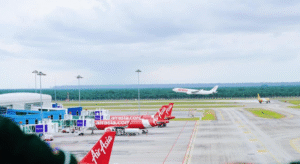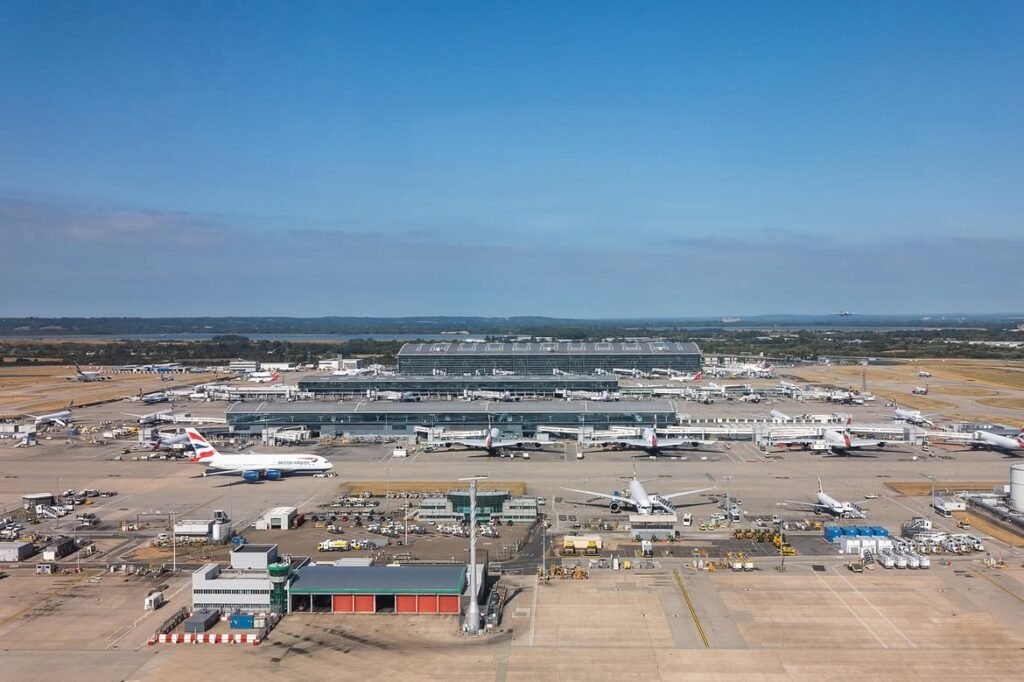
London, United Kingdom: A major technical failure in the UK’s air traffic control system disrupted flights across the country on September 8, 2026 forcing airlines to cancel, delay and divert services and leaving tens of thousands of passengers stranded or facing lengthy waits. The disruption was traced to a fault in the flight-data processing system of National Air Traffic Services (NATS), which manages air traffic control services at 15 UK airports.
NATS first reported the technical problem at about 13:46 BST on Tuesday, saying its engineers were working on the issue. The disruption initially affected departures, but its effects quickly spread through the wider network. Heathrow, Gatwick, Manchester, Stansted, London City, Luton, Edinburgh, Bristol, Birmingham and other UK airports reported delays or cancellations, with airports in Scotland and Northern Ireland also affected.
By 5 p.m. BST, FlightRadar24 had recorded 425 cancellations. Earlier FlightAware data showed about 490 delayed departures at Heathrow, Gatwick, London City, Luton, Edinburgh and Bristol, while 525 arrivals at those six airports were either cancelled or delayed. At Heathrow, Cirium recorded 38 of 661 scheduled arrivals as cancelled or unable to operate, while British Airways had cancelled 16 of its 333 scheduled departures at that point.
The disruption intensified through the evening. FlightRadar24 later reported that 1,300 flights to and from UK airports were cancelled on September 8, 2026 while another 177 flights had already been cancelled for September 9, 2026 almost all at Heathrow. The figures represent cancellations across the UK network rather than a single airport or airline.
Heathrow was among the hardest-hit airports. At 9:19 p.m. BST, the airport said arrivals would remain suspended for the rest of Tuesday, although departures had resumed. Heathrow said the decision was taken “to ensure the safety of our passengers and colleagues” and warned that disruption would continue. The airport has around 1,300 daily take-offs and landings, meaning even a temporary restriction created a substantial backlog.
Other major airports were also affected. Gatwick, Manchester, Stansted, Birmingham, London City, Luton, Edinburgh and Bristol reported disruption, while Aberdeen and Inverness also experienced significant delays. Manchester Airports Group confirmed that Manchester, Stansted and East Midlands were affected. Belfast City and Jersey airports also warned passengers about possible disruption.
Airlines faced a second problem after the technical fault was fixed: aircraft and crews were left in the wrong locations. British Airways said it had been forced to cancel or divert more than 100 flights, affecting tens of thousands of customers. The airline said, “The severity of the issue means there will be a significant knock-on impact for customers and colleagues.” It later described the incident as “entirely out of our control” and said aircraft and crews had ended up out of position.
Ryanair said more than 65,000 of its passengers were affected and that more than 50 scheduled flights were cancelled, with delays of up to eight hours. The airline’s chief operating officer, Neal McMahon, called for NATS CEO Martin Rolfe to resign, asking: “How many more failures do passengers have to suffer before overpaid failure NATS CEO, Martin Rolfe, accepts responsibility for his repeated mismanagement and resigns?”
Wizz Air also demanded changes, saying: “A critical national infrastructure provider should not repeatedly bring the aviation system to a standstill. NATS is simply not fit for purpose in its current form.” EasyJet reported that some flights could not operate and warned that the disruption was also creating delays elsewhere in Europe. KLM, Lufthansa and other international carriers were among airlines affected.
Air India was among the international carriers caught in the disruption. The airline said flights operating to and from UK airports had been affected and that it had been forced to “divert, delay or cancel multiple flights”. Air India warned that further services could be affected because aircraft and crew had been left out of position, and asked passengers to check their flight status before travelling to the airport.
The technical fault itself was resolved later on Tuesday. NATS said at 18:34 GMT that the problem affecting its flight-data processing system had been fixed and that it was operating normally. NATS said, “Recovery from today’s system issue has taken longer than we had hoped. Our system issue is now resolved, we are operating normally and working as hard as possible to clear the backlog of flights.” It later warned that “this has been a very complex recovery and has created difficulties for the whole aviation network” and that recovery would take time.
The precise cause had not been established. NATS CEO Martin Rolfe told Sky News that the organisation had not “fully done the investigation”. Asked what had gone wrong, Rolfe said: “We don’t have an idea yet of exactly what went wrong.” He also accepted responsibility for the disruption, saying: “I always accept full responsibility.” He added: “I am the CEO of a piece of critical infrastructure, so it is my job to take responsibility for that.”
Rolfe said his immediate priority was restoring normal operations and supporting airlines, airports and passengers. “What I absolutely take responsibility for is keeping people safe and delivering the best service we possibly can on a day like today,” he said. “You will understand my focus is entirely about how we actually resolve this issue, get things back to normal, help our airlines, our airport customers and the travelling public.”
NATS had earlier stressed that “safety was not compromised”. The organisation did not disclose a specific component or software failure that caused the outage, and there is currently no confirmed technical explanation beyond the failure affecting its flight-data processing system. The repair therefore consisted of restoring the affected system and returning operations to normal, followed by a wider recovery effort to clear the accumulated flight backlog; the exact root cause remains under investigation.
UK Transport Secretary Heidi Alexander said she was “seeking assurances that lessons will be learned and systems that support aviation are up to the job.” The Civil Aviation Authority said NATS would be expected to provide a full report on the incident and that it would consider whether additional measures were necessary to ensure the reliability of Britain’s air traffic control system.
The disruption was not confined to the UK. The knock-on effects reached international routes and European airports as airlines struggled to reposition aircraft and crews. Schiphol Airport in the Netherlands reported dozens of cancelled UK-linked services, while two Mumbai-London flights were diverted to Amsterdam. Airlines and airports across Europe faced the consequences of aircraft being displaced by the UK disruption.
Although the NATS technical problem was resolved on Tuesday evening, the aviation system did not immediately return to normal. The 1,300 cancellations recorded on September 8 and 177 cancellations already recorded for September 9 demonstrate the scale of the backlog. Heathrow remained the main focus of Wednesday’s disruption, while airlines worked to reposition aircraft and crews and restore their schedules.