News
Civil Aviation
Pilot Training
Flight School Analysis
Aviation Jobs
Training
Services
About Us
Contact Us

South Korea’s Incheon Overtakes Dubai To Become World’s Busiest International Airport

Picture of Aviation Today News Desk

Aviation Today News Desk

Incheon, South Korea: South Korea’s Incheon International Airport has become the world’s busiest airport for international passenger traffic for the first time, handling about 38.39 million international passengers in the first half of 2026, according to preliminary Airports Council International data reported on August 13. Incheon International Airport has emerged as the world’s busiest airport for international passenger traffic, overtaking Dubai’s previous No. 1 position. The latest result represents a major change in the ranking. ACI’s 2025 international passenger ranking placed Dubai first, Heathrow second and Incheon third. The organisation’s July 2026 airport ranking resource likewise listed Dubai as the busiest airport for international passengers based on the latest completed annual dataset. The new Incheon result therefore represents a preliminary H1 2026 shift rather than a completed annual ranking. The ranking shift was partly linked to major changes in global air travel caused by the US-Iran conflict. The disruption weakened the role of Middle Eastern transfer hubs, particularly Dubai, prompting some passengers travelling between Europe and Asia to reroute through Incheon. Dubai’s international passenger traffic fell from 7.4 million in February to 2.5 million in March before recovering to 4.7 million by June. Incheon recorded 4.24 million transfer passengers during the first six months, an 18.1% increase from the same period a year earlier. Transfer traffic on European routes rose 63.2% to about 210,000 passengers, highlighting the shift in connecting traffic toward the South Korean hub. The airport also benefited from stronger tourism demand. Foreign travellers accounted for a record 44.4% of Incheon’s total passenger traffic in the second quarter, with growing visitor flows from markets including China and Japan contributing to the increase. Infrastructure and connectivity have also strengthened Incheon’s position. The airport’s expansion programme has raised its annual passenger-handling capacity to 106 million. It currently serves 101 airlines and 183 cities in 53 countries when passenger and cargo operations are included, while passenger services connect Incheon with 158 international destinations. That compares with 139 international destinations served by Hong Kong, 92 by Shanghai Pudong and 86 by Tokyo Narita, according to the latest reports. The airport opened in 2001 and completed its latest major expansion in 2024. Its growing international network has allowed it to absorb additional connecting traffic while maintaining its position as a major Northeast Asian hub. Incheon International Airport Corporation Acting President Kim Beom-ho credited government support, the public and airport employees for the achievement. He said the airport would continue pursuing service innovation and improving connectivity with regional airports. Kim said: “We’re grateful for the government’s support, the public’s encouragement” and the efforts of airport personnel. The corporation said it plans to strengthen passenger convenience while pursuing service innovation, artificial-intelligence transformation and infrastructure for urban air mobility. It also plans to expand links between Incheon and regional airports as South Korea seeks to increase inbound tourism and improve overseas travel access for passengers outside the Seoul metropolitan area.
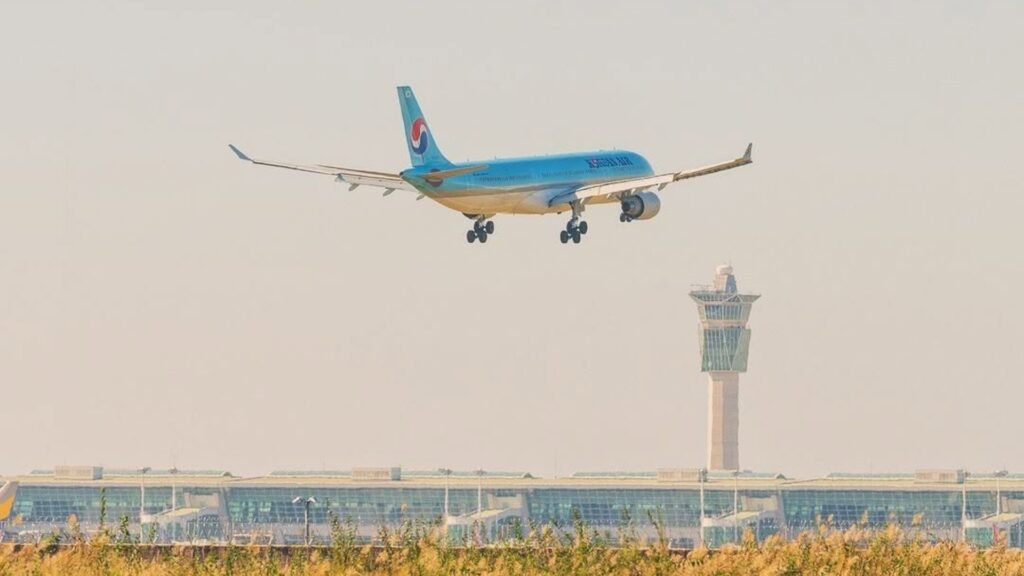
Image: Incheon Airport

Incheon, South Korea: South Korea’s Incheon International Airport has become the world’s busiest airport for international passenger traffic for the first time, handling about 38.39 million international passengers in the first half of 2026, according to preliminary Airports Council International data reported on August 13.

Incheon International Airport has emerged as the world’s busiest airport for international passenger traffic, overtaking Dubai’s previous No. 1 position. The latest result represents a major change in the ranking. ACI’s 2025 international passenger ranking placed Dubai first, Heathrow second and Incheon third. The organisation’s July 2026 airport ranking resource likewise listed Dubai as the busiest airport for international passengers based on the latest completed annual dataset. The new Incheon result therefore represents a preliminary H1 2026 shift rather than a completed annual ranking.

The ranking shift was partly linked to major changes in global air travel caused by the US-Iran conflict. The disruption weakened the role of Middle Eastern transfer hubs, particularly Dubai, prompting some passengers travelling between Europe and Asia to reroute through Incheon.  Dubai’s international passenger traffic fell from 7.4 million in February to 2.5 million in March before recovering to 4.7 million by June.

Incheon recorded 4.24 million transfer passengers during the first six months, an 18.1% increase from the same period a year earlier. Transfer traffic on European routes rose 63.2% to about 210,000 passengers, highlighting the shift in connecting traffic toward the South Korean hub.

The airport also benefited from stronger tourism demand. Foreign travellers accounted for a record 44.4% of Incheon’s total passenger traffic in the second quarter, with growing visitor flows from markets including China and Japan contributing to the increase.

Infrastructure and connectivity have also strengthened Incheon’s position. The airport’s expansion programme has raised its annual passenger-handling capacity to 106 million. It currently serves 101 airlines and 183 cities in 53 countries when passenger and cargo operations are included, while passenger services connect Incheon with 158 international destinations. That compares with 139 international destinations served by Hong Kong, 92 by Shanghai Pudong and 86 by Tokyo Narita, according to the latest reports.

The airport opened in 2001 and completed its latest major expansion in 2024. Its growing international network has allowed it to absorb additional connecting traffic while maintaining its position as a major Northeast Asian hub. 

Incheon International Airport Corporation Acting President Kim Beom-ho credited government support, the public and airport employees for the achievement. He said the airport would continue pursuing service innovation and improving connectivity with regional airports.

Kim said: “We’re grateful for the government’s support, the public’s encouragement” and the efforts of airport personnel.

The corporation said it plans to strengthen passenger convenience while pursuing service innovation, artificial-intelligence transformation and infrastructure for urban air mobility. It also plans to expand links between Incheon and regional airports as South Korea seeks to increase inbound tourism and improve overseas travel access for passengers outside the Seoul metropolitan area.

Leave a Comment

Subscribe to our Newsletter

Recent News

Aviation Today Perspectives