Jakarta, Indonesia: Volcanic ash from Indonesia’s Anak Krakatau has disrupted more than 2,300 flights and affected over 270,000 passengers, with seven airports closed on Monday, September 7, 2026 as authorities continued to assess aviation safety conditions following days of eruptions.
The disruption began after Anak Krakatau, located in the Sunda Strait between Java and Sumatra, erupted late on Friday, September 4, 2026. Ash subsequently spread across Jakarta and surrounding regions, forcing widespread airport closures, flight cancellations, delays and diversions.
The latest figures released by Indonesia’s Transport Ministry show that more than 270,000 passengers have been affected by the delay, diversion or cancellation of approximately 2,300 flights. The numbers represent a significant increase from earlier reports on Sunday, when authorities said around 1,558 flights had been disrupted and approximately 170,000 travellers affected.
Seven airports, including airports serving Jakarta and surrounding provinces, remained closed in the latest update. Jakarta’s Soekarno-Hatta International Airport, the country’s main international gateway, was scheduled to remain closed until 6 p.m. local time on Monday as volcanic ash continued to pose risks to flight operations.
However, there was one positive development for stranded travellers. Atung Bungsu Airport in South Sumatra resumed operations on Monday morning, reducing the number of airports still shut from eight to seven.
Transport Minister Dudy Purwagandhi warned that authorities could not yet determine when the disruption would fully end because conditions remained unpredictable. “We cannot ascertain when this will end due to the dynamic weather,” he said.
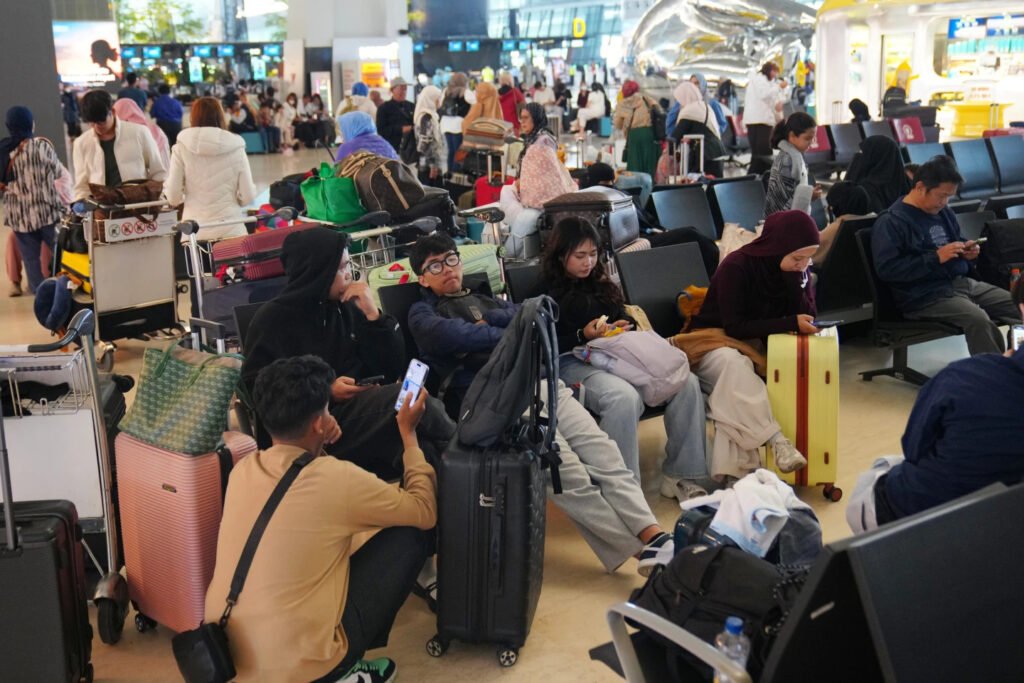
The aviation disruption has left large numbers of passengers stranded at airports, particularly around Jakarta, while airlines cancelled, delayed or altered both domestic and international services. Earlier disruptions affected flights to and from destinations including Singapore, Doha, Sydney and Kuala Lumpur, while domestic services were also impacted.
Singapore Airlines, Qantas, AirAsia and other carriers were among airlines affected during the initial phase of the disruption, while Indonesian operators also cancelled services as aviation authorities monitored ash movement and airspace conditions.
The closures were ordered because volcanic ash presents a serious threat to aircraft operations. Ash can affect aircraft engines and other critical systems, prompting authorities to suspend flights even at airports located far from the volcano itself. Soekarno-Hatta International Airport is more than 150 kilometres from Anak Krakatau, highlighting the scale of the ash cloud’s impact on Indonesian airspace.
Ash plumes reached significant altitudes during the eruption, with authorities reporting ash as high as approximately 20,000 feet on the Java side of the volcano and up to 50,000 feet on the Sumatra side and in parts of Banten province. “The probability of additional eruptions in the coming days remains high,” said Lana Saria, head of the Geology Agency. “The main hazards include volcanic bombs, heavy ashfall and possible lava flows if sustained eruptive activity resumes,” she said.
The continuing uncertainty means flight operations remain dependent on volcanic activity, weather conditions and the movement of ash clouds. While one airport has resumed operations, seven remain closed, leaving hundreds of thousands of passengers affected as Indonesian aviation authorities work to determine when normal air traffic can safely resume.